
Recent traffic-fatality data shows a national decline, but that broader improvement does not erase the legal and practical questions families face after a deadly crash in Mississippi. NHTSA reported in April 2025 that an estimated 39,345 people died in U.S. traffic crashes in 2024, and in April 2026 the agency reported an estimated 36,640 traffic fatalities in 2025. NHTSA reported in April 2025 For families in Columbus, Mississippi, one fatal collision can leave surviving relatives suddenly trying to understand liability, evidence, insurance, and filing deadlines. After a fatal wreck, grieving families often need to understand how to prove wrongful death under Mississippi law.
Why These New Crash Trends Matter in Mississippi Wrongful Death Cases
National safety reports help frame the risk, but wrongful death cases are won or lost on specific facts. In November 2024, NHTSA said traffic fatalities declined in nearly all major safety subcategories in the first half of 2024, including a 6% decrease in speeding-related crash deaths. traffic fatalities declined in nearly all major safety subcategories in the first half of 2024 Mississippi transportation officials continue to rely on crash trends and safety data to set statewide performance targets. Mississippi transportation officials
For families, the legal backdrop is usually much narrower. A wrongful death claim requires showing that a specific person or company committed a wrongful or negligent act, that the act caused the death, and that surviving family members or the estate suffered legally recognizable losses. Readers may find this discussion of the state’s traffic fatality rate helpful as background.

A Columbus Scenario That Feels Uncomfortably Real
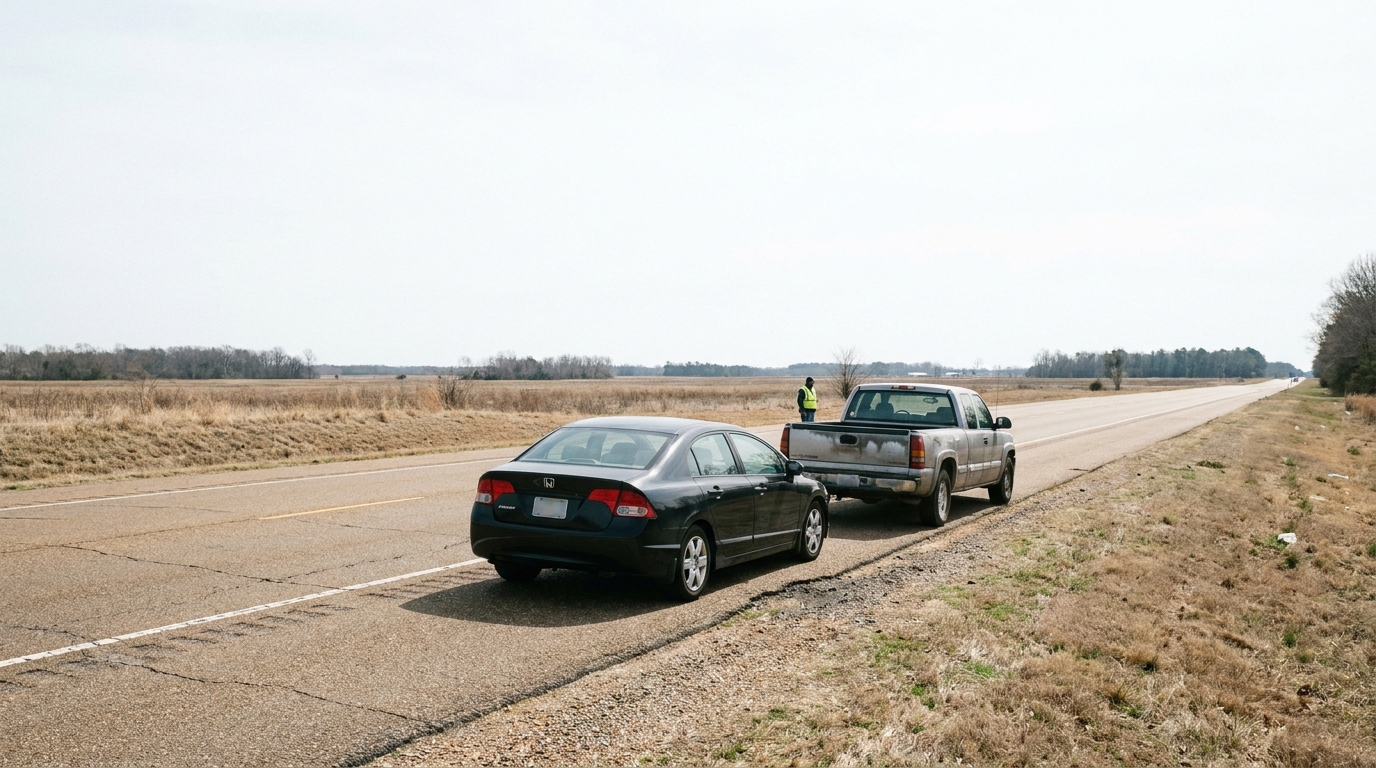
Imagine a family in Columbus loses a father in a rear-end collision on a state highway after traffic slows near a construction zone. In the first days, the family may hear conflicting explanations: speeding, distraction, poor vehicle maintenance, or overlapping factors. What they know is simpler and more painful: a loved one is gone, bills are arriving, and the household has lost income and support.
The insurance investigation may begin before the family has had time to grieve. Adjusters may request statements, seek records, and frame the event as a momentary accident rather than a legally actionable death. If there were pre-impact braking issues, black-box data, roadway design questions, or witness disputes, the family may need fast evidence preservation.
Rear-end crashes can produce severe or fatal harm
Rear-end crashes are sometimes dismissed as minor, but that assumption can be dangerously incomplete. Mississippi’s Drive Smart materials state that rear-end crashes are the most common type of work-zone crash. The National Safety Council reports that motor-vehicle deaths declined for three straight years through 2024, but it also estimates 4.9 million medically consulted injuries and $559.3 billion in total motor-vehicle injury costs in 2024. The National Safety Council reports Fatal-crash cases often include medical care, funeral expenses, lost financial support, and emotional losses.
How to Prove Wrongful Death
In most Mississippi wrongful death cases, the central task is building evidence around duty, breach, causation, and damages. Families need more than suspicion or a police officer’s preliminary impression. They need a record that shows what happened, why it happened, and how that conduct led to the death.
The evidence usually starts with negligence or a wrongful act
A successful case begins by identifying the specific misconduct that caused the fatal event. In a traffic case, that may include speeding, distraction, impairment, fatigue, unsafe lane changes, following too closely, failure to yield, or a commercial carrier’s failure to maintain a vehicle. In other wrongful death matters, the theory may involve unsafe property conditions, a defective product, or criminal violence tied to inadequate security.
Not every tragedy creates civil liability. The law requires proof that a defendant did something unreasonable, unlawful, or otherwise wrongful. Learning how to prove wrongful death means translating a heartbreaking event into provable facts that fit recognized legal elements.
Causation is often where hard cases become harder
Even when fault seems obvious, causation can become the most contested issue. A defendant may argue that a preexisting medical condition, a second impact, delayed treatment, or some unrelated event caused the death rather than the crash itself. In a multi-vehicle collision, several parties may try to shift responsibility elsewhere.
This is why early investigation matters. Lawyers often look for crash reports, photographs, surveillance footage, event data recorder information, toxicology findings, autopsy records, cell-phone evidence, driver logs, vehicle-inspection histories, and witness statements. In some cases, accident reconstruction, biomechanical review, or medical expert analysis may be necessary to connect the wrongful act to the fatal outcome.
Damages are not limited to one invoice or one type of loss
Wrongful death damages usually reflect the full impact of the loss, not just a single expense category. Recoverable damages may include funeral and burial costs, final medical expenses, lost wages or future earnings, loss of companionship, and other losses recognized under Mississippi law. What can be recovered depends on the relationship to the deceased, the estate structure, available insurance coverage, and the evidence supporting each category.
Proof of damages is evidence-driven. Pay records, tax returns, employment benefits, family testimony, household-service evidence, and medical billing records may all become important. Proving wrongful death means proving both fault and the full scope of what the death has taken from the family.
Common evidence families should try to preserve
Preserving evidence early can make a meaningful difference in a fatal-incident case.
- Crash or incident reports from law enforcement or investigators
- Photographs and video of vehicles, roadway conditions, property defects, or the scene
- Names of witnesses and any recorded statements
- Medical records tied to the final injury and treatment
- Funeral and burial documentation
- Employment and income records showing financial support the deceased provided
- Insurance information for all potentially responsible parties
- Vehicle data or maintenance records when a truck, company vehicle, or product defect may be involved
Organized evidence can make it easier to evaluate whether a family may have a viable wrongful death claim and what additional investigation may be needed.
Deadlines Can Matter as Much as Liability
Even a strong claim can be damaged if critical deadlines are missed. In Mississippi, wrongful death filing deadlines can vary depending on the underlying facts and legal theory, and some claims tied to intentional acts or government-related issues may involve different timelines or procedural requirements.
Any discussion of exceptions should be treated cautiously. Tolling rules, discovery arguments, or deadline extensions may apply in limited circumstances, but courts often interpret such exceptions narrowly. Civil statutes of limitations are also different from administrative or notice deadlines that may apply when a government entity is involved.
Why Public Safety Data Still Matters to Private Claims
Government crash data does not prove an individual case, but it can provide useful context. MDOT’s safety planning and NHTSA’s recurring fatality reports reflect an ongoing focus on identifying risk patterns. That context helps explain why fatal crashes are scrutinized closely and why insurers, attorneys, and experts rely on layered evidence.
Medical context matters too. Mayo Clinic notes that whiplash commonly follows rear-end crashes and can include neck pain, stiffness, headaches, and fatigue; some people experience longer-term complications. In a wrongful death case, that medical reality reinforces that crashes looking routine on paper can produce serious, complex, and sometimes fatal consequences.
What families often need most in the first weeks
The first phase of a wrongful death matter is usually about stabilization as much as litigation. Families may need to identify the proper estate representative, secure records, avoid incomplete insurance statements, and determine whether commercial policies, umbrella coverage, or third-party liability may exist.
Legal guidance is often most useful before facts start disappearing. Surveillance footage can be overwritten. Vehicles can be repaired or salvaged. Witness memories can fade. Timing and evidence preservation are often just as important as the underlying legal theory.
How Does This Impact Me?
What does this traffic-fatality reporting mean for my family’s case?
These reports do not decide your case, but they show crash prevention remains a major public-safety issue. Your claim will depend on the specific evidence tied to the death, including who was at fault, how the event unfolded, what caused the fatal injuries, and what losses the surviving family or estate can document.
Does this change my deadline to file a wrongful death claim in Mississippi?
Not by itself. A new safety report does not change the filing deadline for a private civil claim. However, the exact deadline may depend on the facts, and any possible exception may apply only in limited circumstances.
What if the insurer says the crash was just an accident?
That is often a liability argument, not the final word. Many wrongful death cases turn on whether available evidence shows negligence, a wrongful act, or multiple contributing causes. A family may need records, witness accounts, expert analysis, and insurance review before that issue can be assessed fairly.
What should I do first if I think my loved one’s death was preventable?
Start by preserving information. Keep the crash report, photographs, medical and funeral records, correspondence from insurers, and documents showing the financial and personal support your loved one provided. Avoid assuming the facts are settled before the evidence has been reviewed carefully.
If criminal charges are possible, does that automatically prove wrongful death?
No. A criminal case and a civil wrongful death case are separate matters with different standards, procedures, and goals. Criminal charges may be important evidence, but a civil case still requires its own proof.
What This Means for Columbus Families Moving Forward
The latest traffic data points to improvement nationally, but it also highlights how much work remains after any fatal crash in Mississippi. For families in Columbus, the real issue is whether the available evidence can show that a preventable death occurred, who is legally responsible, what losses the family has suffered, and whether all required deadlines can still be met.
If you are trying to understand whether a recent fatal crash, unsafe property event, defective product incident, or violent act may support a civil claim, careful case review can help clarify the next step. Mama Justice Law Firm may be a resource for families who need more information about Mississippi wrongful death issues. You can call [(833) 626-2587]((833) 626-2587) or contact us today to request more information about your situation.