
Results Matter
If you drive through Jackson, you know that sharing the road with 18-wheelers is a daily reality. From the heavy freight traffic on I-55 and I-20 to the logging trucks navigating Highway 49, commercial vehicles are everywhere. While most of these trips end safely, when a massive truck collides with a passenger vehicle, the result is often catastrophic.
Truck accidents are not just “bigger” car accidents; they are legally and technically far more complex. You are not just dealing with a bad driver; you are often going up against a multinational trucking corporation, their aggressive legal team, and an insurance policy worth millions of dollars. They have teams of experts working to protect their profits the moment the crash happens. You deserve a team working just as hard to protect you.
At Mama Justice, we know that after a wreck, you are flooded with questions. Who pays my bills? Can I trust the trucking company? What are my rights? You should not have to guess at the answers to your questions, which is why we have compiled straight talk and clear answers to the most critical questions Mississippi families ask us.
Don’t settle for guessing. If you have been hurt, you need immediate legal protection. Call Mama Justice now for a free case evaluation.
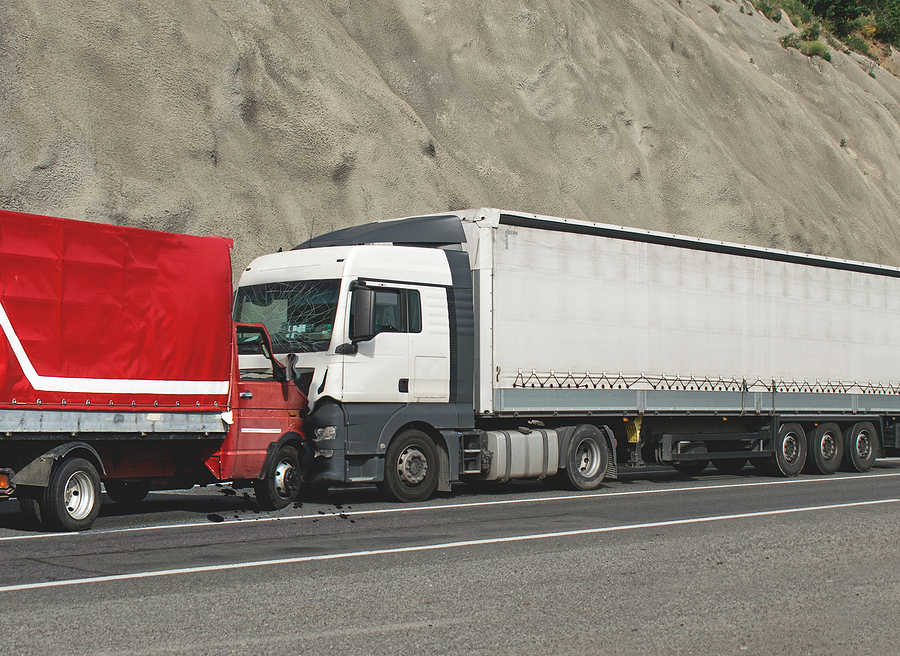
Immediate Steps: The “Dos and Don’ts” After a Crash
The minutes and hours following a truck accident are chaotic. However, the steps you take, and the mistakes you avoid, during this time can determine whether you win or lose your case.
What are the first steps I must take after a truck accident?
- Prioritize Safety: Commercial truck accidents often involve hazardous materials, fuel spills, or scattered cargo. If you can move to a safe place away from the crash, do so. Call 911 immediately.
- Get a Police Report: You must have an official accident report from the Jackson Police Department (JPD) or the Mississippi Highway Patrol (MHP). This document is the
foundation of your liability claim.
- Gather Truck-Specific Evidence: In a car wreck, you get the driver’s license and insurance information. In a truck wreck, you need more information. Try to get:
○ The DOT Number is painted on the side of the truck cab.
○ The logo or name of the trucking company on the door.
○ License plate numbers for both the truck cab (tractor) and the trailer (they are often owned by different companies).
What should I NOT do at the scene?
- Do Not Apologize: It is human nature to say, “I’m sorry” or “I didn’t see you,” but these phrases can be twisted into admissions of fault. Say as little as possible regarding how the crash happened.
- Do Not Sign Anything: Trucking companies often dispatch “rapid response teams” to the crash scene. They may try to get you to sign a statement or a quick settlement release while you are still in shock. Do not sign anything. Tell them to speak to your attorney.
Why is the “Black Box” important in my case?
Most modern commercial trucks are equipped with an Electronic Control Module (ECM), commonly known as a “black box.” This device acts like a flight recorder for the truck.
It captures critical data such as the truck’s speed, whether the driver hit the brakes before impact, engine RPMs, and how long the driver had been on the road. This data is objective proof that can contradict a lying driver who claims they “were going the speed limit.”
Critical Warning: This data is not kept forever. Trucking companies can legally overwrite or erase black box data after a certain period unless your lawyer sends a Spoliation Letter immediately to preserve it. This is why waiting to hire an attorney can destroy your case.
Determining Fault & Liability in Jackson
In a standard car wreck, you sue the other driver. In a truck accident, however, the list of “at-fault” parties is often much longer. Understanding who is responsible is the key to maximizing your compensation.
Who can be held liable in a commercial truck accident?
Trucking litigation allows us to look beyond the driver to find everyone who contributed to the danger. Potential defendants often include:
- The Trucking Company: Companies can be held liable if they hired a driver with a bad record, failed to train them, or pressured them to break speed limits to meet deadlines.
- The Cargo Loader: If a truck jackknifed or rolled over because the cargo shifted, the
third-party company that loaded the trailer may be responsible for failing to secure the load properly.
- The Maintenance Provider: If the brakes failed or a tire blew out, the mechanic or shop responsible for fleet maintenance may be liable.
- The Manufacturer: If a steering column snapped or a hitch failed due to a defect, you may have a product liability claim against the manufacturer.
How do Federal FMCSA regulations affect my claim?
Interstate trucking is governed by federal laws and regulated by the Federal Motor Carrier Safety Administration (FMCSA). Federal trucking laws set strict standards that override state traffic laws. A violation of these federal laws and regulations is often a “smoking gun” that points to negligence. Common violations include:
- Hours of Service (HOS): Drivers are strictly limited in how many hours they can drive without sleeping. If logs show the driver exceeded these limits, we can prove fatigue was a factor.
- Weight Limits: Overloaded trucks take longer to stop and are harder to steer.
- Impaired Driving: Commercial drivers have a lower legal blood alcohol limit (0.04%) and are subject to random drug screens.
Can I sue if the truck driver was an independent contractor?
Trucking companies love to use the “independent contractor” defense. They argue that because the driver owns their own truck or isn’t a W-2 employee that the company isn’t responsible for the driver’s mistakes.
Do not let them fool you. Under the federal doctrine of “Placard Liability,” the company whose name and DOT number are displayed on the truck is often financially responsible for the accident, regardless of the driver’s employment status. We know how to pierce this corporate shield to hold the right people accountable.
Compensation & Settlements
Truck accidents cause devastating injuries, including traumatic brain injuries, spinal cord damage, amputations, and severe burns. The compensation must match the severity of the loss.
How is a truck accident settlement different from a car accident settlement?
The primary difference is the insurance policy limits. In Mississippi, a standard car insurance policy might only cover $25,000 in damages. Commercial trucks, however, are required by federal law to carry at least $750,000 in liability insurance, and many carry policies worth $1 million or more.
Because the stakes are higher, the insurance adjusters fight much harder. They will delay, deny, and defend to avoid paying every penny.
What damages can I recover in a Jackson truck accident lawsuit?
You are entitled to be “made whole” for every loss the accident caused. This includes:
- Economic Damages: Medical bills (past, present, and future), lost wages, loss of future earning capacity, and modification of your home if you are disabled.
- Non-Economic Damages: Physical pain and suffering, emotional distress, PTSD, and “loss of consortium” (the impact of injuries on your relationship with your spouse).
- Punitive Damages: If the truck driver was acting with “actual malice” or gross negligence, such as driving drunk or texting while driving, a Mississippi jury may award punitive damages to punish the behavior and deter others.
Should I accept the trucking company’s insurance offer?
No. The insurance company’s goal is to close out the claim as cheaply as possible. They often make an offer within days of the accident, hoping you will take a quick check before you realize you need surgery or long-term rehab.
Once you sign a release, your case is over. You cannot go back for more money later. Always have a lawyer review any offer to settle your claim to ensure that it covers your lifetime needs, not just your immediate bills.
Quick Answers: Jackson Trucking Accident Questions
How long do I have to file a truck accident claim in Mississippi?
In Mississippi, the general Statute of Limitations is three years from the date of the accident. If you do not file a lawsuit by this deadline, you are barred from recovering compensation. However, you should never wait this long. Critical evidence like driver logs and black box data can be destroyed in as little as six months if you do not take legal action to protect it.
What are the “No-Zones” on a semi-truck?
“No-Zones” are the dangerous blind spots around a commercial truck where the driver cannot see you. These are located:
- Directly behind the trailer.
- Immediately in front of the truck cab.
- The sides of the truck (specifically the right side, which has a huge blind spot).
If you cannot see the truck driver’s mirrors, the driver cannot see you.
Is Mississippi a “comparative negligence” state?
Yes. Mississippi follows a pure comparative negligence rule. This means you can still recover money even if you were partially at fault for the accident. For example, if a jury finds you were 10% at fault and the truck driver was 90% at fault, your settlement will be reduced by 10%.
You do not lose your right to sue just because you weren’t perfect.
Do I need a lawyer for a truck accident, or can I handle it myself?
While you might handle a minor car fender-bender alone, you should never attempt to handle a commercial truck accident without an attorney. The complexities of federal FMCSA laws, spoliation letters, corporate liability, and multi-layered insurance policies make these cases nearly impossible for a layperson to manage successfully.
Why Choose Mama Justice for Your Trucking Case?
When you are hurt, you don’t need a suit-and-tie lawyer who speaks in confusing jargon. You need someone who will fight for you like family.
At Mama Justice, we specialize in high-stakes injury cases. We have the resources to hire accident reconstructionist, download black box data, and stand up to billion-dollar trucking companies. But more importantly, we have the compassion to support you through your recovery.
- We know the law: We understand the Federal Motor Carrier Safety regulations better than the trucking companies do.
- We act fast: We send preservation letters immediately to stop evidence from being destroyed.
- We care: We treat every client like a member of our own family.
We don’t get paid unless you win. You have nothing to lose and everything to gain.
Ready for Answers?
Don’t let a trucking company bully you into a low settlement. Contact Mama Justice today to discuss your case. Let us handle the legal fight so you can focus on healing.
Call us now for your free consultation.