

What a Wrongful Death Attorney Mississippi Families May Consider After a June 2026 Louisiana Crash
Key Takeaways: A June 2026 Louisiana highway crash involving a Mississippi resident raises questions about investigation, filing deadlines, and which state’s law may apply. Mississippi faces unusually high roadway fatality rates, giving this loss broader public safety context. For Tupelo Mississippi families, cross-state fatal crashes create confusion about evidence, insurance, and where claims must be pursued. Early legal review matters because wrongful death claims are fact-sensitive and deadline-driven.
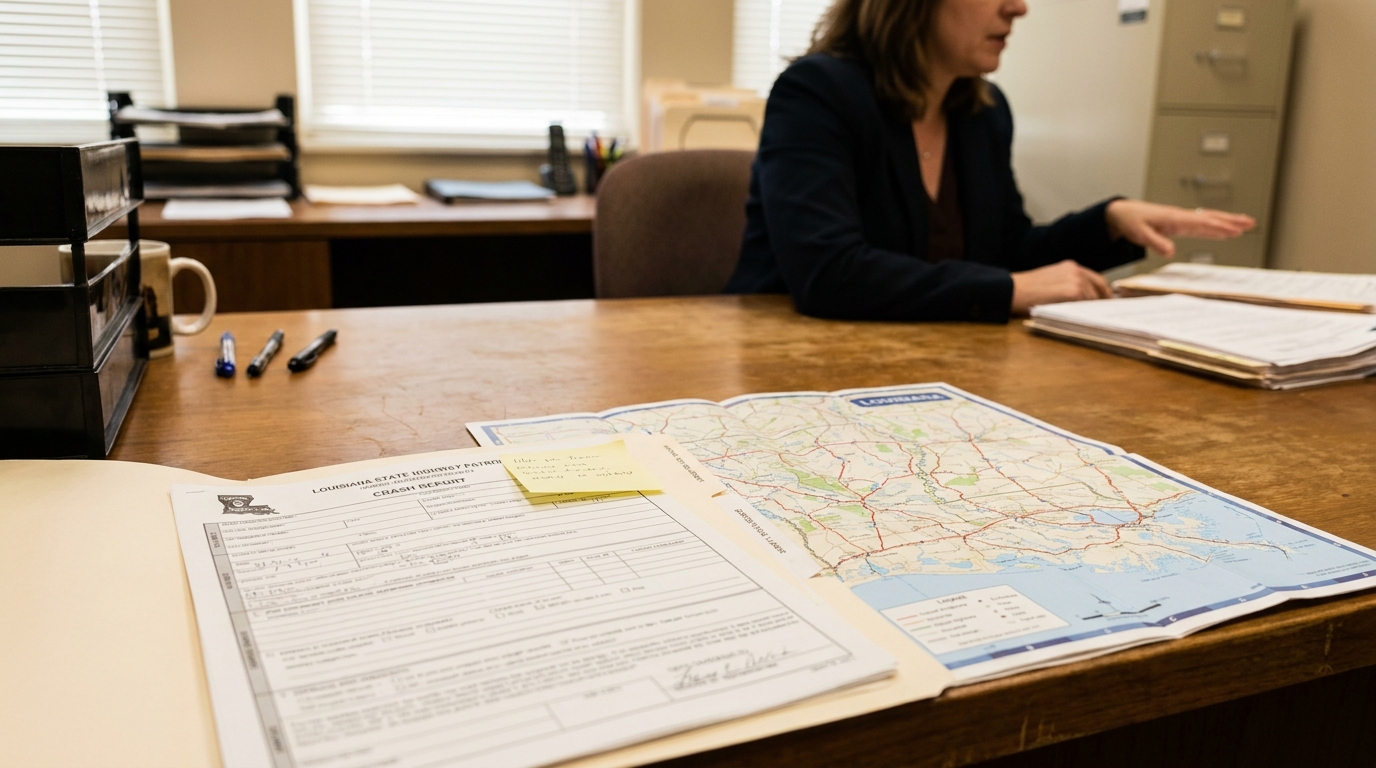
A fatal highway crash in June 2026 involving a Mississippi woman in Louisiana leaves families facing grief and urgent legal questions. For Tupelo, Mississippi readers, the challenge is often the uncertainty that follows. When a Mississippi woman killed in a Louisiana crash leaves behind family, survivors must navigate two states, multiple insurance issues, and time-sensitive steps.
Why This News Matters Beyond One Crash
Out-of-state fatal crashes matter because they intersect public safety and civil accountability. Mississippi had the highest motor vehicle fatality rate in recent IIHS state-by-state reporting, and the highest death rate per 100 million vehicle miles traveled, according to the Insurance Institute for Highway Safety’s state-by-state fatality statistics. Nationally, NHTSA reported 39,345 roadway deaths in 2024 and estimated 36,640 fatalities in 2025.
These numbers provide context for highway negligence severity. The National Safety Council estimated 37,810 motor vehicle deaths in 2025, down 12% from the revised count of 42,789 in 2024, showing fatal crashes still affect tens of thousands of families yearly.
A Wrongful Death Claim Can Become More Complex When the Crash Happens Across State Lines
Cross-state wrongful death claims are often more complex than local collisions. The crash location, deceased’s residence, at-fault driver identity, and available insurance policies all matter. Courts may need to address where lawsuits should be filed and which state’s law controls particular issues.
Civil questions usually begin with duty, negligence, causation, and damages. Families must show that the defendant owed a duty of care to the deceased, that the defendant breached that duty (acted carelessly), that the breach caused the death, and that survivors sustained compensable losses. If the crash involved speeding, distraction, fatigue, impairment, or failure to yield, those facts become central.
The public report is only the starting point
News reports rarely answer every legal question. Initial reports may identify the highway, vehicles, and death, but often omit eyewitnesses, cell phone records, onboard data, surveillance footage, or toxicology results. What appears straightforward can become contested once insurers evaluate liability.
Which state’s law applies may be fact-dependent
Governing law in fatal passenger crash 2026 cases may not be simple. Louisiana law may affect crash-related issues, while Mississippi law may matter for estate administration, available claimants, or procedural issues. Courts analyze these questions carefully, and outcomes turn on details families may not know initially.
A Tupelo Family’s Hypothetical Situation
A Tupelo Mississippi family receives a late-night call that their daughter was killed traveling through Louisiana in June 2026. She may have been a passenger or driving when another vehicle crossed the center line or struck her at highway speed. Within days, insurers could contact the family, request statements, and leave them wondering whether wrongful death claims belong in Mississippi, Louisiana, or both.
This situation is common in regional travel cases. Northeast Mississippi families often have work, medical, or family routes crossing state lines. A Louisiana highway death becomes both emotional crisis and legal puzzle, especially before estate representatives are appointed.
What the family may be dealing with immediately
First problems often precede court filings. Funeral expenses, remains transport, lost income, and unanswered insurance questions hit simultaneously. Meanwhile, key evidence develops through crash reconstruction, witness interviews, vehicle inspections, and electronic data downloads.
Early case review can help identify what records need preservation, which insurers are involved, and whether third parties beyond the driver could bear responsibility. Some fatal wrecks involve liability extending beyond one motorist if vehicle defects, employer trips, or road conditions contributed.
The Mississippi Rules Families Should Know First
Mississippi wrongful death filing questions start with statutes of limitations. Mississippi often applies a three-year period to negligence-based wrongful death claims, though governing deadlines depend on liability source, forum, and statutory exceptions. Readers can see general explanation in Nolo’s discussion of Mississippi personal injury deadlines.
That period should not suggest delay is safe. Courts interpret exceptions narrowly. Families should distinguish between civil filing deadlines and shorter notice requirements if government entities or public roadways become involved. If Louisiana law governs, Louisiana timing rules may need separate analysis.
Comparative fault may still allow recovery
Mississippi follows pure comparative fault, which matters when insurers blame the deceased. Damages may be reduced by claimant’s percentage of fault rather than barred entirely. Defense positions about partial responsibility don’t necessarily end cases, though governing state law on comparative fault needs analysis in out-of-state crashes.
Wrongful death and survival issues are not identical
Wrongful death and survival claims are related but distinct. This affects who recovers certain damages and how estates are handled. For practical overview, review this explanation of wrongful death vs. survival action.
What Evidence Often Matters Most in an Out-of-State Fatal Crash
June 2026 fatal crash cases typically rise or fall on early-gathered evidence. This includes crash reports, photographs, scene measurements, vehicle damage, black-box data, medical records, and witness accounts. In passenger cases, seat position, occupant kinematics, and belt-use findings may matter.
Common evidence categories in these cases
Several forms of proof carry significant weight in litigation and settlement discussions.
- Crash scene evidence such as gouge marks, debris fields, and roadway geometry
- Vehicle data including event data recorder information and module downloads
- Driver conduct evidence such as texting, calls, distraction, or impairment indicators
- Medical and coroner records relevant to causation and damages
- Insurance materials identifying liability, umbrella, commercial, or underinsured coverage
Alcohol-related proof can be difficult to analyze. IIHS reported very low BAC reporting rates for Mississippi in recent fatality reporting, showing why incomplete toxicology reporting complicates safety analysis. In individual cases, controlling evidence comes from actual investigation, not statewide averages.
When Families Start Looking for a Wrongful Death Attorney Mississippi Options Matter
Many families search for wrongful death attorneys after funerals, once practical consequences emerge. That search is about clarity more than conflict. People want to know who may file, what damages exist, whether Louisiana law changes claims, and how to avoid mistakes while evidence is fresh.
Legal review may identify the full scope of recoverable losses. Depending on facts and governing law, damages may include funeral costs, loss of financial support, loss of companionship, and other recognized categories. Families exploring wrongful death attorney Mississippi lawyer resources often seek these basics before litigation decisions.
Common issues that may affect value and timing
Recurring issues tend to shape wrongful death cases:
- Who has legal standing to bring claims or act for estates
- Where suit should be filed if crashes happened outside Mississippi
- Whether comparative fault will be disputed by defense
- How many insurance policies apply and in what order
- Whether settlement discussions should wait until full evidence emerges
How Does This Impact Me?
If my loved one died in Louisiana but lived in Mississippi, can our family still bring a claim?
Yes, claims may still be possible, but the legal path is more complicated. Crash location doesn’t prevent Mississippi families from pursuing civil remedies. Harder questions involve who may sue under governing wrongful death statutes, where actions belong, and which state’s law controls specific dispute parts.
Does this change my deadline to file?
It can affect timeline analysis. Cross-state crashes may involve procedural issues, estate questions, or other deadlines needing closer review. Courts construe exceptions narrowly, so waiting creates risk. Louisiana law may also impose different limitations depending on which claims are asserted.
What if the insurance company says my loved one was partly at fault?
That doesn’t necessarily end cases. Mississippi follows pure comparative fault, so partial fault may reduce rather than eliminate recovery. The issue becomes what evidence shows and whether blame arguments hold up. Because the crash occurred in Louisiana, comparative fault should be evaluated under governing law.
What should our family do first after a fatal highway crash June 2026 event?
First steps are practical and evidence-focused. Preserve documents, avoid broad recorded statements until understanding issues, keep copies of insurance communications, and identify who handles estate matters. Families often benefit from early crash report review, vehicle location, and witness information.
Can a case involve more than one responsible party?
Yes, under certain circumstances. While many cases focus on one negligent driver, some involve additional parties tied to vehicle ownership, employment, maintenance, product condition, or roadway issues. Whether these claims exist depends on facts that may take time to uncover.
What This June 2026 Crash Means for Tupelo Families Moving Forward
A Mississippi woman killed Louisiana crash story is more than a headline for Tupelo families. It reminds that interstate travel can turn tragic collisions into legally complex wrongful death matters quickly. Even with national traffic deaths trending downward in 2025, thousands of families still faced irreversible losses, and Mississippi remained among states most heavily burdened by roadway fatalities.
For grieving families, the central issue is usually the next decision. Cross-state cases may require quick evidence preservation, careful attention to filing deadlines, and clear understanding of how negligence and damages may be proved. Outcomes depend on specific facts, but prompt, informed action can significantly protect a family’s ability to evaluate its rights.
N/A:
- Are all legal claims and statutes legally accurate and nuanced?
- Do all legal claims address exceptions or limitations when applicable?
- Do any legal claims or facts contradict one another?
- Are any legal claims or facts partially correct?
- Could any legal claims or facts be clearer and more concise?