
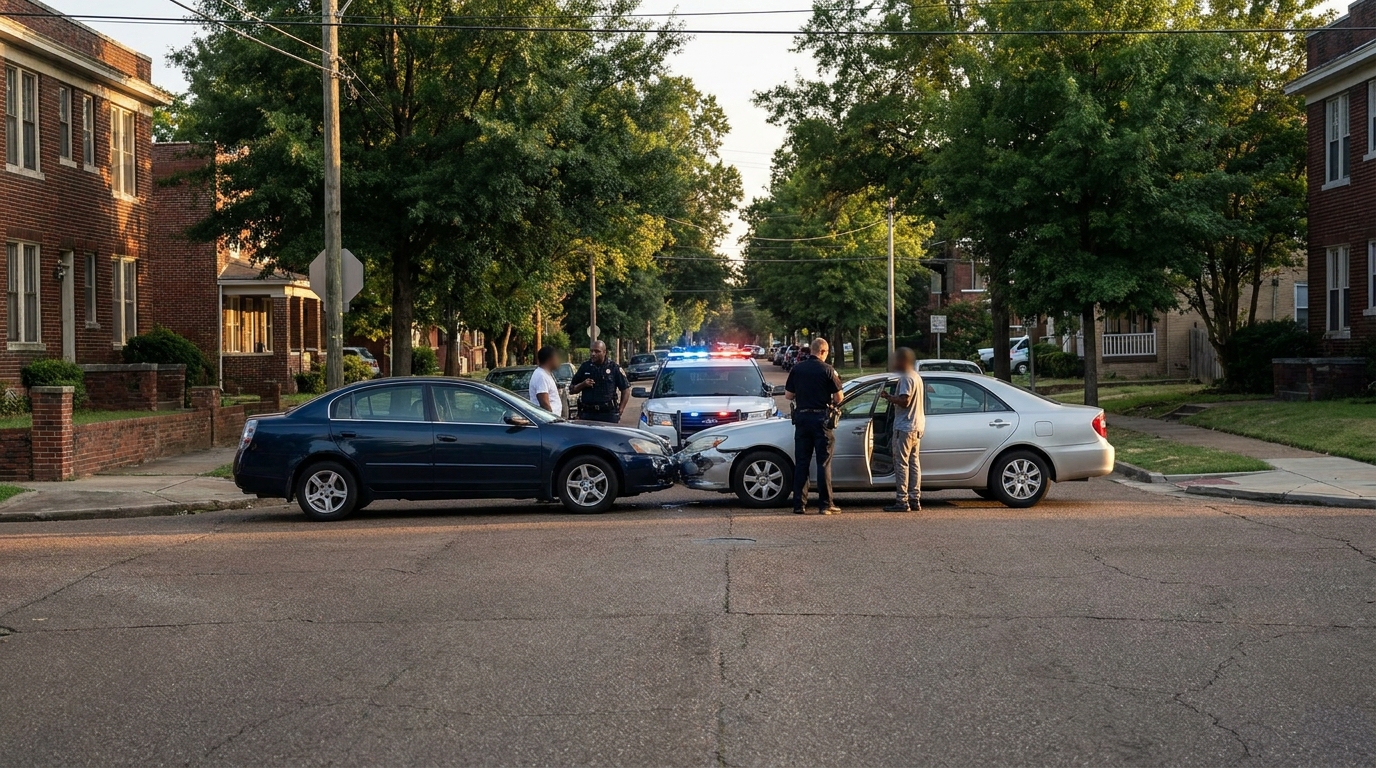
The moments after a Memphis car accident can feel overwhelming, but what happens after a car accident in that critical first day often shapes the entire outcome of an injury claim. Tennessee law imposes specific duties on every driver involved in a collision, from stopping at the scene to exchanging information and rendering aid. At the same time, the evidence you gather, the medical care you seek, and the words you say during these early hours can directly influence whether you recover fair compensation for your injuries. Knowing your rights and responsibilities under Tennessee statutes puts you in a stronger position to protect yourself and your family.
If you were recently hurt in a Memphis car crash, Mama Justice Law Firm is ready to help you understand your next steps. Call (833) 626-2587 or reach out online to discuss your case today.
What Happens After a Car Accident Under Tennessee Law
Tennessee law is clear: every driver involved in a collision must stop immediately. Under Tennessee Code § 55-10-101(a), a driver involved in an accident resulting in injury or death must immediately stop at or as close to the scene as possible and remain there until fulfilling the duties required by § 55-10-103. Similarly, § 55-10-102(a) imposes the same stop-and-remain obligation for accidents involving vehicle damage. Whether the crash involves injuries, fatalities, or only property damage, drivers must stay at the scene until they have exchanged information as required by § 55-10-103.
These duties extend well beyond Memphis highways and intersections. Under Tennessee Code § 55-10-102, the stop-and-remain requirements apply to accidents on the premises of any shopping center, trailer park, apartment complex, or any other location generally frequented by the public. A fender-bender in a Shelby County grocery store parking lot carries the same legal obligations as a wreck on Poplar Avenue.
💡 Pro Tip: Even a low-speed collision in a parking lot triggers the same legal duties as a crash on a busy road. Do not assume you can leave just because damage seems minor.

Your Legal Duty to Stop, Stay, and Share Information
Tennessee Code § 55-10-103(a) spells out exactly what drivers must do after stopping. You are required to provide your name, address, and vehicle registration number to the other party involved. If the other driver requests it, you must also show your driver’s license. These requirements exist to ensure accountability and to give injured parties the information they need to pursue a claim.
Rendering Reasonable Assistance
If anyone at the scene appears injured, you have a legal duty to help. Under § 55-10-103(a), drivers must render reasonable assistance to any injured person, including carrying or arranging transportation for that person to a physician, surgeon, or hospital for treatment if it appears necessary or is requested. This does not mean you need to provide medical care yourself, but you cannot simply ignore someone who is hurt.
💡 Pro Tip: Call 911 immediately if anyone at the scene reports pain, visible injuries, or confusion. A documented emergency response creates a valuable record for any future injury claim.
Penalties for Leaving the Scene
Walking away from a crash scene in Tennessee carries serious criminal consequences. The severity of the penalty depends on the outcome of the accident:
| Accident Outcome | Offense Level | Governing Statute |
|---|---|---|
| Property damage not exceeding $1,500 | Class B Misdemeanor | § 55-10-102(b)(1) |
| Property damage exceeding $1,500 | Class A Misdemeanor | § 55-10-102(b)(2) |
| Injury to any person | Class A Misdemeanor | § 55-10-101(b)(1) |
| Death (known or reasonably should have known) | Class E Felony | § 55-10-101(b)(2)(A) |
These criminal penalties are separate from any civil liability you may face. A hit-and-run charge can also severely damage your credibility if you later need to defend yourself against a comparative negligence argument in a personal injury case.
Documenting the Scene in Those First Hours
Strong evidence gathered at the crash scene can make or break a Memphis injury claim. While Tennessee law focuses on your duties to stop and exchange information, your own interests demand that you go further. Photograph vehicle damage, skid marks, traffic signals, road conditions, and any visible injuries. Collect the names and phone numbers of witnesses before they leave. Write down everything you remember about how the crash happened while details are still fresh.
- Take wide-angle and close-up photos of all vehicles from multiple angles
- Photograph the surrounding area, including street signs and weather conditions
- Save a copy of any police report number or officer badge number
- Record the other driver’s insurance information, as Tennessee Code § 55-10-107(c) requires written accident reports to include the name of the insurer for both the driver and the vehicle owner
💡 Pro Tip: Use your phone’s voice memo feature to record a detailed account of the crash immediately afterward. Memory fades quickly, and a contemporaneous recording can help your attorney build a stronger case.
Why Medical Attention Matters Right Away
Seeking medical care within the first 24 hours protects both your health and your legal rights. Many injuries from a car wreck in Memphis, such as soft tissue damage, concussions, or internal bleeding, do not always produce immediate symptoms. A medical evaluation creates a documented connection between the crash and your injuries. Insurance adjusters frequently argue that gaps in treatment mean injuries were not caused by the accident or were not serious. Getting examined promptly helps counter that tactic.
Follow-Up Care and Records
Keep every receipt, discharge summary, and doctor’s note from day one forward. These records form the foundation of any demand for medical bills, lost wages, and pain and suffering. If your doctor recommends follow-up imaging, physical therapy, or a referral, follow through as soon as possible. Gaps in your treatment timeline give the opposing insurer ammunition to minimize your claim.
For a more detailed breakdown of immediate priorities, review these critical steps after a Memphis crash.
Reporting the Accident to the Tennessee Department of Safety
Tennessee Code § 55-10-107(a)(1) requires a written accident report for certain crashes. If your accident resulted in bodily injury, death, or property damage exceeding $1,500, you must forward a written report to the Tennessee Department of Safety within 20 days. This reporting obligation applies not only on public roads but also on premises of shopping centers, trailer parks, apartment complexes, and other areas frequented by the public, as stated in § 55-10-107(b).
Failing to file this report does not eliminate your right to pursue a civil claim, but it can create complications. The report itself must include insurance policy information, including the name of each party’s insurer. Filing on time demonstrates that you took the accident seriously and acted responsibly, which can support your credibility later.
💡 Pro Tip: Keep a personal copy of everything you submit to the Department of Safety. If there is ever a dispute about whether or when you filed, your own records serve as backup.
How Tennessee’s Comparative Negligence Rule Affects Your Claim
Tennessee follows a modified comparative negligence rule that can reduce or eliminate your recovery. Under this system, courts allocate fault among all parties involved. If you are found to be 50 percent or more at fault for the accident, you are barred from recovering any damages. If your fault is below that threshold, your compensation is reduced by your percentage of responsibility.
Why the First 24 Hours Matter for Fault Determination
Everything you say and do immediately after a Memphis car accident can influence how fault is assigned. Statements made at the scene, recorded by police, or given to insurance adjusters may later be used to argue that you contributed to the crash. Evidence that disappears, such as skid marks washed away by rain or surveillance footage overwritten after a few days, cannot help prove the other driver’s negligence. Acting quickly to preserve evidence and being careful with your words gives your attorney the best possible foundation.
- Avoid apologizing or accepting blame at the scene, even out of politeness
- Do not give a recorded statement to the other driver’s insurance company without first consulting an attorney
- Request that nearby businesses preserve any surveillance footage of the collision
What to Do After a Crash in Memphis: Protecting Your Injury Claim
The car accident aftermath in Tennessee demands quick, deliberate action. Beyond fulfilling your legal duties under the statutes discussed above, you should notify your own insurance company of the accident promptly. Stick to the basic facts and avoid speculating about fault. An experienced Memphis car accident lawyer can handle communications with the at-fault driver’s insurer and help you avoid common pitfalls that reduce the value of Shelby County car accident claims.
💡 Pro Tip: Write down a timeline of everything that happens in the first 24 hours, including phone calls, medical visits, and conversations with police or witnesses. This timeline becomes a valuable reference as your claim progresses.
Frequently Asked Questions
1. Do I have to stop after a minor fender-bender in a Memphis parking lot?
Yes. Tennessee Code § 55-10-102(a) requires drivers to stop and remain at the scene of any accident, and this applies on the premises of shopping centers, apartment complexes, and other locations frequented by the public. The obligation exists regardless of how minor the damage may appear.
2. What information am I legally required to exchange at the scene?
Under § 55-10-103(a), you must provide your name, address, and vehicle registration number. You must also show your driver’s license if the other party requests it. Collecting insurance information is also important, as Tennessee law requires it for written accident reports.
3. How long do I have to file an accident report with the state?
You generally have 20 days. Tennessee Code § 55-10-107(a)(1) requires a written report to the Department of Safety if the accident involved bodily injury, death, or property damage exceeding $1,500.
4. Can I still recover damages if I was partially at fault?
Possibly. Tennessee’s modified comparative negligence rule allows recovery only if your fault is less than 50 percent. Your compensation will be reduced in proportion to your share of fault. The specific facts of your case will determine how fault is allocated.
Taking Control After a Memphis Car Crash
The first 24 hours after a Tennessee auto accident set the stage for everything that follows. By understanding your legal duties to stop, exchange information, and render aid, and by taking proactive steps to document the scene and seek medical care, you position yourself to pursue the compensation you may deserve. Every detail matters, and early action can make a meaningful difference in the strength of your claim.
Mama Justice Law Firm is here to guide Memphis crash victims through this process. Call (833) 626-2587 or contact us today to get started on protecting your rights.