
Autonomous Truck Accident Lawyers
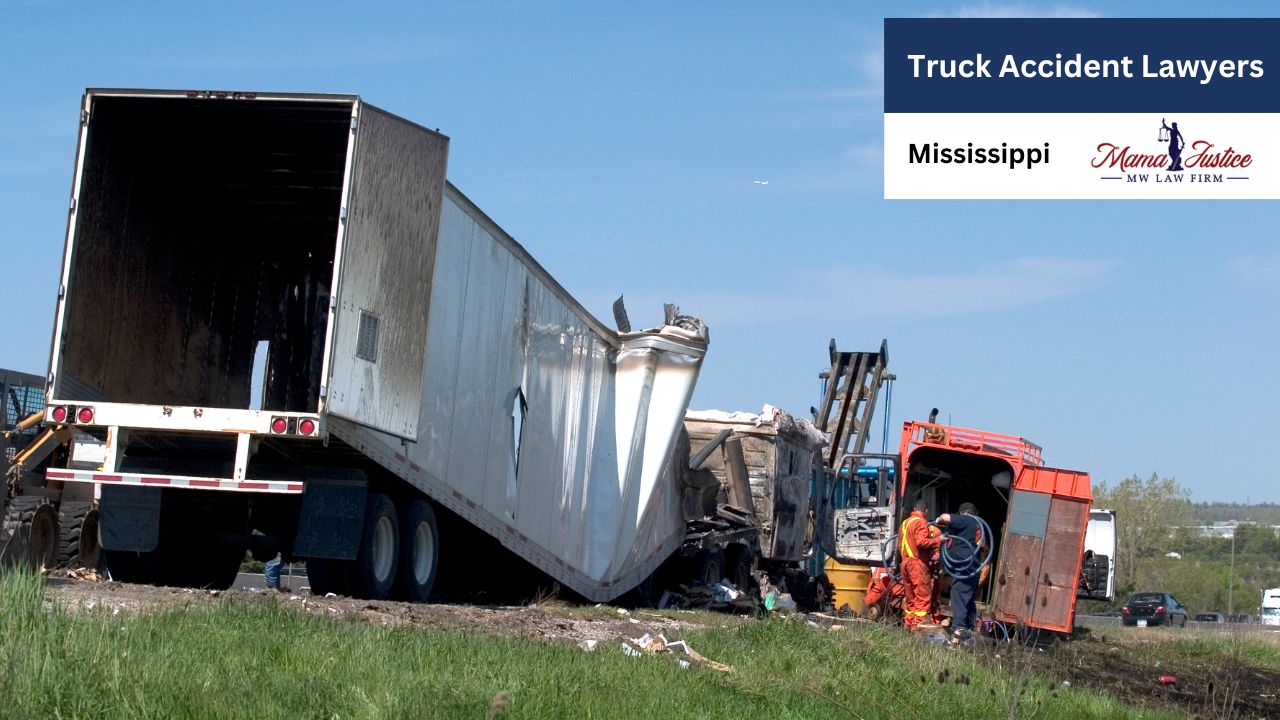
When an 80,000-pound 18-wheeler hits your family car, your whole world stops. But when that massive commercial truck was being driven by a computer instead of a human being, a terrifying situation becomes an absolute nightmare. You aren’t just dealing with a sleepy or distracted truck driver anymore. You are suddenly up against multi-billion-dollar tech giants, massive logistics companies, and corporate defense teams who will do everything in their power to protect their experimental technology.
At Mama Justice, we don’t back down from bullies, no matter how big their bank accounts or how fancy their software is.
As the roads across the Southeastern United States become testing grounds for automated driving systems, our families are the ones bearing the risk. If you or someone you love has been injured by a self-driving truck or an automated commercial vehicle, you need an autonomous vehicle accident lawyer who understands the science, knows the law, and fights like a mother for your family. We serve injury victims across Mississippi, Tennessee, and Alabama, making sure that when Silicon Valley’s technology fails on our Southern highways, they are the ones who pay the price.
You’ve probably seen them on the interstate: commercial trucks traveling incredibly close together, almost like a train without tracks. The trucking and logistics industry is pushing hard for autonomous technology, mostly through a practice called “truck platooning”.
Truck platooning is when two or more massive commercial rigs are linked together by wireless vehicle-to-vehicle communication. This lets them travel just feet apart to reduce wind drag and save on gas money. All three of the states we serve have changed their old “following too closely” laws to allow these massive trucks to tailgate each other legally, relying on electronic braking systems to stop them from crashing.
The companies testing these systems promise they are safe. They promise computers will react faster than humans. But technology fails. Sensors get dirty, software glitches, and connections drop. When a human makes a mistake, it’s negligence. When a machine makes a mistake while hauling tons of freight at 70 miles per hour, it’s a catastrophe.
For decades, car accident lawsuits were about proving which human messed up. Who was speeding? Who was texting? Who ran the red light? But when we are dealing with automated big rigs, the rules of the game completely change. We have to look at how traditional legal ideas like duty of care and negligence fit into a world of algorithmic decisions.
When an Automated Driving System (ADS) is fully engaged and doing the actual driving, the law in our states generally looks at that computer system as the legal “operator” or “driver” of the vehicle.
This is a massive shift. It means we aren’t just filing a standard auto accident claim; we are filing a complex product liability lawsuit. We have to prove that the product—the software, the cameras, or the radar—was dangerously defective.
To win these cases, your self-driving accident lawyer has to get their hands on the truck’s “black box.” Also known as the ADS data logs or the Event Data Recorder, this digital evidence is the single most important piece of the puzzle. The corporate lawyers know this, and they will try to hide it, lock it away, or overwrite it. At Mama Justice, the minute you hire us, we send aggressive legal demands to lock down that data so they can’t destroy the evidence of their machine’s failure.
If you survive a crash with a self-driving commercial vehicle, your adrenaline will be pumping. If you are physically able, you need to protect yourself immediately:
These trucks rely on a massive web of complex technology to “see” the road, including radar, high-definition cameras, and LIDAR (light-based radar). But a computer doesn’t have human common sense. When we dig into the data with our technical experts, we usually find one of these fatal flaws:
When we take these companies to court in places like Tennessee and Alabama, we often use the “reasonable human driver standard”. We look the jury in the eye and ask: Would a normal, attentive human driver have avoided this crash? If a human could have easily stopped, but the multi-million-dollar robot failed to do so, we argue that their product is unreasonably dangerous.
The laws regarding autonomous vehicles are changing incredibly fast. What is legal in Mississippi might get a trucking company heavily fined just across the border in Alabama. You need a law firm that knows exactly how to fight in your specific state.
Mississippi is currently very welcoming to autonomous technology companies. Under the MS FAVE Act of 2023, the state allows Level 4 and Level 5 autonomous vehicles to operate without a human driver.
Tennessee has tied its autonomous vehicle laws directly to the Tennessee Product Liability Act, which gives us a clear path to sue the manufacturers when their machines break down and hurt people.
Alabama allows autonomous testing, requiring vehicles to be able to safely pull over (achieve a “minimal risk condition”) if their systems fail. However, the state’s liability laws are incredibly tough on victims.
You cannot handle a claim against an autonomous vehicle manufacturer on your own. The insurance adjusters will smile, act sweet, and try to trick you into admitting fault so they can deny your claim—especially in states like Alabama and Tennessee.
When you hire Mama Justice, we take the burden off your shoulders. We bring a gritty, aggressive, no-nonsense approach to the legal fight, combined with the Southern hospitality and deep compassion your family needs during a crisis.
Here is what we do the moment you call us:
Smart Legal Strategy: Because the laws are so different between MS, TN, and AL, we look at where the software was made, where the truck was marketed, and where the crash happened to file your lawsuit in the court that gives you the best possible chance to win big.


When the automated system is fully engaged and driving, the system itself is legally considered the “operator”. Therefore, we typically file a product liability lawsuit against the technology manufacturer, the software developer, or the corporate fleet operator who owns the vehicle.
It depends on the state. Mississippi allows trailing trucks in a two-truck platoon to be totally driverless if the state approves the plan. Tennessee requires a human CDL driver in every commercial truck. Alabama recently passed a law (SB 222) banning oversized 18-wheelers from operating without a human onboard.
Platooning is when commercial trucks use wireless signals to travel very close together on the highway to reduce wind resistance. All three states exempt these trucks from the standard 300-foot following distance rule. The danger arises when the wireless connection drops or the electronic brakes fail to react in time.
In Mississippi, yes; their “pure comparative negligence” law lets you recover damages even if you were mostly at fault. In Tennessee, you can recover money as long as you are less than 50% to blame. But in Alabama, if you are found to be even 1% at fault, you are barred from standard negligence recovery, which is why we must use product liability strategies instead.
We use the truck’s Event Data Recorder (the black box) and sensor logs. We work with experts to prove the truck suffered from sensor occlusion (blindness), classification errors (identifying a car as a shadow), or latency (reacting too slowly).
In Mississippi, absolutely not. The MS FAVE Act dictates an “absolute liability rule,” meaning once an injury occurs, the insurer’s liability is fixed and they cannot retroactively cancel the policy.
If a cyberattacker causes a wreck, liability usually falls on the company that designed the truck’s cybersecurity. If they failed to use proper encryption and safety standards to prevent a foreseeable hack, they can be held responsible.
Alabama has a specific “conversion defense” for this. If a third party modifies a standard truck into an autonomous vehicle, the original manufacturer of the truck cannot be held liable for defects caused by that modification. We would sue the company that installed the tech.
The laws surrounding autonomous vehicles are complex and built to protect corporate interests. But at Mama Justice, we only protect families. We believe that if tech companies want to use our highways as their testing labs, they have to pay when their experiments cause harm.
If you are hurting, confused, and facing a mountain of medical bills because of a self-driving car or an automated commercial truck, let us take the wheel. We will treat you with the compassion you deserve, and we will treat the insurance companies with the grit and aggression required to win.
Contact Mama Justice today for a free, no-obligation consultation. We are ready to fight for you in Mississippi, Tennessee, and Alabama.