
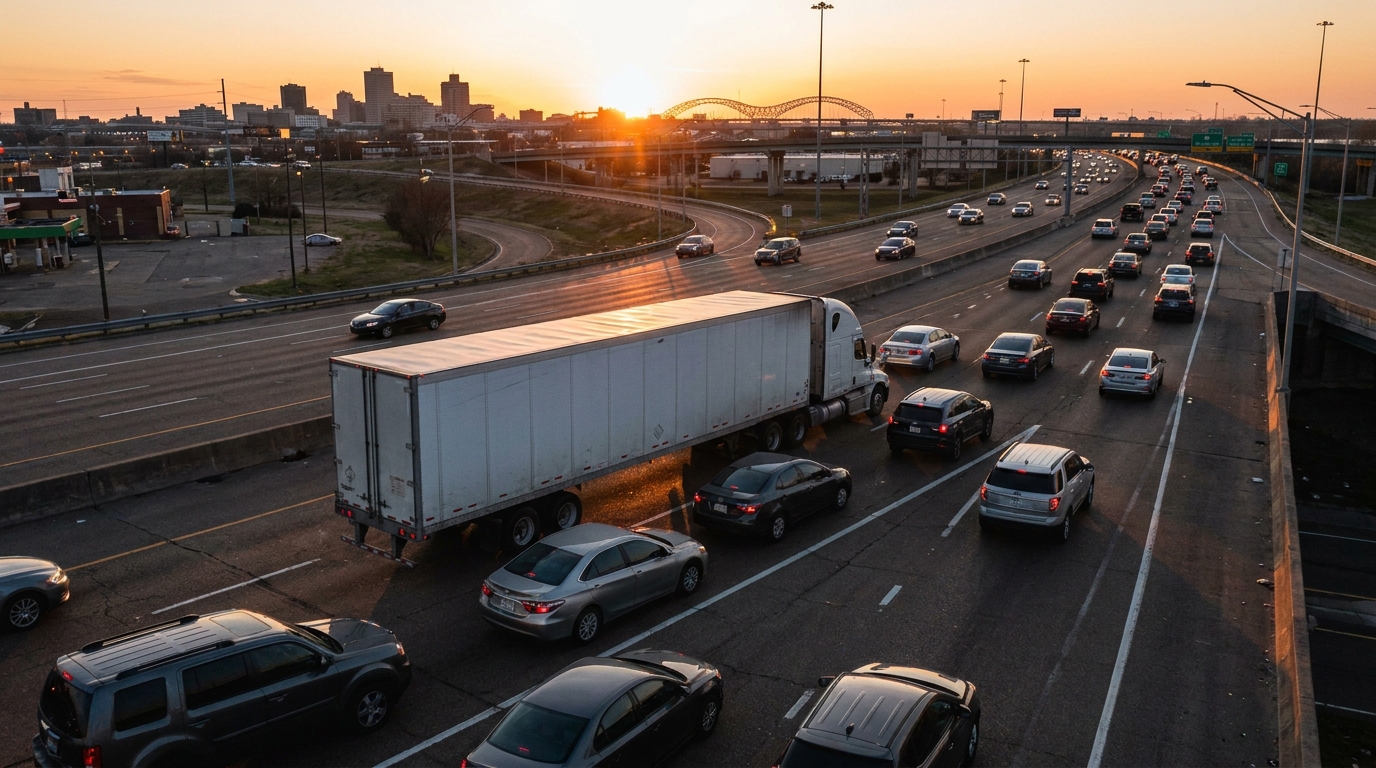
No, a truck driver cannot see cars in all four blind spots at the same time. Large trucks have massive blind spots, called "no-zones," where passenger vehicles completely disappear from a driver’s view. These visibility gaps exist on every side of a commercial vehicle and play a significant role in serious crashes on Memphis roads. Understanding where these blind spots are and how they contribute to collisions is critical for anyone sharing the highway with 18-wheelers along I-40, I-240, or busy freight corridors in Shelby County.
If you or a loved one has been hurt in a blind spot truck wreck in Memphis, Mama Justice Law Firm is here to help. Call (833) 626-2587 or reach out to our team today for a confidential case review.
Why Semi-Truck Blind Spots Are So Dangerous in Memphis
Memphis is one of the largest freight hubs in the country, meaning commercial trucks are constantly present on local highways and streets. The sheer volume of 18-wheelers increases the chances that a passenger vehicle will find itself in a truck’s blind spot. According to the IIHS, 65 percent of deaths in large truck crashes in 2023 were occupants of passenger vehicles, while only 16 percent were truck occupants.
The Federal Motor Carrier Safety Administration acknowledges that large trucks face unique safety challenges including blind spots, wide turns, and long stopping distances. These design-related limitations make it physically impossible for a truck driver to monitor every zone around a 70-foot rig simultaneously. When a truck driver changes lanes, merges, or turns without confirming a blind spot is clear, the results can be catastrophic.
💡 Pro Tip: If you cannot see the truck driver’s face in the truck’s side mirror, the driver most likely cannot see you either. Adjust your position accordingly.
Understanding the 4 No-Zones Around Every Semi-Truck
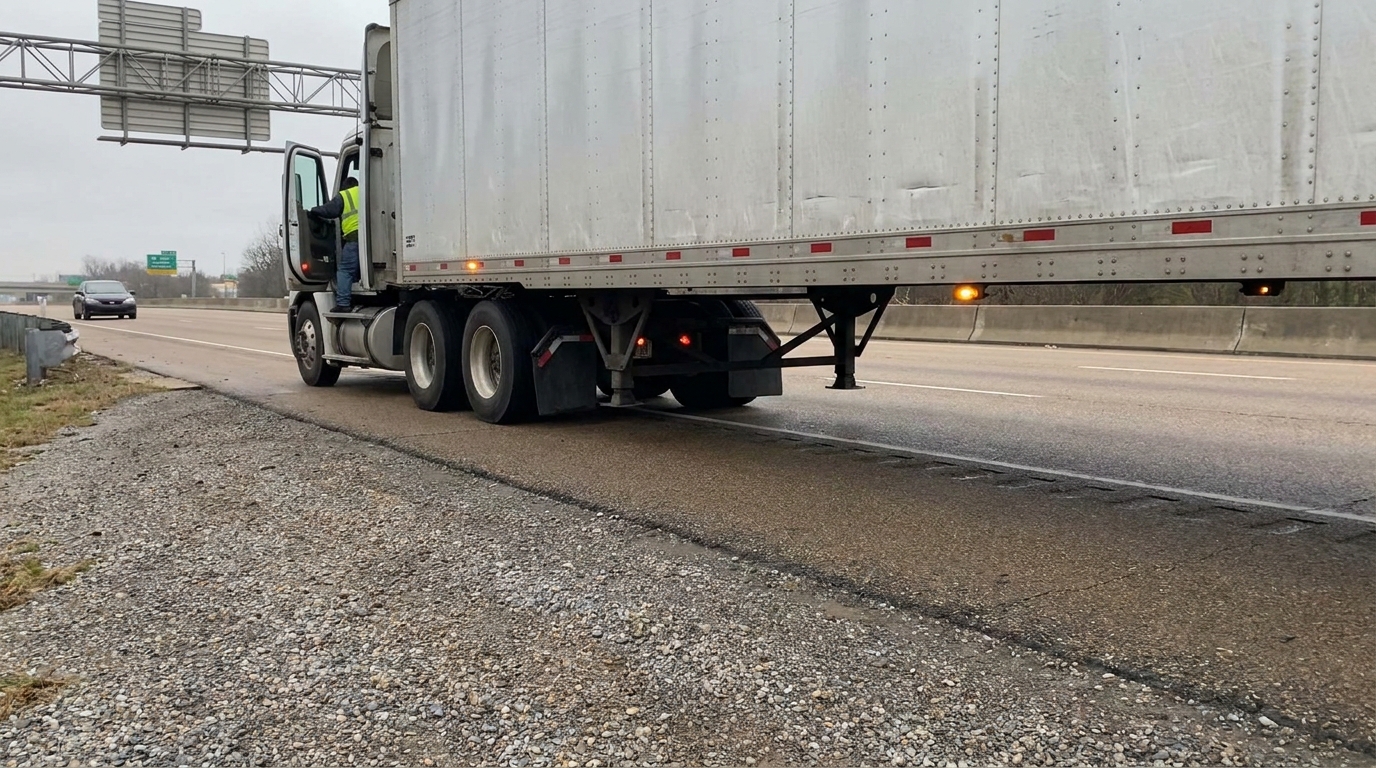
Every commercial truck has four distinct blind spots, each presenting different risks. Learning about the 4 no-zones around semi-trucks can help Memphis drivers make safer decisions. The FMCSA’s "Our Roads, Our Safety" campaign provides graphics illustrating exactly where these zones fall.
Front No-Zone
The front blind spot extends roughly 20 feet ahead of the cab. Because truck drivers sit much higher than passenger vehicle drivers, a car that cuts in too close after passing may be invisible. The FMCSA advises only merging back in front of a truck when the entire truck is visible in your rearview mirror.
Rear No-Zone
The rear blind spot stretches approximately 30 feet behind the trailer. Most semi-trucks have no rearview mirror. Tailgating means you cannot see the road ahead and the driver cannot see you.
Left-Side No-Zone
The left-side blind spot runs along the driver’s side, generally covering one lane for about half the trailer’s length. This zone is smaller than the right side but still conceals vehicles lingering alongside the cab.
Right-Side No-Zone
The right-side blind spot is the largest and most dangerous. It can extend across two full lanes and run the entire length of the trailer. The FMCSA specifically warns against passing trucks from the right lane.
| No-Zone | Approximate Coverage | Key Risk |
|---|---|---|
| Front | ~20 feet ahead of cab | Cut-off after passing; driver cannot see car below sightline |
| Rear | ~30 feet behind trailer | No rearview mirror; tailgating hides vehicle entirely |
| Left Side | One lane, half the trailer length | Lingering alongside cab during lane changes |
| Right Side | Up to two lanes, full trailer length | Largest blind spot; passing on right is especially hazardous |
💡 Pro Tip: Wide right turns are particularly dangerous because a truck driver may swing left before turning right to create turning space. If you are alongside the truck on the right when this happens, you could be squeezed or crushed. Never squeeze between a turning truck and the curb.
How to Avoid Truck Blind Spot Accidents on Memphis Roads
Taking proactive steps around commercial trucks can significantly reduce your risk. The FMCSA offers tips for driving safely around large trucks that every Memphis commuter should know:
- Pass quickly and decisively. Do not cruise alongside a semi-truck. Move through the left-side blind spot at a steady speed and get fully ahead of or behind the truck.
- Increase your following distance. Large trucks need significantly more stopping distance than passenger vehicles. Staying well back gives you reaction time and keeps you visible.
- Avoid the right side when possible. The right no-zone is the biggest blind spot. If you must pass on the right, do so only briefly and with extra caution.
- Use your signals early. Give the truck driver advance warning so they can adjust.
- Stay visible after merging. Only merge in front of a truck once you can see the entire cab and trailer in your rearview mirror.
💡 Pro Tip: During heavy freight traffic hours on Memphis interstates, plan lane changes early. Avoid weaving between semi-trucks, as each lane change puts you through at least one blind spot zone.
When Truck Driver Visibility Failures Lead to Liability in Tennessee
A truck driver’s failure to check blind spots before changing lanes, turning, or merging can constitute negligence under Tennessee law. When a commercial driver fails to take reasonable steps to verify that a lane is clear, and that failure causes a crash, the injured party may have grounds to pursue a personal injury claim.
Tennessee’s Assured Clear Distance Rule and Unexpected Hazards
Tennessee courts have addressed how visibility constraints affect fault determinations. In Fontaine v. Mason Dixon Freight Lines, 357 S.W.2d 631, the Tennessee Court of Appeals examined a scenario where a large truck stopped on the wrong side of a two-lane road just below a sharp curve. The approaching driver could not see the truck until she was within approximately 143 feet because of the curve and dense vegetation. The court recognized that under Tennessee’s modified assured clear distance rule, a driver’s failure to stop in time does not automatically constitute negligence when encountering a hazard they had no reason to expect.
The court noted that a motorist generally has a right to assume their path will not be blocked by illegal stopping or parking, particularly near a sharp curve. This statutory analysis from Tennessee case law illustrates how roadway geometry and obstructions can limit reaction time.
💡 Pro Tip: If you have been in a commercial truck accident, preserving evidence quickly is essential. Electronic logging device data, dashcam footage, and driver inspection reports can disappear within days. Request that your attorney send a spoliation letter to the trucking company immediately.
What to Do After a Truck Blind Spot Accident in Memphis TN
The steps you take immediately after a collision can directly affect your injury claim’s strength. Tennessee’s statute of limitations for personal injury is generally one year from the date of injury under T.C.A. § 28-3-104.
Document Everything at the Scene
If physically able, gather as much evidence as possible. Photograph vehicle positions, skid marks, traffic signals, and visible damage. Note the truck’s DOT number, carrier name, and license plate. Get witness contact information.
Seek Medical Attention Promptly
Get a medical evaluation on record even if injuries seem minor. Delayed symptoms are common in truck crashes, and gaps in medical documentation can be used against you during negotiations or at trial.
💡 Pro Tip: Keep a written log of symptoms, medical visits, and how injuries affect daily activities. This record can become valuable evidence when calculating non-economic damages.
Frequently Asked Questions
1. Can a truck driver be held liable for a blind spot accident in Memphis?
Yes, in many cases. If a truck driver fails to check mirrors, use proper signaling, or take reasonable precautions before a lane change or turn, that conduct may constitute negligence. Liability can also extend to the motor carrier under theories of vicarious liability or negligent hiring.
2. How do I know if I was in a truck’s blind spot during the crash?
Crash reconstruction and physical evidence can establish vehicle positioning. Skid marks, point-of-impact damage, dashcam or surveillance footage, and witness testimony help determine whether your vehicle was in a no-zone at the time of collision.
3. Does Tennessee’s comparative fault rule affect my truck accident claim?
It can. Tennessee follows a modified comparative fault system under T.C.A. § 29-11-103. If you are found less than 50 percent at fault, you may still recover damages, but your award will be reduced by your percentage of fault. If you are 50 percent or more at fault, you are barred from recovery.
4. What evidence is most important in a semi-truck injury claim in Memphis?
Electronic and physical evidence from the truck itself is often most critical. ELD records, driver logs, pre-trip inspection reports, maintenance records, and event data recorder data can reveal hours-of-service violations, mechanical failures, or distracted driving patterns.
5. How long do I have to file a truck accident lawsuit in Tennessee?
Tennessee generally imposes a one-year statute of limitations for personal injury claims under T.C.A. § 28-3-104. Certain narrow exceptions may apply, but courts interpret these strictly. Consult an attorney as soon as possible to ensure critical deadlines are not missed.
Protecting Yourself on Memphis Roads Starts With Awareness
Truck blind spots are a well-documented safety hazard that contributes to serious injuries and fatalities every year. While Memphis drivers can take steps to reduce exposure to no-zones, the responsibility to operate a commercial vehicle safely rests on the truck driver and carrier. When that duty is breached and someone gets hurt, Tennessee law provides a path toward accountability and fair compensation.
If a truck blind spot accident has turned your life upside down, the team at Mama Justice Law Firm is ready to fight for the compensation you deserve. Call (833) 626-2587 or contact us now to discuss your Memphis semi-truck injury claim.