
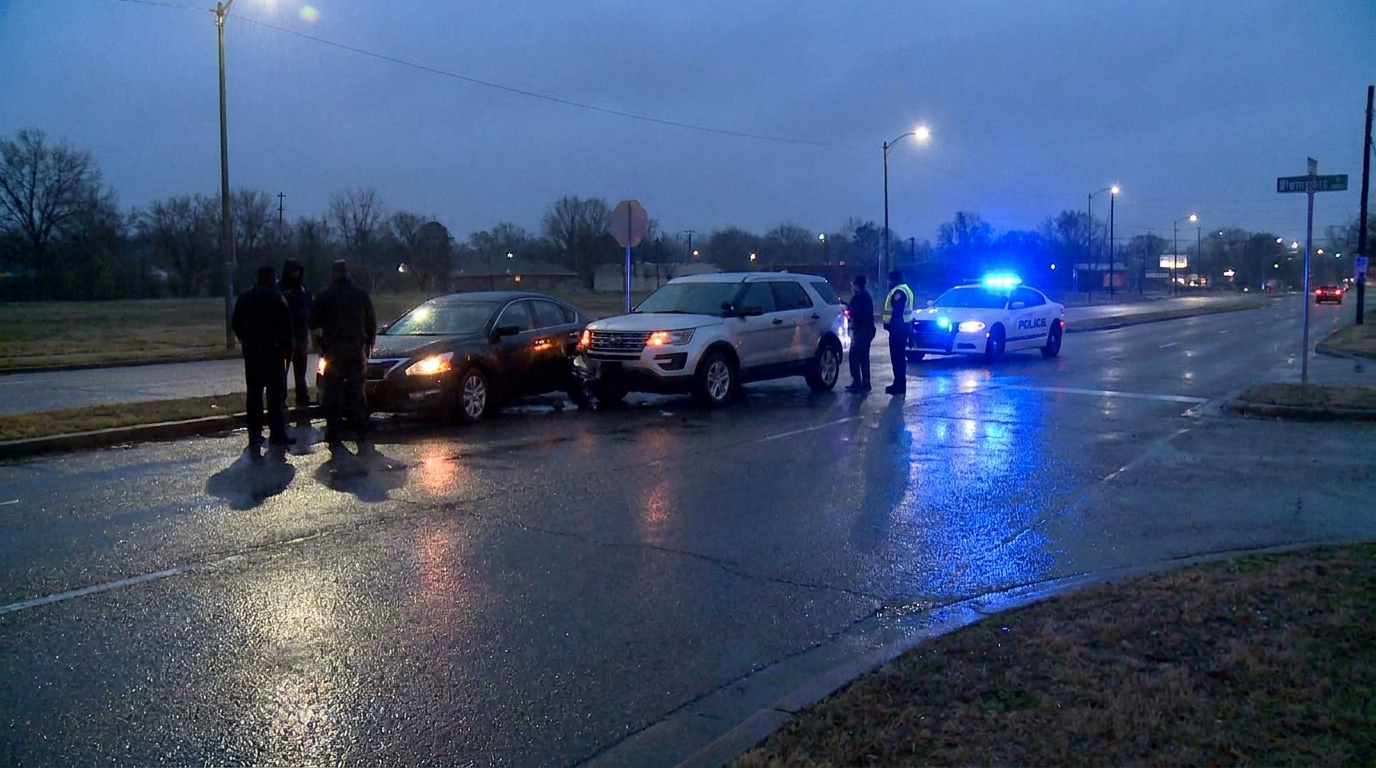
If you were injured in a Memphis car accident and the other driver’s insurance company says you share some blame, you need to understand Tennessee’s modified comparative fault system. Your percentage of fault directly reduces your compensation, and crossing a critical threshold eliminates your recovery entirely. Tennessee uses a modified comparative negligence model with a 50 percent bar, meaning you must be less at fault than the defendant to recover damages. Understanding how these rules apply to your Memphis car crash claim can make the difference between fair compensation and walking away with nothing.
If you have questions about how fault may affect your case, Mama Justice Law Firm is here to help Memphis injury victims navigate these complex rules. Call (833) 626-2587 or reach out to our team today to discuss your situation.
How Modified Comparative Fault Works in Tennessee
Tennessee follows a “modified comparative negligence” system, governed by a 50 percent bar rule. A jury or judge assigns a percentage of fault to each party involved in the collision. If you are found to bear less than 50 percent of the total fault, you may still recover damages. However, your award is reduced by your percentage of responsibility. For example, if you are 49 percent at fault, you can recover 51 percent of your total damages. At 50 percent or more fault, you recover nothing.
This system differs significantly from rules in other states. Some jurisdictions follow pure comparative negligence, where a plaintiff can recover even at 99 percent fault. Others apply contributory negligence, where any fault bars recovery entirely. Over 30 states use some form of modified comparative negligence, placing Tennessee in the majority approach nationwide.
💡 Pro Tip: Insurance adjusters frequently try to shift blame onto injured drivers during recorded statements. Before providing any statement, consider how your words could inflate your percentage of fault and reduce your compensation.

The 50 Percent Bar: Where Your Memphis Car Accident Claim Stands or Falls
The 50 percent bar is the single most important number in any fault-based car accident in Memphis. It acts as a bright line. On one side, you recover reduced damages. On the other, you recover nothing. Courts do not round or give the benefit of the doubt at the threshold. The Tennessee Supreme Court established in McIntyre v. Balentine that a plaintiff may recover only if their negligence remains less than the defendant’s negligence.
To illustrate how dramatically this rule affects outcomes, consider the following table:
|
Your Fault Percentage |
Defendant’s Fault |
$100,000 in Damages |
Recovery |
|---|---|---|---|
|
20% |
80% |
$100,000 |
$80,000 |
|
40% |
60% |
$100,000 |
$60,000 |
|
49% |
51% |
$100,000 |
$51,000 |
|
50% |
50% |
$100,000 |
$0 |
|
60% |
40% |
$100,000 |
$0 |
This threshold makes factual investigation critically important. Every piece of evidence, from traffic camera footage to witness testimony, can shift fault percentages and determine whether you cross the 50 percent bar.
💡 Pro Tip: Preserve all evidence from the accident scene as quickly as possible. Photographs of vehicle damage, skid marks, traffic signals, and road conditions can directly influence fault allocation in your case.
Proving Negligence: The Four Elements Every Memphis Auto Accident Attorney Must Establish
Before comparative fault percentages even come into play, you must first prove the other driver was negligent. Tennessee law requires establishing four key elements:
-
Duty: The other driver owed you a duty of care on the road (all drivers share this obligation).
-
Breach: The other driver violated that duty through careless or reckless behavior, such as running a red light or texting while driving.
-
Causation: The breach of duty directly caused or contributed to the collision and your injuries.
-
Damages: You suffered actual, compensable harm, including medical bills, lost wages, pain, and suffering.
Failing to establish even one element can defeat your claim regardless of fault. Gathering medical records, police reports, and witness accounts early strengthens your ability to prove each element.
💡 Pro Tip: Seek medical attention immediately after a collision, even if you feel fine. Delayed symptoms are common, and gaps in treatment records give insurance companies ammunition to argue your injuries are unrelated to the crash.
How Tennessee Code § 20-1-119 Protects Plaintiffs When New Parties Are Identified
One of the most powerful procedural tools available to Memphis car accident victims is Tennessee Code Annotated § 20-1-119. This statute addresses a common defense tactic: blaming someone who is not part of the lawsuit. Under Tenn. Code Ann. § 20-1-119(a), if a defendant files an answer alleging that a non-party caused or contributed to your injury, you have 90 days to amend your complaint and add that person as a defendant, even if the statute of limitations has otherwise expired.
This protection applies when three conditions are met under the framework outlined in Scales v. H.G. Hill Realty Co., LLC: the original defendant was named within the statute of limitations, that defendant alleges a non-party caused or contributed to the injury, and the plaintiff’s claims against the newly identified person would otherwise be time-barred. Under § 20-1-119(b), a cause of action brought within the 90-day window is not barred by any statute of limitations.
The statute was amended by Public Chapter 294, effective July 1, 2023, expanding its provisions to include uninsured motor vehicle cases. Additionally, under § 20-1-119(g), these comparative fault joinder rules apply to suits involving governmental entities, ensuring that government parties cannot avoid being added to a lawsuit through procedural technicalities.
💡 Pro Tip: If the defense blames a non-party for your injuries, act quickly. The 90-day deadline under Tenn. Code Ann. § 20-1-119 is strict, and missing it could leave a potentially liable party outside your lawsuit permanently.
Bringing a Previously Dismissed Party Back Into the Case
Tennessee courts have interpreted § 20-1-119 to allow plaintiffs to bring a previously dismissed party back into a lawsuit. In Sands v. Williard (W2024-00772-COA-R9-CV, Jan. 24, 2025), the court held that the plaintiff could add a city as a defendant within 90 days of a new comparative fault allegation in an amended answer, even though the city had formerly been part of the suit. This ruling reinforces the statute’s purpose of ensuring all potentially responsible parties are before the court.
The Noneconomic Damages Cap in Tennessee
Even when you successfully prove your case and clear the 50 percent bar, Tennessee law places a ceiling on certain types of recovery. Under Tennessee Code Annotated § 29-39-102, noneconomic damages are capped at $750,000 per injured plaintiff, including any derivative claims such as a spouse’s loss of consortium. However, the cap increases to $1,000,000 in cases involving catastrophic injuries such as paraplegia, quadriplegia, or severe burns. Additionally, the cap does not apply when the defendant acted with specific intent to cause serious injury or was under the influence of alcohol or drugs.
What a Memphis Car Accident Lawyer Can Do to Protect Your Claim
Navigating comparative fault rules without legal guidance puts your recovery at serious risk. A Memphis car accident lawyer can investigate the collision, gather evidence to minimize your assigned fault percentage, and handle communications with insurance adjusters who may try to shift blame onto you. Tennessee accident liability determinations often hinge on the quality of evidence presented.
Your attorney can also monitor for comparative fault allegations that trigger the 90-day joinder window under Tenn. Code Ann. § 20-1-119. Missing critical procedural deadlines can permanently limit your options, making experienced legal counsel particularly valuable in multi-party or complex collision cases.
💡 Pro Tip: Keep a detailed journal of your symptoms, medical visits, and how the injury affects your daily life. This documentation supports both your causation argument and your claim for noneconomic damages.
How Insurance Companies Use Comparative Fault Against You
Insurance adjusters in Memphis routinely use Tennessee’s comparative fault rules as leverage to reduce or deny claims. Their goal is to push your fault percentage as close to 50 percent as possible. They may point to minor traffic violations, question your speed, or argue you failed to take evasive action. Every percentage point of fault they can attribute to you reduces what they owe.
Understanding these tactics empowers you to protect yourself. Avoid admitting fault at the scene, limit conversations with the other driver’s insurer, and let your legal team handle negotiations. You can learn more about how Tennessee’s modified comparative fault impacts your claim to better prepare for what lies ahead.
Frequently Asked Questions
1. Can I still recover compensation if I was partially at fault for my Memphis car accident?
Yes, but only if your fault is less than 50 percent. Under Tennessee’s modified comparative negligence system, your damages are reduced by your percentage of fault. If you are 30 percent responsible, you may recover 70 percent of your total damages. At 50 percent or above, you recover nothing.
2. What happens if the defense blames someone not involved in my lawsuit?
Tennessee Code Annotated § 20-1-119 gives you 90 days to add that person as a defendant. This right applies even if the statute of limitations has expired, provided the original defendant was sued in time and the newly identified party’s fault was raised in an answer.
3. Is there a cap on how much I can recover for pain and suffering in Tennessee?
Tennessee caps noneconomic damages at $750,000 per injured plaintiff under Tenn. Code Ann. § 29-39-102, including derivative claims. This cap increases to $1,000,000 for catastrophic injuries and does not apply when the defendant acted with specific intent to cause serious harm or was impaired by alcohol or drugs.
4. How do I prove the other driver was at fault in a Memphis car wreck?
You must establish four elements: duty, breach, causation, and damages. This generally requires evidence such as the police report, medical records, witness statements, and physical evidence from the scene.
5. Does comparative fault apply to claims against government entities in Tennessee?
Yes. Under Tenn. Code Ann. § 20-1-119(g), the comparative fault joinder rules apply to suits involving governmental entities, ensuring that government parties can be added as defendants under the same 90-day procedure.
Protecting Your Right to Fair Compensation After a Memphis Car Accident
Tennessee’s modified comparative fault system creates both opportunities and risks for injured drivers, passengers, and pedestrians in Memphis. Your percentage of fault directly determines whether you recover full, partial, or zero compensation. Understanding the 50 percent bar, preserving evidence, and acting within strict procedural deadlines under Tenn. Code Ann. § 20-1-119 are all essential steps in protecting your claim.
If you or a loved one suffered injuries in a car accident in Memphis, Mama Justice Law Firm is ready to fight for the compensation you deserve. Call (833) 626-2587 or contact us now to schedule a consultation and learn how we can help with your case.