

A new 2026 Congressional Research Service report has put fresh attention on a legal issue that can matter significantly after a devastating semi-truck crash: whether an injured person may pursue a negligent-selection claim against a freight broker, not just the driver or motor carrier. For people in Memphis, Tennessee, where major freight traffic runs through corridors like I-40, this affects how quickly evidence should be preserved, how broadly liability should be investigated, and what to do after an 18 wheeler accident when the trucking company’s insurer starts narrowing the story early.
Why this 2026 development matters in Tennessee truck cases
Truck-crash cases often involve more than one potentially responsible party. In a routine passenger-car collision, the focus may stay on the two drivers. In a serious semi-truck case, however, the factual picture can expand to include the truck driver, the motor carrier, the maintenance chain, the cargo side, and sometimes the broker that helped place the load.
The recent CRS legal analysis is worth watching. Published on February 27, 2026, it examines whether federal law may preempt state-law negligent-selection claims against freight brokers. For injured people, the practical takeaway is that a thorough investigation should not assume the carrier and driver are the only defendants from day one.
Tennessee law already gives accident victims important baseline duties and deadlines. Under Tennessee Code § 55-10-102, a driver involved in an accident must stop at or near the scene and remain there. The statute applies broadly to accidents on highways and publicly frequented premises, requiring stops without obstructing traffic more than necessary, a rule especially important on busy freight routes and interstate shoulders in and around Memphis. See the text of Tennessee’s accident-stop law.
A wider liability map can change the first week after a crash
When the legal field widens, the first week after the collision becomes critical. Electronic logging device data, dispatch communications, load tenders, maintenance histories, inspection records, and broker-carrier communications can all become relevant. Some evidence is digital, some controlled by corporate entities, and some may not be preserved unless someone acts quickly.
That broader lens fits the reality of Tennessee trucking litigation. A 2025 Tennessee Court of Appeals decision, Sandi Dawn Cunningham et al. v. Bryan Truck Line, Inc. et al., shows claims against commercial trucking operators move through Tennessee courts and can turn on detailed negligence questions tied to tractor-trailer operations. These cases are fact-intensive, and early assumptions about fault can be incomplete. A reader who wants a broader overview of Memphis truck accident claims should understand the legal analysis usually goes well beyond a basic wreck report.
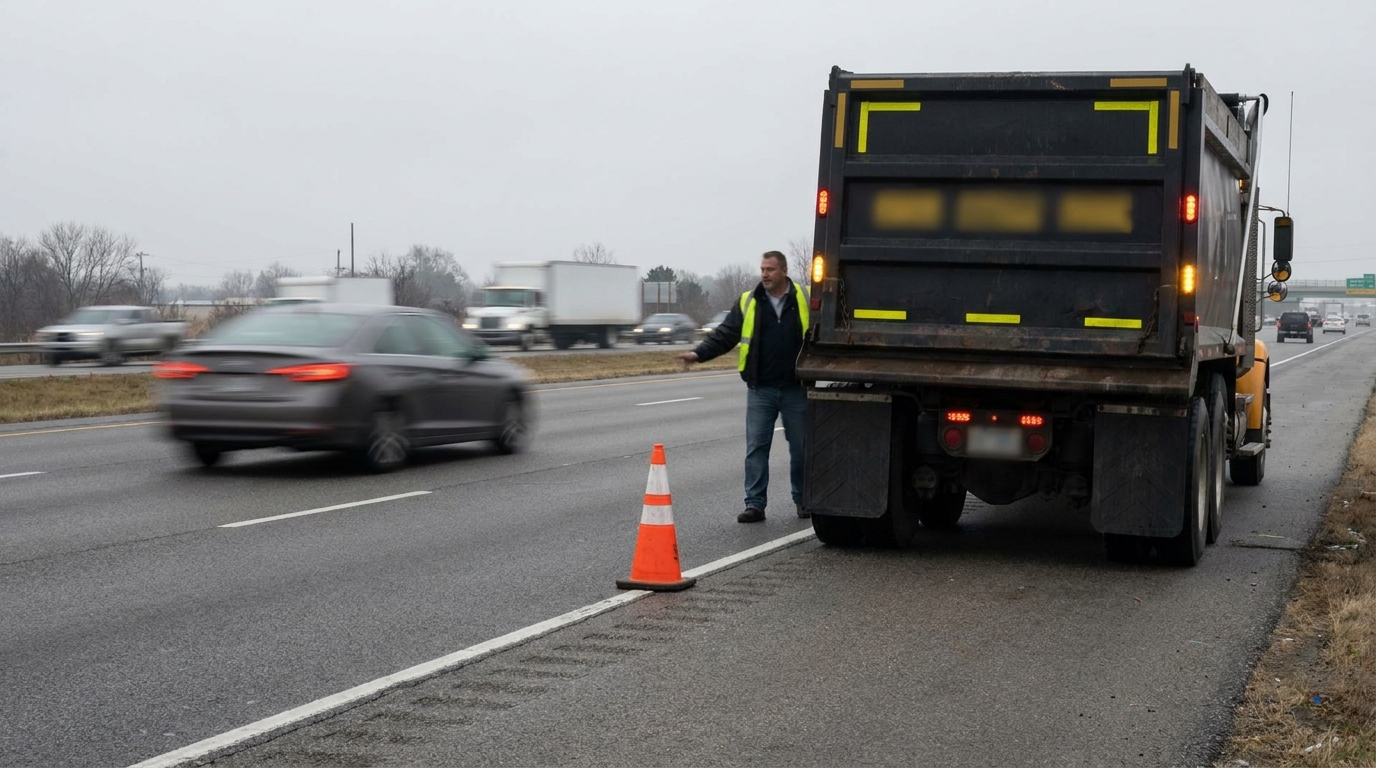
What to do after an 18 wheeler accident when liability may involve more than the truck driver
If you are trying to figure out what to do after an 18 wheeler accident, the answer starts with safety, documentation, and speed. Those first steps matter in any crash but matter even more in a commercial-truck case because records can be dispersed across multiple companies and systems.
Immediate steps at the scene and in the first 48 hours
Start with medical care and scene safety. If physically able, call 911, accept emergency evaluation, and follow medical advice. Tennessee law requires drivers involved in accidents to stop and remain at or near the scene, and information-exchange requirements apply even in property-damage cases.
Then document what you can without putting yourself at risk. If conditions allow, gather names, company information on the truck, trailer numbers, USDOT markings, photographs of vehicle positions, skid marks, debris, cargo issues, road conditions, and visible injuries. If witnesses are present, get their contact information before they leave.
The next step is to preserve evidence before it disappears into separate corporate channels. In a semi-truck case, that can include:
- Driver logs and ELD data
- Dash camera or onboard video
- Dispatch and load-assignment records
- Inspection, repair, and maintenance files
- Drug and alcohol testing records when applicable
- Broker-carrier communications
- Bills of lading and cargo-loading records
Why insurance context still matters in Tennessee
Tennessee is an at-fault system, so the party who caused the crash is generally financially responsible for the resulting damage. The state’s financial-responsibility law requires liability coverage, with minimum limits of $25,000 per person, $50,000 per accident for bodily injury, and $25,000 for property damage. Those are basic passenger-vehicle minimums, not a measure of what a catastrophic truck case is worth, and not a substitute for investigating all available coverage sources.
That insurance framework matters because Tennessee does not require every optional coverage that some assume is automatic. If an injured person lacks certain optional protections on their own policy, recovery may depend heavily on the at-fault side’s available insurance and on identifying all viable defendants. In a serious semi-truck crash, lawyers often examine not only the driver and motor carrier, but also other entities involved in the shipment chain.
A Memphis hypothetical that shows why this report matters
Imagine a Memphis family driving home on I-40 after dark when traffic compresses near a construction zone and a loaded tractor-trailer fails to slow in time. The impact causes catastrophic injuries to one passenger and leaves another family member with months of lost work, surgery, and rehabilitation ahead. Within days, the family hears one story from the carrier’s insurer, another from the police report, and yet another from news coverage.
Now add one more fact: the load was arranged through a freight broker, and questions begin to surface about how the carrier was selected. Was the carrier properly vetted? Were there prior safety concerns? Did anyone ignore warning signs? The family may not know the answers in the first week, but the 2026 CRS report highlights why those questions can matter and why an investigation should not stop with the driver’s version.
That hypothetical is not unusual in structure. Memphis sits in a major freight corridor, and the concentration of truck traffic increases the chance that a serious crash will involve layered contracts, multiple insurers, and a fast-moving effort to control evidence. Readers following local transportation risk may also want to review this discussion of I-40 truck collisions as background on why interstate truck wrecks in West Tennessee demand careful fact development.
Tennessee deadlines, court scrutiny, and practical caution
One of the most important issues after a truck wreck is time. Tennessee truck-accident injury claims are often discussed in relation to a one-year filing deadline, and that short timeline is why injured people should not wait for a final insurer position before learning where they stand. If a government entity may be involved, separate notice rules or administrative requirements can also arise.
Deadline exceptions are limited, not routine
Any discussion of tolling or delayed-discovery issues needs caution. In limited circumstances, certain facts may affect when a deadline begins or whether a claim can proceed, but courts interpret exceptions narrowly. Nothing about a possible exception should be treated as automatic, especially where multiple entities and overlapping deadlines may be in play.
Tennessee courts still require proof, not assumptions
Recent case law reinforces that truck cases are won or lost on evidence, not headlines. The 2025 Cunningham opinion arose from a fatal crash involving a tractor-trailer parked on the interstate shoulder after mechanical failure, and the appellate decision underscores how detailed Tennessee negligence analysis can become. For victims and families, that is a reminder that what to do after an 18 wheeler accident includes protecting the evidentiary record early, not just reporting the crash and waiting.
How Does This Impact Me?
Does this new 2026 report mean I can sue a freight broker in my case?
Not necessarily, but it means the issue may deserve attention. The CRS report highlights an active legal question about federal preemption and negligent-selection claims against brokers. Whether such a claim exists in your situation depends on the facts, the entities involved, the available evidence, and how applicable law is interpreted.
Does this change my deadline to file a Tennessee truck-accident lawsuit?
No recent report automatically changes your deadline. Tennessee truck-injury claims are often associated with a one-year filing period, but case-specific facts can matter, and government-related claims may involve different notice requirements or administrative deadlines. Because courts construe exceptions narrowly, it is risky to assume extra time exists unless a lawyer has confirmed it.
What should I do after an 18 wheeler accident if the trucking insurer contacts me quickly?
Be careful, even if the call sounds routine. You may need medical documentation, crash evidence, and a clearer understanding of all potentially liable parties before making broad recorded statements or accepting a quick settlement discussion. In many cases, the strongest immediate move is to preserve documents and learn what evidence exists before positions harden.
What if the truck driver says the crash was unavoidable?
That statement may be disputed by electronic and corporate records. Brake history, speed data, dispatch timing, onboard systems, inspection records, roadway conditions, and witness testimony can all change the picture. In truck cases, early explanations are sometimes incomplete because the full operational record has not yet been gathered.
If I lost a loved one in a Memphis semi-truck crash, does this report affect wrongful-death cases too?
It can affect the investigation, though it does not determine the outcome by itself. A wrongful-death claim may still require looking beyond the driver to identify every entity whose conduct contributed to the collision. The CRS report matters because it reminds families and counsel to examine broker involvement where the shipment chain suggests that issue may be present.
Why this news should push injured Tennesseans toward faster evidence preservation
The biggest practical lesson from this 2026 report is about scope. Truck-crash victims in Memphis often need an investigation that is broader, earlier, and more technically informed than what follows an ordinary car wreck.
That is especially true where injuries are severe and financial stakes are high. Medical bills, lost income, long-term impairment, and wrongful-death damages can all depend on identifying every liable party and every available insurance layer. Because each case depends on its specific facts, no article can tell you exactly what claims exist in your situation, but the legal trend is clear enough to justify prompt review when a commercial truck is involved.
If you need more information about what to do after an 18 wheeler accident or whether a recent legal development could affect your situation in Memphis, Mama Justice Law Firm is available as a resource. You can call (833) 626-2587 or contact us today to ask questions about the next steps after a semi-truck collision.