
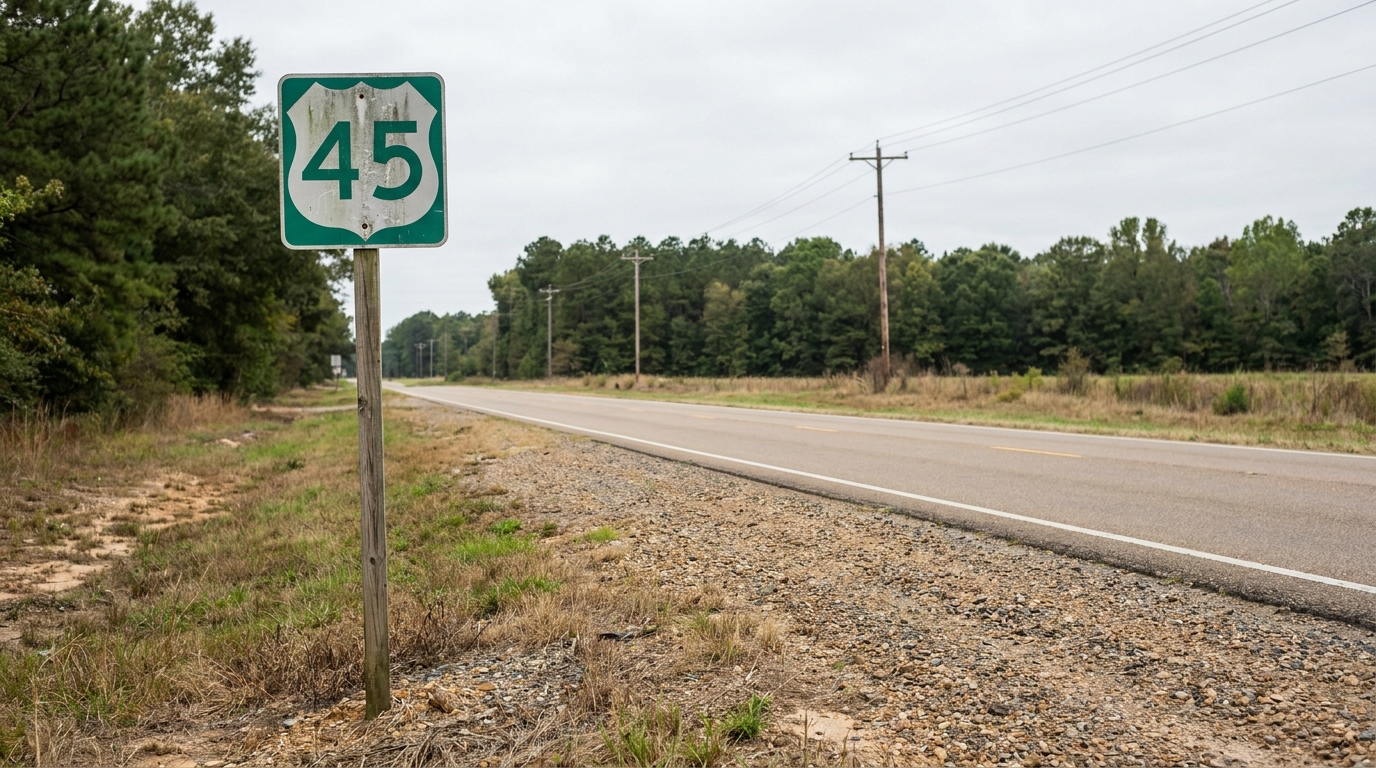
A new federal safety update has put one point beyond dispute: fatal traffic crashes remain a major legal and human issue. On April 1, 2026, the National Highway Traffic Safety Administration reported an estimated 36,640 traffic fatalities nationwide in 2025, a 6.7% drop from 2024, while Mississippi’s highway-safety planning documents continue to emphasize fatal-crash reduction and crash-data collection as core priorities. (nhtsa.gov) For families in Columbus, Mississippi, every fatal crash raises immediate questions about evidence, deadlines, and who can bring a claim under state law. When a death follows a collision on Highway 45 or a local road in Lowndes County, knowing what evidence exists and how quickly it can disappear shapes whether a civil case is viable.
Why this safety update matters under Mississippi wrongful death law
Mississippi wrongful death claims depend on statute, proof, and timing. Mississippi’s wrongful death statute allows recovery when a death is caused by a "real, wrongful or negligent act or omission," and permits claims for negligence, strict liability, and other causes of action that could have been brought had the person survived. (Mississippi’s wrongful death statute) This makes recent traffic-fatality reporting legally relevant because it underscores how often fatal crashes arise from preventable conduct. Families must prove duty, breach, causation, and damages while identifying the proper plaintiff and avoiding disputes over who has authority to proceed.
Mississippi law is specific about who may sue. The statutory list is exclusive and includes certain surviving family members and the personal representative of the estate, and there can be only one suit for the same death for the benefit of all interested parties. (law.justia.com) For grieving relatives, the first legal issue is often organizational. Before any insurer negotiation becomes serious, someone must determine which beneficiaries must be included, what losses are being claimed, and how the case will be structured.

A Columbus family’s questions usually begin with the evidence
Imagine a Columbus family loses a parent after a nighttime collision near a busy highway corridor. The death triggers grief and a chain of legal questions: Was the other driver speeding, distracted, impaired, or asleep? Was a commercial vehicle involved? Did roadway design, visibility, or vehicle defects contribute?
Families need the crash report, witness statements, photographs, scene measurements, event-data information, and medical-examiner findings. Mississippi’s Department of Public Safety describes its CRASH Team as using Total Stations (electronic optical equipment) for recording scene data, Crash Data Recovery Kits for downloading pre- and post-crash vehicle data (including speed changes, braking, seatbelt use, and airbag deployment), and collecting tangible physical evidence in comprehensive investigations of major traffic collisions throughout the state. (dps.ms.gov) Those details matter because proof in a fatal crash case often comes from technical reconstruction, not assumptions.
How to prove wrongful death in a Mississippi crash case
To understand how to prove wrongful death, start with the basic legal elements. A civil wrongful death claim requires evidence showing that another person or company committed a wrongful act or negligent omission, that the conduct caused the death, and that legally recoverable damages followed. Under Mississippi Code Section 11-7-13, the claim exists when the decedent could have maintained an action had death not ensued.
That usually means building the case in layers. In a fatal vehicle case, useful proof may include:
- Crash-scene evidence showing point of impact, skid marks, debris patterns, and vehicle rest positions
- Electronic vehicle data reflecting speed changes, braking, seatbelt use, or airbag deployment
- Witness statements that support or contradict the drivers’ versions
- Medical records and autopsy findings connecting the crash to the fatal injuries
- Employment or trucking records if a commercial vehicle or on-the-job conduct played a role
- Damages documentation including funeral bills, medical expenses, lost financial support, and family-loss evidence
Each category serves a different purpose. Some evidence addresses fault, some addresses causation, and some establishes damages.
What damages Mississippi law may allow, and what it limits
Mississippi law draws distinctions in recoverable damages. The wrongful death statute allows recovery of damages the jury determines are just, including property damage and funeral, medical, and related expenses. (law.justia.com) Mississippi law defines noneconomic damages to include pain and suffering, mental anguish, emotional distress, loss of society and companionship, and loss of consortium, while excluding punitive or exemplary damages from that definition. (law.justia.com)
Statutory limits exist. Mississippi Code Section 11-1-60 sets a noneconomic damages cap of $1,000,000 in most civil actions and $500,000 in actions against health care providers for malpractice. (nolo.com) Separately, Mississippi law states that in wrongful death actions there is no recovery for loss of enjoyment of life caused by death. (law.justia.com)
Why fast investigation often matters more than families expect
The legal system gives evidence no sympathy for delay. Vehicles get repaired or destroyed. Surveillance footage is overwritten. Witness memories fade. Phone records, onboard systems, and employer records may not remain available indefinitely.
Government agencies emphasize traffic-record systems and fatal-crash analysis, but official investigations may not answer every civil-liability question. Mississippi’s highway-safety materials stress traffic-record collection and enforcement, but a civil claim still requires connecting that evidence to legal elements of fault and damages. (dps.ms.gov) Public safety data can frame the problem, but it does not replace case-specific proof.
Local context for Columbus and Highway corridors
Fatal crashes are not abstract concerns for Columbus families. In February 2026, local coverage reported on a fatal crash investigation in Columbus. (wcbi.com) For readers understanding local roadway risks, this connects with Mama Justice’s overview of Columbus highway auto accidents.
Not every fatality scenario looks exactly the same. Cases arise from car, truck, motorcycle, bicycle, or pedestrian crashes. Others involve unsafe property conditions, defective products, or criminal acts. Mississippi’s wrongful death statute is broad enough to reach multiple legal theories, but required proof depends heavily on the facts. (law.justia.com)
The deadline issue is real, and exceptions are usually narrow
A valid claim can be lost if filed too late. Mississippi wrongful death cases often track the limitations period tied to the underlying cause of action. Negligence-based claims commonly have a three-year filing period, while claims based on intentional conduct or governmental issues may involve different rules or shorter deadlines. (nolo.com) Deadline questions are intensely fact-specific, and courts interpret exceptions narrowly.
This is especially true regarding tolling, delayed discovery, minority, incapacity, or government-entity involvement. In limited circumstances, an exception may extend or alter the time to act, but those extensions are not guaranteed or automatic. Because consequences of missing a deadline can be severe, families should not assume they have more time than the calendar suggests.
What careful proof looks like for grieving families
Effective wrongful death preparation begins with disciplined fact gathering. That includes confirming who the statutory beneficiaries are, preserving vehicles and electronic data, obtaining crash and medical records, identifying all possible insurance coverage, and documenting both economic and noneconomic losses. Mississippi’s statute allows one suit for the benefit of all concerned parties, making early coordination important. (law.justia.com)
Families researching wrongful death claims are often trying to answer two questions. First, did someone’s negligence or wrongful act cause the death? Second, can that be proved with admissible evidence strong enough to support settlement discussions or trial? A suspicion may be understandable; proof still has to be built.
How to prove wrongful death when liability is disputed
When the other side denies responsibility, the case turns on contradictions in the record. A driver may say the decedent suddenly swerved, while vehicle data suggests excessive speed or no braking. A property owner may deny notice of a dangerous condition, while maintenance records suggest otherwise. A manufacturer may blame misuse, while product testing points toward a defect.
How to prove wrongful death is ultimately a question of documentation, sequence, and credibility. The timeline matters. The physical evidence matters. The medical proof matters. And damages proof matters too, because even a clear liability case requires persuasive evidence of what the surviving family and estate have lost under Mississippi law.
How Does This Impact Me?
What does this federal traffic-death update mean for my family’s case?
It does not automatically prove fault in any one case, but reinforces that fatal crashes remain a serious safety problem. For a Columbus family, the practical takeaway is that a fatal collision requires prompt evidence preservation, not just reliance on a police summary or insurer explanation.
Does this change who can file a wrongful death lawsuit in Mississippi?
No. Mississippi law still controls who may bring the claim, and the list is exclusive under Section 11-7-13. (law.justia.com) If multiple relatives may have an interest, that needs sorting out early because there can be only one suit for the same death.
Does this news change the deadline to file?
Not by itself. The applicable deadline depends on the underlying legal theory and facts. In limited circumstances, tolling or other exceptions may apply, but courts construe those exceptions narrowly, and government-related claims can involve separate notice requirements.
What if I do not yet have the crash report or full investigation file?
That is common early on. Mississippi DPS provides a process for obtaining crash reports, and more technical evidence may emerge through reconstruction work, vehicle downloads, and medical records. (driverservicebureau.dps.ms.gov) The absence of one document at the start does not mean the claim lacks merit.
What should I do next if I am trying to understand how to prove wrongful death?
Start by preserving information and avoiding assumptions. Keep bills, photographs, correspondence, funeral records, and any communication from insurers. Identify potential witnesses, save messages or videos, and note every agency involved. Then consider legal guidance focused on Mississippi wrongful death law.
What this means for families in Columbus now
The latest traffic-fatality reporting offers cautious good news nationally, but does not reduce the burden on a Mississippi family facing a sudden death. In Columbus, a fatal crash triggers urgent questions about who may sue, what damages may be available, what evidence should be preserved, and how to prove wrongful death under Mississippi law. The answer rarely comes from one dramatic piece of proof. More often, it comes from disciplined investigation, accurate beneficiary identification, and careful documentation of negligence, causation, and loss.
For readers whose family may be dealing with a fatal crash or another preventable death, general information is only a starting point. If you want to discuss your situation, Mama Justice Law Firm is one option for learning more about the process. You can call (833) 626-2587 or contact us today to ask questions about next steps, deadlines, and what records may matter in a Mississippi wrongful death case.