
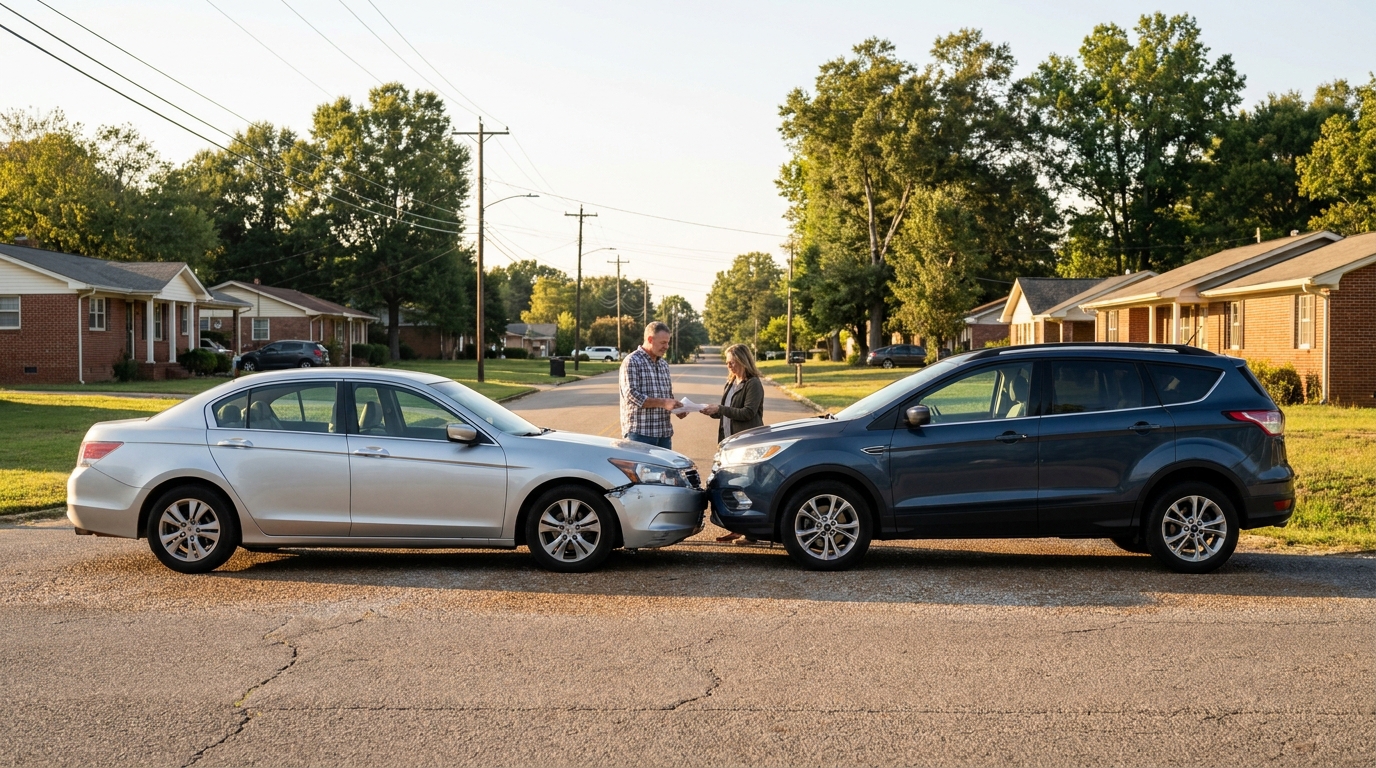
How Contributory Negligence Can Affect Your Decatur, Alabama Car Wreck Claim
If you were hurt in a car wreck in Decatur, Alabama, the legal concept of contributory negligence could determine whether you recover any compensation at all. Alabama follows a pure contributory negligence rule, meaning if an injured person is found even 1% at fault for the accident, they are barred from recovering damages from the other party. This strict standard contrasts sharply with comparative negligence rules used in most states, where partial fault reduces but does not eliminate recovery. Understanding this doctrine is essential for anyone pursuing a Decatur Alabama auto accident claim, because even a small misstep can jeopardize your entire case.
If you have questions about how fault may affect your injury claim, Mama Justice Law Firm is ready to help. Call (833) 626-2587 or reach out to our team today to discuss your situation.

What Is the Alabama Contributory Negligence Rule?
Contributory negligence is a common law tort rule that completely bars plaintiffs from recovering damages if they were at all negligent in causing the harm. Unlike most states that allow injured parties to recover reduced compensation based on their share of fault, Alabama applies an all-or-nothing approach. Under pure contributory negligence, a plaintiff who bears any degree of fault may be barred from recovery, according to Cornell Law Institute.
The degree of fault does not matter under this rule. A plaintiff who was 1% negligent may receive nothing from a defendant who was 99% negligent. In Decatur Alabama auto accidents, the at-fault driver’s insurance company will aggressively look for any evidence that you contributed to the collision, no matter how slightly.
Why Alabama Still Follows This Strict Rule
Alabama is one of only four U.S. states, along with Maryland, North Carolina, and Virginia, that still follow the pure contributory negligence rule; the District of Columbia also applies this standard. Most jurisdictions have replaced contributory negligence with comparative negligence systems. Over 30 states use modified comparative negligence, while about a dozen use pure comparative negligence. Alabama’s retention of this doctrine makes it one of the most challenging states for injured plaintiffs pursuing compensation.
💡 Pro Tip: After any Decatur car accident, avoid statements at the scene that could be interpreted as admitting fault. Even saying "I’m sorry" can potentially be used by an adjuster to argue you share blame.
How Decatur Alabama Contributory Negligence Impacts Your Injury Claim
In a Decatur AL injury claim fault analysis, the defendant’s insurance company bears the burden of proving you were also negligent. The Alabama Supreme Court has established that contributory negligence is a complete defense to negligence claims. Alabama Rule of Civil Procedure 8(c) lists contributory negligence as an affirmative defense, meaning the defendant must raise and prove it.
What the Defendant Must Prove
To successfully use the Decatur AL negligence defense, the other side must establish three things. According to Alabama case law, proving the defense involves showing that:
- The plaintiff had knowledge of the dangerous condition
- The plaintiff had an appreciation of the danger under the surrounding circumstances
- The plaintiff failed to exercise reasonable care
If the defendant cannot prove all three elements, the contributory negligence defense may fail. This is why thorough documentation matters.
💡 Pro Tip: Preserve all evidence from your wreck, including photos, dashcam footage, witness contacts, and medical records. Strong evidence can help counter a contributory negligence argument by showing you acted reasonably.
An Important Exception: Wanton Misconduct
Contributory negligence does not apply to every type of claim in Alabama. The Alabama Supreme Court has ruled that while contributory negligence is a complete defense to negligence-based actions, it is not a defense to claims based on wanton misconduct. Wanton misconduct involves conduct carried out with reckless or conscious disregard for others’ safety, such as extreme speeding or driving under the influence. If the other driver’s behavior rises to wantonness, your partial fault may not automatically bar your claim. To learn more about severe injury cases, read about whether contributory negligence affects catastrophic claims in Decatur.
Car Accident Attorney Decatur Alabama: Why Legal Help Matters
Because Alabama fault bars recovery for even minimal plaintiff negligence, working with a car accident attorney Decatur Alabama residents trust can significantly impact your case outcome. An attorney experienced in Morgan County car accident cases can build a strong factual record showing you were not at fault and anticipate defense strategies the insurance company will likely use.
Insurance adjusters handling Decatur car wreck claims are trained to find any possible basis for contributory negligence. They may request recorded statements, review your social media, or scrutinize the police report for any indication you violated traffic laws. Having legal counsel before engaging with the insurer helps protect your rights and prevent statements that could be used against you.
💡 Pro Tip: Do not provide a recorded statement to the other driver’s insurance company without first speaking with an attorney. Adjusters may ask leading questions designed to establish shared fault.
The Last Clear Chance Doctrine and Other Exceptions
Even if you were partially at fault, there may still be a path to recovery under limited legal exceptions. One such exception is the last clear chance doctrine, also known as the subsequent negligence doctrine. Under this doctrine, a negligent plaintiff can still recover if the defendant had the last clear opportunity to avoid the accident through reasonable care but failed to do so. For example, if you were slightly over the speed limit but the other driver ran a red light with ample time to stop, courts may consider whether the other driver had the last clear chance to avoid the collision.
These exceptions are narrow and fact-dependent. Courts generally interpret them strictly, so they do not apply in every case. However, they represent an important legal avenue that an experienced car accident attorney Decatur AL can evaluate based on your wreck’s specific details.
Contributory Negligence vs. Comparative Negligence: Understanding the Difference
The distinction between these two systems can mean the difference between full compensation and nothing at all. The table below illustrates how Alabama’s contributory negligence system compares to comparative negligence models used in most other states.
| Feature | Contributory Negligence (Alabama) | Comparative Negligence (Most States) |
|---|---|---|
| Plaintiff partially at fault | Completely barred from recovery | Recovery reduced by percentage of fault |
| Plaintiff 1% at fault | Recovers nothing | Recovers up to 99% of damages |
| Number of jurisdictions using system | 4 states and D.C. (AL, MD, NC, VA, D.C.) | Over 40 states |
| Burden of proof | Defendant must prove plaintiff’s negligence | Varies by jurisdiction |
| Wanton misconduct exception | Yes, in Alabama | Varies by state |
This comparison shows how much is at stake for injured people in Decatur, Alabama. While a plaintiff in a comparative negligence state might still recover most damages despite being slightly at fault, the same plaintiff in Alabama could walk away with nothing.
💡 Pro Tip: If you were involved in a wreck near the Alabama-Tennessee border, the law that applies depends on where the accident occurred. Alabama and Tennessee follow very different fault rules, so confirming jurisdiction is critical.
Key Deadlines for Filing a Decatur Alabama Auto Accident Claim
Alabama imposes strict time limits on personal injury lawsuits that every injured person should know. Under Alabama Code § 6-2-38, the statute of limitations for most personal injury claims is two years from the accident date. Missing this deadline generally means losing the right to file a lawsuit, regardless of case strength.
Courts interpret tolling exceptions narrowly in Alabama. While limited circumstances such as the plaintiff being a minor may extend the filing window, these exceptions do not apply automatically. Acting promptly to investigate your claim and preserve evidence is always the safer course.
💡 Pro Tip: Even if you are unsure about filing a lawsuit, consulting an attorney well before the two-year deadline ensures your options remain open and evidence is preserved.
Frequently Asked Questions
1. Can I still recover damages if I was partially at fault for a car wreck in Decatur, Alabama?
What Alabama law says about plaintiff fault
Generally, no. Alabama follows pure contributory negligence, meaning if you are found even 1% at fault, you are typically barred from recovering damages. However, limited exceptions such as the last clear chance doctrine or wanton misconduct claims may apply depending on your case facts.
2. How does the insurance company prove contributory negligence?
What adjusters look for after a Decatur car accident
The insurance company must show you knew about a dangerous condition, appreciated the risk, and failed to act with reasonable care. They often rely on police reports, witness statements, traffic camera footage, and your own statements to build this defense.
3. What is the deadline to file a car accident lawsuit in Alabama?
Understanding the statute of limitations
Alabama Code § 6-2-38 generally provides a two-year statute of limitations for personal injury claims. The clock typically starts on the accident date. Courts interpret exceptions narrowly, so taking action well before the deadline is important.
4. Does contributory negligence apply if the other driver was drunk or driving recklessly?
Wanton misconduct and your claim
Not necessarily. The Alabama Supreme Court has held that contributory negligence is not a defense to wanton misconduct claims. If the other driver’s conduct was reckless or showed conscious disregard for your safety, contributory negligence may not bar your recovery.
5. Why does Alabama still use contributory negligence instead of comparative negligence?
Alabama’s legal tradition
Alabama is one of only four states, along with the District of Columbia, that have retained the contributory negligence rule. While many legal commentators have called for change, the Alabama legislature has not adopted a comparative negligence system. Plaintiffs in Decatur and throughout Alabama continue to face this strict standard.
Protecting Your Right to Compensation After a Decatur Car Wreck
Alabama’s contributory negligence rule creates real risks for anyone injured in a Decatur car accident. Even a minor allegation of fault can threaten your entire claim. Understanding how this defense works, knowing key exceptions, and building a strong evidence-based case are critical steps toward protecting your right to fair compensation. Every case depends on its unique facts, and the law leaves little room for error in Alabama.
If you were injured in a car wreck in Decatur or Morgan County, Mama Justice Law Firm can help you understand your legal options. Call (833) 626-2587 or contact us now to schedule a conversation about your case.