
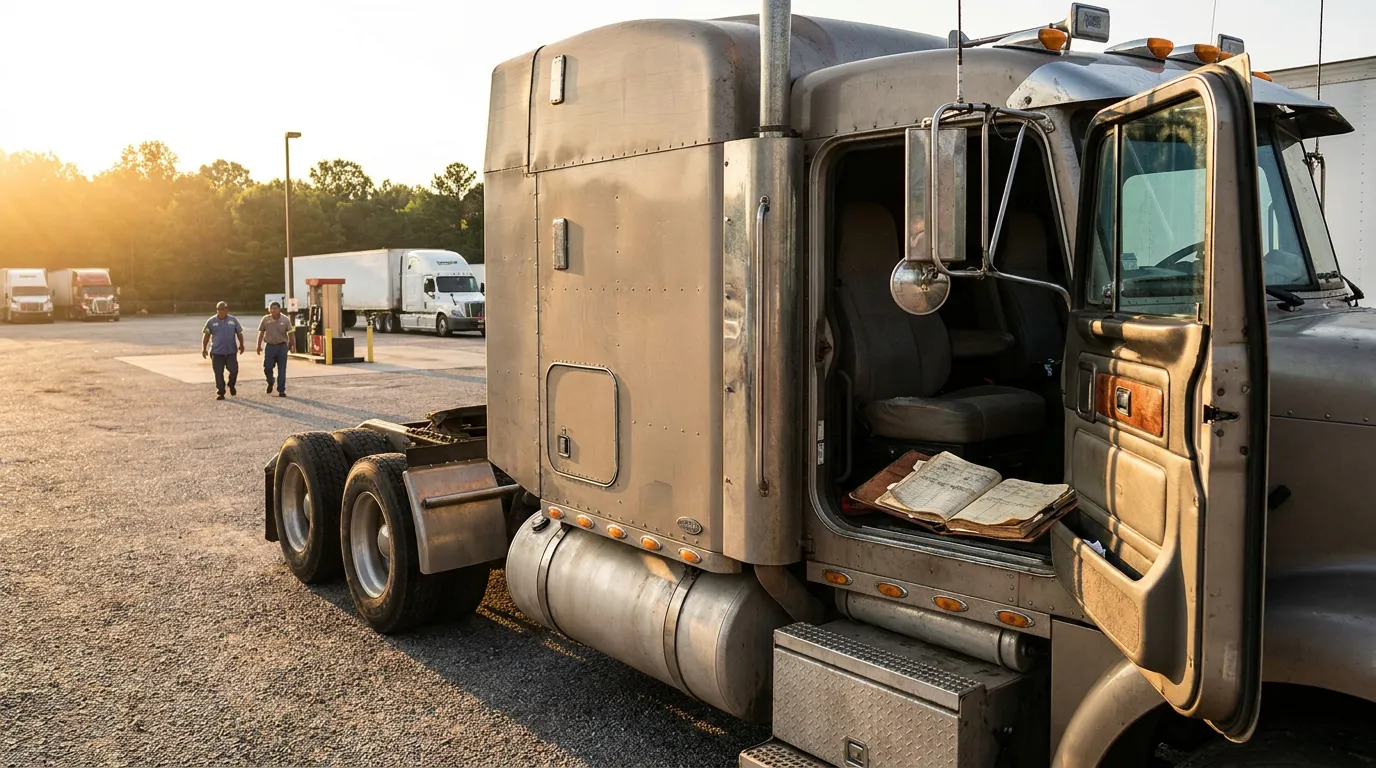
The Paper Trail That Can Prove a Truck Company Knew About a Dangerous Defect
Key Takeaways: A DVIR, or driver vehicle inspection report, is a federally required record under 49 CFR 396.11 documenting whether a commercial truck’s core safety systems, brakes, steering, tires, coupling devices, lighting, and more, were working at the end of a driver’s day. It matters in Decatur semi-truck injury cases because it may show a carrier knew about a defect and still put the truck on the road. The regulation requires repair and written certification before the vehicle is driven again, building a chain of accountability from post-trip report to repair certification to next driver’s pre-trip review. Breaks in that chain may support a negligence claim. Carriers must keep these records three months, so prompt preservation demands covering work orders, parts invoices, and electronic audit logs are critical. Important limits exist: no-defect reports are generally not required for property-carrying vehicles following a 2014 final rule, and certain operations are exempt under 49 CFR 396.11(a)(5). Because Alabama follows contributory negligence, objective maintenance records can be especially valuable.
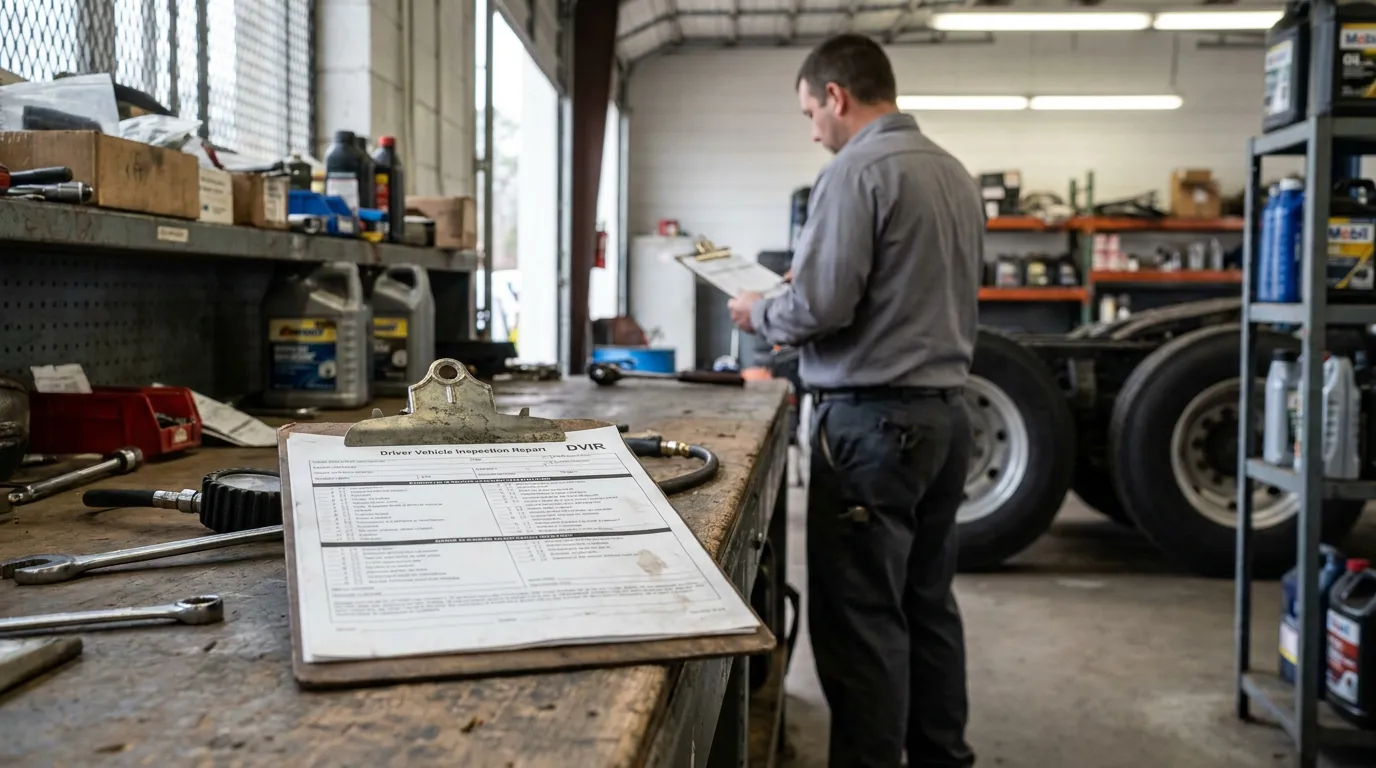
A DVIR, or driver vehicle inspection report, is a federally required written record documenting whether a commercial truck’s safety equipment was working at the end of a driver’s workday. Under 49 CFR 396.11(a)(1) and (a)(2), a driver must prepare a report at the completion of each day’s work, and that report must cover at least the following parts and accessories: service brakes (including trailer brake connections), parking brake, steering mechanism, lighting devices and reflectors, tires, horn, windshield wipers, mirrors, coupling devices, wheels and rims, and emergency equipment. In a Decatur semi-truck injury case, that document can become the difference between a carrier claiming a "freak mechanical failure" and a records trail proving the company knew about a defect and put the truck on the road anyway.
If you or a family member was hurt in a crash involving an 18-wheeler, the maintenance records may already be on a countdown clock. The team at Mama Justice Law Firm helps injured people move quickly to demand preservation of inspection and repair records. Call (833) 626-2587 or reach out to our team today to discuss your situation.
Why Federal Rules Control a Decatur Truck Crash Claim
Federal law, not just Alabama law, generally governs how a trucking company documents vehicle safety. A carrier operating in interstate commerce through Morgan County must generally follow the Federal Motor Carrier Safety Regulations, including the inspection and repair duties in 49 CFR 396.11 and 49 CFR 396.13. Alabama has also adopted much of the federal scheme for intrastate carriers.
This matters because federal regulations supply an objective benchmark for the standard of care. Rather than arguing only about what a "reasonable" trucking company should have done, your attorney may point to a written regulation and ask whether the carrier followed it. Alabama courts may treat a regulatory violation as evidence of negligence.
What the Regulation Actually Requires
The default rule under 49 CFR 396.11(a)(2) requires any report prepared to identify the vehicle and list any defect or deficiency that would affect safe operation or cause a mechanical breakdown. The driver must sign it, and a separate report is generally required for each vehicle operated. For most property-carrying vehicles no report is required if the driver neither found nor received a report of any defect.
Corrective action is where liability often concentrates. Under 49 CFR 396.11(a)(3), a carrier must generally repair any defect listed on a DVIR that is likely to affect safe operation before allowing a driver to operate the vehicle, and must certify on the report that the defect was repaired or that repair was unnecessary. When a crash follows an unrepaired, previously reported defect, that certification gap becomes powerful truck maintenance evidence.
Understanding 49 CFR 396.11 DVIR Requirements Step by Step
The regulation builds a chain of accountability that runs from one driver to the next. A post-trip inspection generates the report, the carrier certifies the repair, and the next driver reviews it before rolling out. Under 49 CFR 396.13(b) and (c), before driving, a driver must review the last DVIR if one was required (subsection b), and must sign the report to acknowledge that the driver has reviewed it and that there is a certification that the required repairs have been performed (subsection c). Breaks anywhere in that chain may support an argument that the carrier failed to exercise reasonable care.
| Stage | Governing Provision | What It Should Show |
|---|---|---|
| End-of-day report | 49 CFR 396.11(a)(1)-(2) | Vehicle ID, defects found, driver signature |
| Repair and certification | 49 CFR 396.11(a)(3) | Defect repaired or repair deemed unnecessary |
| Pre-trip review | 49 CFR 396.13(b) and (c) | Next driver reviewed and acknowledged the report |
| Retention | 49 CFR 396.11(a)(4) | Records kept three months from preparation date |
The retention rule is short, and that is often the most urgent practical point for crash victims. Under 49 CFR 396.11(a)(4), DVIRs, repair certifications, and driver review certifications must generally be retained for three months from the date the report was prepared. A detailed guide on how to preserve evidence after a truck crash explains why a spoliation letter should generally go out within days, not months.
💡 Pro Tip: Ask that any preservation demand cover not just the DVIR itself but the underlying work orders, parts invoices, and maintenance-software audit logs.
Important Exceptions You Should Know About
A missing DVIR does not automatically prove a violation. Since a 2014 final rule, no-defect DVIRs are generally not required for property-carrying operations, meaning a report from the prior trip may exist only if a defect was discovered or reported, or if the carrier voluntarily requires no-defect reports. A subsequent 2020 FMCSA final rule extended the same relief to passenger-carrying commercial vehicles operating in interstate commerce, rescinding their mandatory no-defect DVIR requirement as well.
Other carve-outs also apply. Under 49 CFR 396.11(a)(5), the reporting requirement generally does not apply to private motor carriers of passengers (nonbusiness), driveaway-towaway operations, or motor carriers operating only a single commercial motor vehicle.
Electronic Records and Intermodal Container Equipment
DVIRs may generally be created, signed, and maintained electronically, consistent with 49 CFR 396.11 and the electronic records provisions of 49 CFR 390.32. For a claimant, that means timestamped digital records, edit histories, and user login data may exist, and those metadata layers can sometimes reveal more than the report itself.
Intermodal equipment carries its own separate duties. Under 49 CFR 396.11(b), drivers and carriers must generally report damage or defects in intermodal equipment to the intermodal equipment provider, who must then repair the equipment and certify it before the equipment is placed back in service. When a container chassis fails, the responsible party may be an equipment provider rather than the motor carrier alone.
Components Worth Comparing Against the Crash Scene
The regulatory component list gives injured people a practical checklist. Investigators can compare each listed item against physical findings from the wreck, and inconsistencies may point toward truck defect documentation problems. Items commonly examined include:
- Service brakes, including trailer brake connections, and the parking brake system
- Steering mechanism and coupling devices between tractor and trailer
- Tires, wheels, and rims, particularly in tread-separation or blowout crashes
- Lighting devices, reflectors, mirrors, wipers, horn, and emergency equipment
💡 Pro Tip: Photograph the trailer’s DOT number and any visible inspection decals at the scene if safe to do so.
Alabama’s Contributory Negligence Rule Raises the Stakes
Alabama applies contributory negligence, which makes objective maintenance records unusually valuable. Cornell’s Legal Information Institute explains that contributory negligence can bar a plaintiff from collecting damages even when found only slightly negligent, and that only Alabama, Maryland, North Carolina, Virginia, and the District of Columbia retain it. Limited exceptions, such as a defendant’s wanton conduct or the last clear chance doctrine, may apply.
Because most states use comparative fault, advice you read online may not fit an Alabama truck accident. Insurers defending Decatur claims may work hard to assign the injured driver some blame, which is why a documented brake defect or an uncertified repair may reframe the fault analysis around the carrier’s conduct.
How Inspection Records Fit Into a Broader Liability Investigation
A DVIR rarely stands alone in a semi-truck injury claim. Counsel generally reads it alongside electronic logging device data, driver qualification files, dispatch records, annual inspection reports, and third-party repair invoices. FMCSA’s overview of driver vehicle inspection reports provides useful background on the program.
Identifying every potentially responsible party is a core part of the work. Depending on the facts, that may include the driver, the motor carrier, a maintenance contractor, an intermodal equipment provider, or a cargo loader. Families researching options can learn more from a firm handling 49 CFR 396.11 DVIR requirements matters and related commercial trucking claims.
💡 Pro Tip: Keep a dated file of medical visits, missed work, and insurer contacts, because carrier compliance evidence may help establish fault while your records help document damages.
Frequently Asked Questions
1. How long does a trucking company have to keep a DVIR?
Generally three months from the date the report was prepared, under 49 CFR 396.11(a)(4). That retention period also covers repair certifications and driver review certifications. Sending a preservation demand promptly is advisable.
2. What if no DVIR exists for the truck that hit me?
Its absence is not automatically a violation. Following a 2014 final rule, no-defect reports are generally not required for property-carrying operations. Other maintenance and repair records may still be available.
3. Can a DVIR be kept electronically?
Yes, electronic creation and maintenance are generally permitted, consistent with 49 CFR 396.11 and 49 CFR 390.32. Electronic systems often retain timestamps and edit histories that can be informative.
4. Does a regulatory violation guarantee I win my case?
No. A violation may be evidence relevant to negligence, but duty, causation, and damages generally must still be proven. Alabama’s contributory negligence doctrine can affect recovery.
5. Who is responsible when a container chassis fails?
Responsibility may extend beyond the motor carrier. Under 49 CFR 396.11(b), intermodal equipment providers must generally repair reported defects and certify the equipment before it is placed back in service.
Turning Regulatory Detail Into a Clearer Picture of What Happened
A DVIR is a short document, but it may help answer a large question: did the trucking company know something was wrong before the crash? The 49 CFR 396.11 DVIR requirements create a documented sequence of inspection, repair certification, and next-driver review, and gaps in that sequence may support a negligence theory. Given the three-month retention floor, Alabama’s strict fault rules, and the number of parties potentially involved, the value of these records often depends on how quickly someone demands them.
If you are weighing your options after a collision with a commercial truck, Mama Justice Law Firm can review what happened and help pursue the records that matter. Call (833) 626-2587 or schedule your free consultation to get started.
Disclaimer: This content is for informational purposes only and is not legal advice. Every case is unique, and results may vary. Consult an attorney about your specific circumstances.