
How Work Capacity Testimony Shapes a Tupelo Catastrophic Injury Claim
Key Takeaways: A vocational expert assesses what work you may realistically still perform after a catastrophic injury and translates that loss into documented lifetime wage figures. Mississippi law under Miss. Code Ann. § 11-1-60 defines economic damages as "objectively verifiable," making structured earning capacity proof important, especially since noneconomic damages in most non-medical civil actions are generally capped at $1,000,000 (with a separate $500,000 cap in medical malpractice actions). The evaluation often layers work and wage history, medical records synthesis, standardized testing, transferable skills analysis, and Tupelo-area labor market research, often supported by published job classification data. Those findings may feed an economist’s present-value projection of lifetime losses. Deadlines matter too, including the one-year period and pre-suit notice under the Mississippi Tort Claims Act and the six-year outer limit for certain construction-related claims, while most ordinary personal injury claims fall under a separate general limitations period. Liability must still be proven first, and outcomes remain highly fact-dependent.
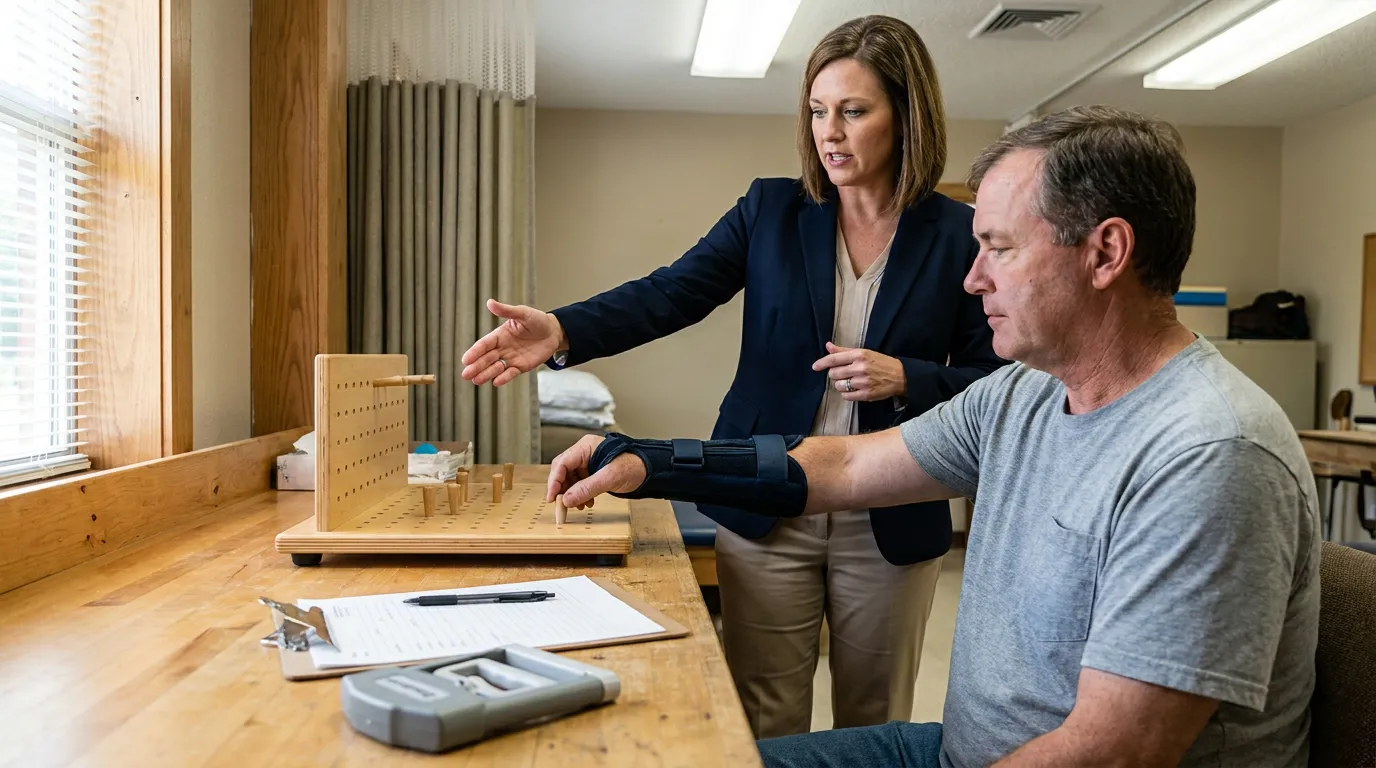
A vocational evaluator addresses a question medical records alone generally cannot: after a traumatic brain injury, spinal cord damage, amputation, or severe burns, what work might you realistically still do, and what could that cost you over a lifetime? These professionals compare your pre-injury job demands, education, and transferable skills against your current functional limits, then translate the gap into documented wage loss. In a Mississippi civil case, that analysis can become a significant part of the economic damages presentation, since economic losses generally must be supported by objectively verifiable proof rather than speculation.
If your family faces a permanent loss of income after a serious injury, early case preparation matters. The team at Mama Justice Law Firm helps injured people across North Mississippi coordinate medical, vocational, and financial proof. Call (833) 626-2587 or contact us now to discuss your situation.

Why Mississippi Law Makes Earning Capacity Proof So Important
Mississippi generally treats lost earning capacity as a distinct, provable economic loss. Miss. Code Ann. § 11-1-60(1)(b) defines "actual economic damages" to include "objectively verifiable pecuniary damages arising from medical expenses and medical care, rehabilitation services, custodial care, disabilities, loss of earnings and earning capacity, loss of income… and other objectively verifiable monetary losses." That "objectively verifiable" language is part of why a structured assessment carries weight. The statute defines terms and caps noneconomic awards; it does not create a cause of action or dictate recoverable damages in a given case.
The same statute limits certain noneconomic recoveries, raising the stakes on the economic side. Under Miss. Code Ann. § 11-1-60(2)(b), in most civil actions filed on or after September 1, 2004, other than medical malpractice actions (subject to a $500,000 cap under subsection (2)(a)), a trier of fact "shall not award the plaintiff more than One Million Dollars ($1,000,000.00) for noneconomic damages." Pain, suffering, and disfigurement generally fall under that cap, while documented wage and earning capacity losses generally do not. Punitive damages are excluded from the statutory definition and governed separately by Miss. Code Ann. § 11-1-65. The jury isn’t told about the cap; the judge reduces any excess award, and how the cap applies to particular facts can still be litigated.
For catastrophic injury damages, that structure can shift attention toward careful lifetime income modeling. A worker in their thirties who can no longer perform medium or heavy exertion work may lose decades of earning power, retirement contributions, and advancement. A well-supported earning capacity evaluation can give the jury a defensible framework instead of guesswork.
What a Loss of Earning Capacity Vocational Expert Actually Evaluates
A loss of earning capacity vocational expert generally builds an opinion from layered evidence, not a single test. The Social Security Administration’s internal guidance, HALLEX I-2-5-48 (updated January 6, 2025, under SSR 24-3p), provides general guidelines for an ALJ’s use of vocational experts, including that the ALJ must evaluate the sufficiency of vocational expert evidence before using it to support findings at step four or step five of the sequential evaluation process. Detailed testimony standards regarding the physical and mental demands of past relevant work and whether a claimant’s RFC allows performance of other work in the national economy are now more fully addressed in HALLEX I-2-6-74. Civil injury cases often borrow this analytical structure, though legal standards differ and SSA findings aren’t controlling in a Mississippi tort case.
These professionals are meant to be impartial evaluators rather than advocates. SSA materials explain that a vocational expert may testify about jobs a person has done in the past and whether someone with the same limitations could perform that or other work. That neutrality can make the testimony persuasive in a courtroom setting.
The Core Components of a Mississippi Vocational Evaluation
- Work and wage history review, including tax records, job descriptions, and physical demands of prior positions
- Records synthesis from treating physicians, physical therapists, and neuropsychologists
- Standardized testing of aptitude, reading, math, and cognitive processing where a head injury is involved
- Transferable skills analysis, asking whether abilities from earlier jobs carry over to new occupations considering age, education, and work experience
- Labor market research for the Tupelo and Lee County region, not just national averages
How Job Data Sources Support the Opinion
Vocational witnesses often rely on published classification systems to keep conclusions testable. Historically that meant the Dictionary of Occupational Titles, which groups jobs by exertion level and skill requirements. More recently, practitioners have turned to the Bureau of Labor Statistics Occupational Requirements Survey, and professional literature on using ORS data in testimony addresses both its strengths and methodological limits.
That transparency matters because opposing counsel may probe the data. A witness who can explain sample sizes, survey definitions, and why a particular occupational category applies to your case may withstand cross-examination better than one relying on general impressions. Admissibility is decided by the trial court under Mississippi Rule of Evidence 702, which asks whether testimony rests on sufficient facts or data and reliable methods reliably applied.
Where Vocational Findings Meet Economic Projections
A vocational assessment often feeds into a separate economic analysis. The vocational professional identifies occupations that may remain accessible and their typical wage ranges. An economist may then reduce the lifetime difference to present value, factoring work-life expectancy, fringe benefits, and inflation assumptions.
Outcomes are fact-dependent and rarely uniform. Two people with similar diagnoses can reach very different earning capacity conclusions based on age, prior education, and regional job availability.
💡 Pro Tip: Keep pay stubs, performance reviews, and job descriptions from before your injury. Reconstructing wage history years later is one of the most common obstacles in catastrophic injury claims.
Deadlines That Can Quietly Limit Your Claim
Mississippi filing deadlines vary sharply depending on who caused the harm, and missing one can end a case regardless of injury severity. Most ordinary personal injury claims against private defendants fall under the general three-year limitations period in Miss. Code Ann. § 15-1-49, while the frameworks below apply in specific situations. Building a thorough vocational record can take months, so the calendar often drives strategy from day one.
| Type of Claim | General Deadline Framework | Statutory Source |
|---|---|---|
| Claims against a governmental entity | One year from the actionable conduct, with a required pre-suit notice | Miss. Code Ann. § 11-46-11 |
| Injury from defective design or construction of an improvement to real property | Generally six years from written acceptance or actual occupancy or use, whichever occurs first | Miss. Code Ann. § 15-1-41 |
Claims involving a city vehicle or public property may fall under the Mississippi Tort Claims Act. Miss. Code Ann. § 11-46-11 requires actions to be commenced "within one (1) year next after the date of the tortious, wrongful or otherwise actionable conduct," and a notice of claim served within that period tolls the limitations period for ninety-five days. The statute also generally requires serving a formal notice of claim on the entity’s chief executive officer at least ninety days before filing suit, and Mississippi courts have treated these requirements strictly, with limited statutory allowances for minors and persons under a disability.
Construction-related catastrophic injuries have their own outer limit. Under Miss. Code Ann. § 15-1-41, no action for personal injury arising from a deficiency in design, planning, supervision, or construction of an improvement to real property may be brought "more than six (6) years after the written acceptance or actual occupancy or use, whichever occurs first." Exceptions exist: the statute doesn’t protect a person in actual possession or control of the improvement as owner, tenant, or otherwise at the time of injury, does not apply to actions for wrongful death, and does not apply where fraudulent concealment is shown (with courts holding the repose period is not tolled if the fraud was known or discoverable within the six-year period). This provision is an outer limit layered on top of, not a replacement for, the otherwise applicable limitations period, and courts generally construe exceptions narrowly. Administrative notice requirements are generally separate from the civil lawsuit itself, and satisfying one may not excuse the other.
Liability Still Has to Be Proven First
Vocational testimony generally matters only if the case reaches the damages phase. Liability findings typically come first, and in some Mississippi claims the threshold can be demanding. Understanding what evidence proves negligence in a serious injury case may help families see why investigation and expert work often run in parallel.
Premises cases involving third-party violence illustrate the point. The Landowners Protection Act, Miss. Code Ann. § 11-1-66.1, provides that a covered property owner or operator "shall not be civilly liable to any invitee who is injured on said property as the result of the willful, wanton or intentional tortious conduct of any third party" unless the injured party proves each statutory element by a preponderance of the evidence, including that the third party’s conduct occurred on the property, that the owner’s own conduct actively and affirmatively, with a degree of conscious decision-making, impelled the conduct of the third party, and that the third party’s conduct "proximately caused the economic and noneconomic damages suffered by the injured party." The Act, effective for cases governed by it beginning in 2019, also narrows what can establish an atmosphere of violence and generally requires actual rather than constructive knowledge. Whether those elements are met is highly fact-sensitive.
Working With a Tupelo Injury Attorney on Expert Strategy
Coordinating medical, vocational, and economic witnesses is as much a sequencing problem as a legal one. A vocational evaluation performed before your condition stabilizes may understate or overstate permanent restrictions. Counsel handling catastrophic injury damages generally aim to time the assessment to follow meaningful medical clarity while still leaving room for discovery deadlines and expert designation dates.
Common challenges surface in many files. Gaps in employment history, pre-existing conditions, self-employment income, and limited local job market data can all complicate an opinion. Addressing these openly may strengthen credibility more than ignoring them.
💡 Pro Tip: Bring a written list of daily tasks you can no longer perform to your vocational appointment. Concrete examples often communicate functional loss more clearly than clinical terminology.
Frequently Asked Questions
1. Do I need a vocational witness if I already have a treating physician?
Often yes, because physicians document medical restrictions while a vocational professional translates those into job-market consequences. The roles are generally complementary, and whether expert testimony is necessary depends on the facts and the court’s evidentiary rulings.
2. When should a vocational assessment happen in my case?
Typically after treating providers can describe long-term functional limitations with reasonable confidence. Waiting too long, however, can conflict with court scheduling orders and expert disclosure deadlines.
3. Can I recover lost earning capacity if I return to some work?
Potentially. Mississippi’s economic damages definition covers loss of earning capacity, so returning to lower-paying or part-time work doesn’t by itself eliminate the claim, though the calculation may change and the loss must still be proven with competent evidence.
4. Does the noneconomic damages cap apply to my lost wages?
The $1,000,000 cap in Miss. Code Ann. § 11-1-60(2)(b) applies to noneconomic damages in most non-medical civil actions; medical malpractice actions are subject to a $500,000 cap. Objectively verifiable economic losses are treated separately, subject to the statute’s terms and judicial interpretation.
5. What if a city vehicle caused my injury?
The Mississippi Tort Claims Act’s one-year period, pre-suit notice requirement, and damages limitations may apply, which can make prompt consultation important.
Bringing the Damages Picture Into Focus
A catastrophic injury can change what your future work life looks like, and Mississippi law generally requires that change to be documented with verifiable proof rather than assumption. A qualified vocational professional may bridge the medical record and the labor market, supplying the structured analysis that can support a lifetime earnings claim. Combined with attention to the applicable limitations period and the liability elements that may apply to your claim type, that evidence can influence the overall value of a case. Every outcome depends on the specific facts involved.
You do not have to assemble this evidence alone. The attorneys at Mama Justice can evaluate whether a vocational evaluation fits your circumstances. Reach us at (833) 626-2587 or schedule a consultation to get started.
Disclaimer: This content is for informational purposes only and is not legal advice. Every case is unique, and results may vary. Consult an attorney about your specific circumstances.