
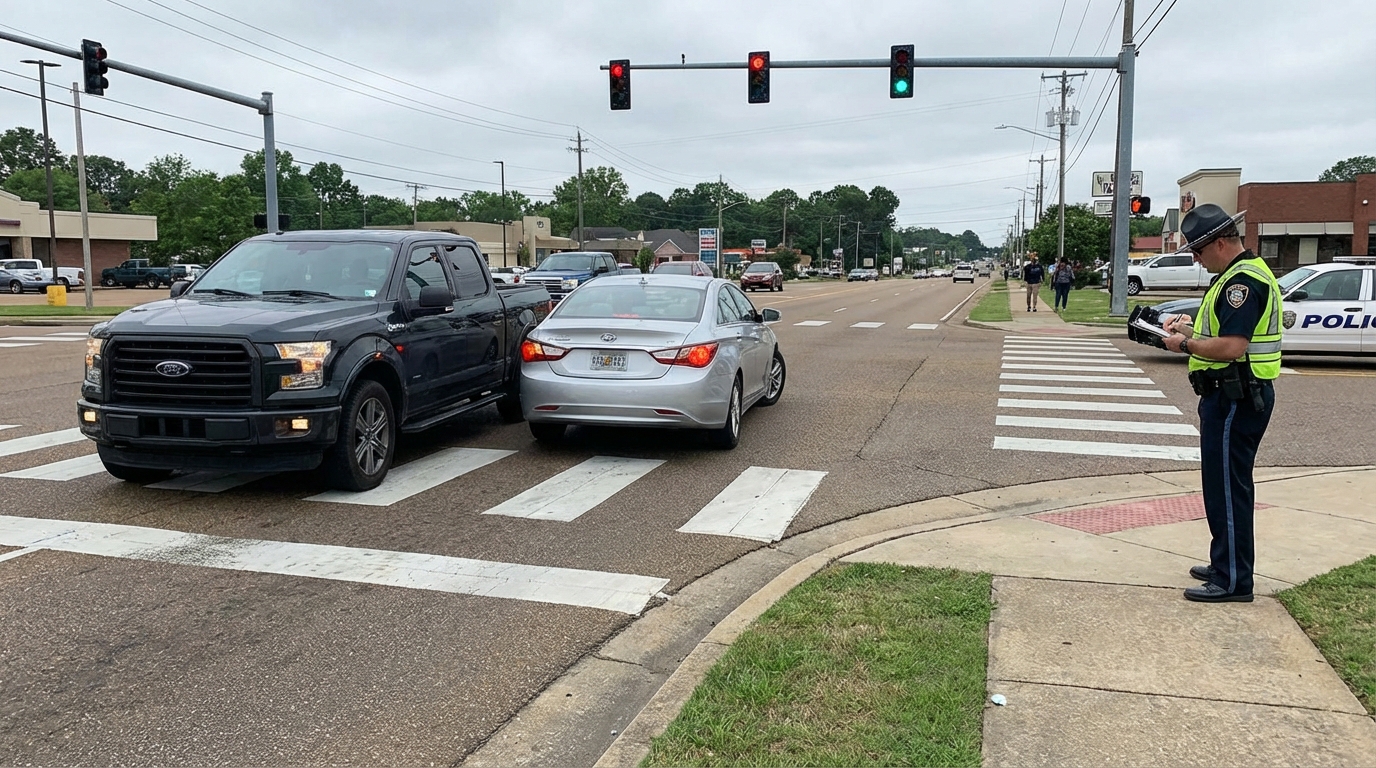
HB 1274 Puts Mississippi Comparative Negligence Law Auto Accident Claims in a New Spotlight
A new Mississippi bill is drawing attention for a reason that matters far beyond insurance pricing. In late January 2026, House Bill 1274 proposed barring insurers from raising rates, adding surcharges, canceling policies, or refusing renewals based on crashes where the policyholder was not at fault, with penalties tied to triple overcharged premiums or $1,000, whichever is greater. For people in Tupelo, Mississippi, this matters because the fight after a crash often turns on fault, documentation, and how insurers classify the event from the start. (insurancebusinessmag.com)
Why fault rules still drive Mississippi claims
Mississippi remains a fault-based auto insurance state, meaning liability usually follows who caused the wreck. That structure shapes nearly every injury claim, from the first insurance call to any settlement discussion or lawsuit. A state-by-state legal overview from Justia places Mississippi within the traditional fault framework rather than a no-fault system, which is why questions about blame carry significant weight after a collision. (insurancebusinessmag.com)
That is where the phrase Mississippi comparative negligence law auto accident becomes more than a search term. In practice, comparative negligence issues can affect whether an injured person is blamed for part of the crash, whether an adjuster discounts medical damages, and how aggressively the other side disputes causation. If HB 1274 puts renewed attention on what counts as a "nonfault" crash, it also highlights how important factual proof is in any Mississippi comparative negligence law auto accident claim. (insurancebusinessmag.com)
Insurance rules and liability rules are related but not the same. A bill about premium surcharges would not automatically rewrite legal standards for proving negligence in a personal injury case. Still, it can change the practical landscape by making fault determinations even more significant at the claims stage, especially when a family is dealing with treatment, missed work, and adjuster pressure. (insurancebusinessmag.com)

A Tupelo driver’s hypothetical after a serious crash
Picture a Tupelo driver hit at an intersection by a speeding pickup. She goes to the hospital, misses work the next week, and gets a call suggesting she may share some blame because she "could have reacted sooner." Simultaneously, she worries that being involved in the crash could affect her insurance costs.
That scenario is exactly why HB 1274 matters. If lawmakers are focusing on whether insurers may penalize policyholders for nonfault crashes, injured people should expect insurers to examine fault carefully and contest it. For someone living through a Mississippi comparative negligence law auto accident dispute, small details, photos, witness names, treatment timing, vehicle damage, and scene statements, can become critically important. (insurancebusinessmag.com)
What can make that situation harder
Early statements often shape the entire claim. The Mississippi Bar advises drivers not to express opinions about fault at the scene because those statements can later be used as evidence. People who are shaken or injured sometimes say things that insurers later frame as admissions. (The Mississippi Bar advises drivers not to express opinions about fault at the scene)
Paperwork matters too. The Mississippi Bar states that a written accident report must be filed within 10 days if someone is injured or if property damage exceeds $250, and failure to file can be treated as a misdemeanor that may lead to license suspension. That report can become an important reference when insurers and attorneys evaluate fault. (msbar.org)
What HB 1274 appears to do, and what it does not do
Based on late-January 2026 reporting, HB 1274 targets insurer conduct after nonfault crashes. The reported proposal would prohibit carriers from increasing rates, imposing surcharges, canceling policies, or declining renewals when the crash was not the insured’s fault. The bill includes a financial penalty requiring repayment of overcharged premiums plus triple damages, or $1,000, whichever is higher. (insurancebusinessmag.com)
The official Mississippi Legislature site is the place to track the measure’s status. The Legislature’s measure search portal is the state’s official source for locating bills from the 2026 Regular Session. Readers should distinguish between a proposal, committee action, and a bill that actually takes effect. (The Legislature’s measure search portal)
Why this could matter to injury claims
Fault labels influence more than premiums. They can shape how an insurer evaluates credibility, whether a crash is treated as clearly compensable, and how hard the defense pushes back on injury damages. Even when a statute targets underwriting or renewals, it can signal broader public concern about how "nonfault" crashes are categorized. (insurancebusinessmag.com)
For injured people, the practical lesson is caution and documentation. If your case may involve a Mississippi comparative negligence law auto accident dispute, preserve evidence early, seek medical care promptly, and avoid casual statements that minimize injuries or guess at fault. Outcomes depend on specific facts.
Insurance basics Mississippi drivers still need to know
Mississippi requires minimum liability coverage of $25,000 per person, $50,000 per accident for bodily injury, and $25,000 for property damage. The Mississippi Insurance Department states those minimums have been in effect since January 1, 2006. Under current Mississippi law (Miss. Code Ann. Section 63-15-4), the penalty for failing to maintain an insurance card is a fine of $100 and suspension of driving privileges for one year or until the motor vehicle owner shows proof of insurance. If the owner shows proof at the hearing date that insurance was in effect at the time of the citation, the case is dismissed with prejudice and all court costs are waived. (mid.ms.gov)
Liability coverage protects against damage you cause to others, not your own losses. The Mississippi Insurance Department explains that liability insurance does not pay your medical bills or vehicle repairs if you are the at-fault driver. (mid.ms.gov)
Mississippi also distinguishes between first-party and third-party claims. According to the Mississippi Insurance Department, first-party claims are made under your own policy, while third-party claims involve losses caused by an allegedly at-fault insured, and insurers owe a greater duty to claimants in third-party claims. (the Mississippi Insurance Department)
Property damage disputes often carry over into injury cases
Vehicle repair fights can affect the whole claim timeline. The Mississippi Insurance Department says insurers may not dictate where repairs must be made or condition payment on using a specific facility. Damages are often measured by the vehicle’s actual cash value before the loss or the amount necessary to properly repair the damage. (mid.ms.gov)
Parts disputes can also become part of the conversation. Mississippi permits aftermarket and non-OEM crash parts subject to legal and policy requirements. If a car is central to proving crash severity, repair method and documentation may matter significantly. (mid.ms.gov)
- Get photos of all vehicles, debris, skid marks, and roadway conditions.
- Keep copies of the crash report, repair estimate, rental bills, and towing records.
- Follow medical advice and keep records of every visit, prescription, and work restriction.
- Avoid giving broad recorded statements before understanding the facts and your injuries.
- Save all insurer letters or app messages about fault, coverage, or rate consequences.
What this means for readers in Tupelo
For local families, the biggest takeaway is that fault disputes start earlier than most people expect. A development like HB 1274 belongs in the real-life aftermath of a collision, where an injured person is trying to figure out treatment, bills, lost wages, and who is saying what about blame. Readers who want a broader explanation can review this discussion of Mississippi no-fault rules.
That local context matters in northeast Mississippi. A crash on a busy Tupelo corridor can involve private drivers, delivery vehicles, or commercial traffic, each generating competing stories about who caused the impact. People researching a Tupelo car accident claim are often trying to understand how to protect the facts before they get reshaped by the claims process.
A note on deadlines and legal caution
Injury claims and insurance reporting duties have different deadlines. The 10-day accident report requirement is an administrative obligation, while a civil lawsuit deadline is a separate legal issue. Courts often interpret exceptions narrowly, and whether an exception may apply depends on specific facts. (msbar.org)
That is why delay can be risky even when a case seems straightforward. Medical evidence can change, witnesses can disappear, and insurer positions can harden over time. Nothing in this article is individualized legal advice.
How Does This Impact Me?
If I was hurt in a crash, does HB 1274 change my personal injury case?
Probably not directly, based on what has been publicly reported. HB 1274 appears aimed at whether insurers can penalize policyholders for nonfault crashes, not at rewriting core negligence rules for bodily injury claims. But fault classification can influence how insurers frame the accident from the start. (insurancebusinessmag.com)
Does this mean my insurance company cannot raise my rate after a crash?
Not automatically, and not yet. A filed bill must move through the legislative process before becoming law. Readers should verify current status through the Mississippi Legislature’s measure search system. (legislature.ms.gov)
What should I do right after an accident if fault may be disputed?
Start preserving evidence immediately. Get medical evaluation, keep photos and witness information, and avoid speculating about blame at the scene. Mississippi Bar guidance specifically warns drivers not to express opinions concerning fault, because those statements may be used later. (msbar.org)
Do I have to use the repair shop the insurer recommends?
No, not according to Mississippi Insurance Department guidance. The agency says an insurer may recommend a shop but cannot require you to use a particular facility or condition payment on that choice. That can matter if repair quality, crash severity, or parts selection may later be disputed. (mid.ms.gov)
What if the other driver or insurer says I was partly to blame?
That is exactly when careful documentation becomes critical. In a Mississippi comparative negligence law auto accident dispute, the other side may use scene statements, delayed treatment, gaps in records, or incomplete property-damage proof to argue your fault share or damages should be discounted. Get case-specific guidance before making major claim decisions.
What readers should watch next
The most important next step is to watch whether HB 1274 advances, changes, or stalls during the 2026 session. As of early April 2026, the safest takeaway is not that Mississippi law has changed, but that lawmakers and industry observers are actively focusing on nonfault crash classification consequences. For injured people, that renewed attention underscores an old truth: facts gathered in the first days after a wreck can affect everything that follows. (insurancebusinessmag.com)
If you are trying to sort out what a recent crash may mean for your injuries, lost income, or insurance issues, getting reliable information early can help you make better decisions. Mama Justice Law Firm may be a resource if you need more information about your options after a collision. You can call [(833) 626-2587](tel:(833) 626-2587) or contact us today to learn more.