
Protecting the Evidence That Proves Your Columbus Truck Crash Case
Key Takeaways: A spoliation letter is a formal written demand sent to a trucking company, its insurer, and other responsible parties directing them to preserve all evidence tied to a semi-truck crash. Evidence can include electronic logging device data, engine control module downloads, dashcam footage, dispatch communications, driver qualification files, and maintenance records. Because much of this material is digital and subject to automatic overwriting or routine deletion, the letter is typically one of the first documents an attorney prepares. An effective letter itemizes specific record categories, demands suspension of automatic deletion protocols, and goes to every identifiable party, including leasing entities, brokers, and maintenance vendors. While not a court order, it establishes notice of the duty to preserve, which courts may weigh when considering sanctions or an adverse inference instruction. Preserved evidence can be especially valuable under Mississippi’s pure comparative negligence rule, though a preservation letter does not extend the deadline to file suit.
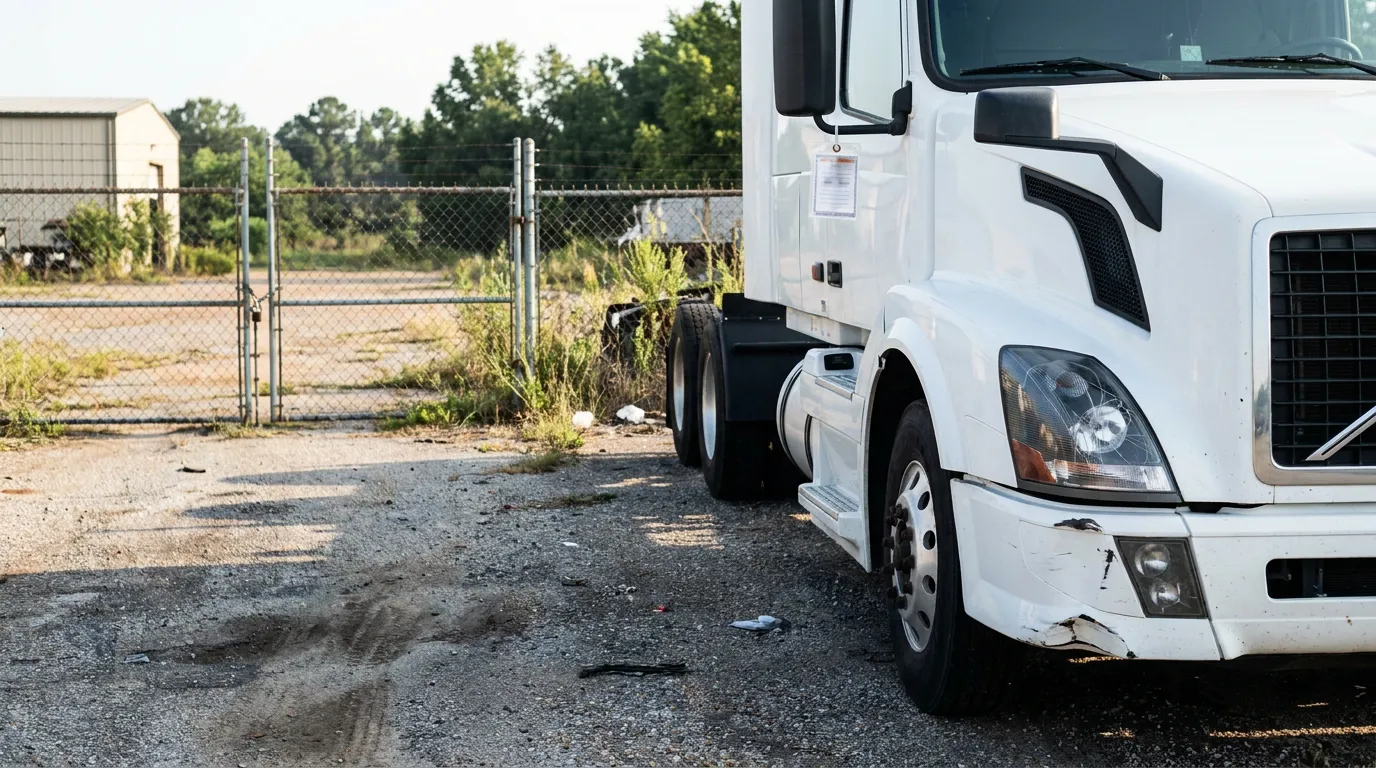
A spoliation letter formally instructs a trucking company, its insurer, and other potentially responsible parties to preserve every piece of evidence connected to a crash. After a semi-truck collision in Columbus, Mississippi, that evidence may include ELD records, engine control module downloads, dashcam footage, dispatch messages, driver qualification files, and maintenance histories. Because much of this material is digital and subject to routine deletion or overwriting, it’s often one of the first documents a plaintiff’s attorney prepares.
If you or a family member were hurt in a Lowndes County truck crash, the team at Mama Justice Law Firm may be able to help you understand your options. Call (833) 626-2587 or contact us now to discuss what evidence may still be recoverable in your case.
What Spoliation Means Under Mississippi Evidence Principles
Spoliation refers to the destruction, alteration, loss, or failure to preserve evidence relevant to a legal proceeding. Legal sources define it as the intentional, reckless, or negligent destruction, alteration, or hiding of relevant evidence, and courts generally treat it as a serious breach of a litigant’s obligations. See a plain-language legal definition of spoliation for more.
The consequences are significant but never automatic. Depending on the facts, a court may consider sanctions or an adverse inference instruction, allowing a jury to infer that missing evidence was unfavorable to the party that lost or destroyed it. Whether any remedy applies depends on culpability, timing of the duty to preserve, and prejudice to the injured party. The Mississippi Supreme Court has declined to recognize an independent civil cause of action for spoliation, so available responses are evidentiary and procedural remedies within the underlying case rather than a separate lawsuit.
Why a Letter Matters Before a Lawsuit Exists
A preservation letter puts a carrier on notice before litigation formally begins. A motor carrier’s duty to preserve typically arises when litigation becomes reasonably foreseeable, and a written demand helps establish that moment on the record. Sending it early may reduce arguments that deletion was routine business practice, though a carrier may still claim records were lost in good faith before any duty attached.
Mississippi’s procedural framework reflects an expectation that accident-related records be safeguarded. For example, Miss. Code Ann. § 13-3-63 requires that process served on nonresident motorists be preserved by the Secretary of State and court clerk. That statute addresses service of process rather than evidence retention, so it doesn’t itself create a preservation duty for carriers; it’s cited only to illustrate the state’s general posture favoring retention over disposal.
What a Truck Accident Spoliation Letter Should Demand
An effective letter identifies specific categories of evidence rather than making a vague request. Generic demands invite narrow interpretation, so counsel typically itemizes records unique to commercial motor carrier operations, including:
- Electronic logging device data, hours-of-service logs, and supporting documents
- Engine control module and event data recorder downloads from tractor and trailer
- Driver qualification file, training records, and post-crash drug/alcohol testing results
- Maintenance, inspection, and repair records for tractor and trailer
- Dispatch communications, GPS/telematics data, bills of lading, and load manifests
- Dashcam or onboard camera footage and any third-party surveillance obtained
- The tractor and trailer themselves, in post-crash condition, pending inspection
The letter should also instruct the carrier to suspend automatic deletion protocols. A carrier evidence hold is only meaningful if someone stops systems that routinely purge data. Counsel typically requests written confirmation that a litigation hold has been distributed internally to drivers, dispatchers, safety personnel, and IT staff, though a carrier isn’t obligated to confirm this absent a court order.
Electronic Logging Devices and the Race Against Deletion
Federal regulations require most commercial drivers to use electronic logging devices, creating a digital record of the truck’s activity before a crash. The FMCSA requires drivers who must keep duty-status records to use electronic logging devices to automatically record driving time and hours-of-service data, including time-stamped location, engine hours, and mileage. Limited exceptions exist for certain short-haul operations, drivers using paper logs a few days per month, drive-away/tow-away operations, and pre-2000 vehicles.
Because this data generates automatically, it can also be overwritten automatically. Under 49 C.F.R. Part 395, carriers must generally retain duty-status records for six months, while telematics, dashcam, and messaging data outside those rules may be purged far sooner under a carrier’s own policies. That’s one reason attorneys move quickly, a delay of weeks can mean the difference between a complete record and a gap.
💡 Pro Tip: If you photographed the truck, trailer, DOT number, or placards at the scene, save those images in more than one place. That information may help counsel direct a preservation demand to the correct legal entity.
Why Semi-Trucks Fall Squarely Within Mississippi’s Regulatory Framework
Mississippi’s Motor Vehicle Safety Responsibility Law defines "motor vehicle" broadly enough to cover commercial rigs. Under Miss. Code Ann. § 63-15-3(c), this includes trailers and semitrailers designed for highway use, excluding rail vehicles. So tractor-trailers on Highway 45 or 82 through Columbus generally sit inside the same state regulatory structure as passenger cars, alongside applicable federal rules.
That dual framework matters when identifying who must preserve evidence. A single crash may involve the driver, motor carrier, a separate trailer owner, cargo loader, maintenance vendor, and multiple insurers. Demands are often sent to each identifiable party, since a party’s preservation duty generally extends only to evidence within its own possession, custody, or control.
How Preserved Evidence Interacts With Fault Allocation
Mississippi follows a pure comparative negligence rule, which can make fault evidence exceptionally valuable. An injured plaintiff may recover damages even when assigned substantial fault, with the award reduced proportionally. Because recovery isn’t automatically barred by partial fault, every percentage point that evidence shifts may affect the outcome, though certain statutory defenses can still restrict recovery.
Preserved data frequently drives that allocation. Duty-status records may show a driver exceeding permitted hours; event data may show speed and braking before impact; maintenance files may reveal a deferred brake repair. Without these records, fault arguments often collapse into competing recollections.
| Evidence Category | What It May Show | Typical Preservation Risk |
|---|---|---|
| ELD / hours-of-service data | Driving time, fatigue, log falsification | Overwritten on rolling retention cycles |
| ECM / event data recorder | Speed, braking, throttle before impact | Lost if tractor is repaired or sold |
| Maintenance and inspection files | Deferred repairs, brake or tire defects | Purged under routine retention policies |
| Dashcam and telematics | Lane position, following distance | Auto-deleted within days or weeks |
| Dispatch communications | Delivery pressure, scheduling demands | Deleted with employee messaging accounts |
Common Obstacles Injured Claimants Encounter
Carriers and insurers often act faster than injured people can. Rapid response teams may reach the scene within hours, download the ECM, interview witnesses, and photograph the roadway before an injured claimant leaves the hospital. That imbalance is why evidence preservation is often treated as urgent.
Another frequent obstacle is misidentifying the right recipient. Trucking operations are often layered across leasing entities, owner-operators, brokers, and shippers, and a letter sent only to the name on the door may miss the entity that actually controls the records. For a fuller walkthrough, see our discussion of a spoliation letter in a Tupelo semi-truck case.
Deadlines That Run Alongside Evidence Preservation
A preservation letter protects evidence, but it does not extend your time to file suit. Most Mississippi truck crash negligence claims are governed by the general three-year limitations period in Miss. Code Ann. § 15-1-49, while Miss. Code Ann. § 15-1-35 sets a shorter one-year period for certain intentional torts like assault and battery. Wrongful death claims are generally measured by the period that would have applied to the underlying wrongful act. Which period governs is fact-dependent, and misjudging it may end a claim regardless of the evidence’s strength.
Exceptions such as tolling or delayed discovery are interpreted narrowly and don’t apply automatically. Courts consider these only in limited circumstances, such as legal disability or minority, with the burden on the claimant to establish an exception applies. Claims involving governmental entities are also subject to the Mississippi Tort Claims Act, which imposes a separate pre-suit notice requirement and shorter one-year limitations period.
💡 Pro Tip: Keep a simple written timeline of the crash date, every medical visit, and every insurer contact. Prompt documentation may support your damages and any later argument that the carrier was on notice of likely litigation.
Working With a Truck Accident Attorney in Columbus
Legal counsel generally sends preservation demands within days of being retained, sometimes the same day. An attorney may identify the corporate entities involved through DOT records, issue tailored demands, and pursue court intervention such as a temporary restraining order or expedited inspection when a vehicle appears likely to be repaired or sold. Whether a court grants such relief depends on the specific showing made, including urgency and irreparable loss.
Working with a legal team familiar with commercial trucking litigation may also shape what happens after preservation. Our attorneys handle 18-wheeler crash evidence issues as part of a broader approach including damages documentation and liability investigation; learn more about our work as a truck accident spoliation letter lawyer. Outcomes always depend on the particular facts, and no attorney can promise a specific result.
Frequently Asked Questions
1. How soon after a Columbus, MS truck accident should a spoliation letter be sent?
As soon as reasonably possible, often within the first several days. Some electronic data may be overwritten on short cycles, and physical evidence such as a damaged tractor may be repaired or sold. Earlier notice generally strengthens any later argument that the carrier’s duty to preserve had already attached.
2. Does a trucking company have to comply with a spoliation letter?
A letter itself is not a court order, so compliance isn’t directly enforceable. Its practical force comes from establishing notice, which courts may consider when evaluating whether later destruction was reasonable. In some cases, counsel may seek a court order to compel preservation or inspection.
3. What happens if evidence is destroyed anyway?
A court may consider remedies including an adverse inference instruction or other sanctions. These generally depend on culpability, timing, and prejudice to the injured party, and Mississippi doesn’t recognize a separate lawsuit for spoliation itself. No specific sanction is guaranteed.
4. Can I send a preservation letter myself without an attorney?
Nothing prevents an injured person from sending written notice, and doing so is generally better than nothing. However, these letters typically require identifying the correct legal entities and itemizing carrier-specific record categories. Incomplete demands may leave important data unprotected.
5. Does partial fault prevent me from recovering after a semi-truck crash?
Not necessarily, because Mississippi applies pure comparative negligence. A plaintiff may still recover even when assigned a large share of responsibility, with damages reduced proportionally, subject to any applicable statutory defenses. How fault is apportioned depends on the evidence available, one reason preservation matters.
Moving Quickly Protects What Your Case Depends On
A truck accident spoliation letter is a practical tool that may help keep perishable evidence intact while liability is investigated. It cannot guarantee compliance and doesn’t replace the need to meet applicable filing deadlines, but it may establish notice, document the duty to preserve, and create a record courts may consider if evidence later disappears. For families dealing with serious injuries after a Columbus, Mississippi collision, that early step may shape much of what follows.
If you need help with evidence preservation after a semi-truck collision, reach out to Mama Justice Law Firm today. Call (833) 626-2587 or schedule your free consultation to have your questions answered.
Disclaimer: This content is for informational purposes only and is not legal advice. Every case is unique, and results may vary. Consult an attorney about your specific circumstances.