

Who Else Can Be Held Responsible When an 18-Wheeler Load Is Arranged by a Third Party?
Key Takeaways: Freight broker liability in a Memphis semi-truck accident case usually depends on whether the broker negligently selected an unsafe motor carrier or exercised enough control over the shipment to be treated like a carrier. Federal law defines brokers and carriers separately, but courts often look at actual conduct rather than the label a company uses, making early verification of operating authority important. Brokers also frequently raised preemption under the Federal Aviation Administration Authorization Act, but the U.S. Supreme Court unanimously resolved the circuit split in Montgomery v. Caribe Transport II, LLC (May 14, 2026), holding that negligent-hiring claims against freight brokers are saved from preemption by the safety exception and may proceed under state law nationwide. Strong broker claims are often built on pre-load safety data, crash and inspection histories, insurance lapses, broker-carrier agreements, and load communications showing scheduling pressure. The $75,000 broker bond is generally designed for freight payment disputes, not injury compensation, so recovery more typically comes from the carrier’s liability policy and any contingent or errors and omissions coverage. Bills of lading, load confirmations, and dispatch records may reveal who described the freight, directed loading, and controlled the shipment. Tennessee’s one-year filing deadline under Tenn. Code Ann. § 28-3-104(a)(1) generally applies to broker claims as well, subject to limited statutory exceptions, and critical electronic evidence can be overwritten within weeks.
When a semi-truck crashes on I-40, I-240, or Lamar Avenue, the driver is rarely the only party with potential exposure. Behind many loads sits a freight broker, a company that never touches the cargo but arranges for a motor carrier to haul it. Freight broker liability in a Memphis case generally turns on whether the broker negligently selected an unsafe carrier, or exercised enough control over the shipment that a court may treat it more like a carrier than a middleman. These claims are fact-intensive, and outcomes depend heavily on contracts, communications, and safety records uncovered in discovery, as well as how the court resolves federal preemption arguments.
If you or a loved one were hurt in a collision with a commercial truck, Mama Justice Law Firm can help you identify every potentially responsible party, including brokers and shippers you may not know exist. Call (833) 626-2587 or contact us now to discuss your situation.
How Federal Law Separates Brokers From Motor Carriers
The starting point is understanding what a broker legally is. Federal law defines a broker as a person who, for compensation, arranges transportation of property by an authorized motor carrier, while a motor carrier actually provides that transportation. Those definitions, at 49 U.S.C. § 13102(2) and § 13102(14), matter because a broker generally isn’t answerable for a carrier’s driving conduct under respondeat superior unless facts show an agency relationship or sufficient control over the transportation.
Federal registration categories reinforce this separation. The FMCSA issues motor carrier, broker, and freight forwarder authority as distinct registrations, and a single company may hold more than one. A defendant calling itself a "logistics company" may have operated as a broker on one load and a carrier on the next, which is why early verification of operating authority matters. Registration status is a starting point, not a conclusion, the role a company actually played on the load at issue controls.
Freight forwarders occupy a middle position. Under the definitions of broker and carrier authority, a freight forwarder assembles and consolidates shipments and generally assumes carrier-like responsibility for the goods during its portion of the movement. Courts may weigh that added responsibility when deciding how much duty a defendant owed the traveling public.
Why the Label a Company Uses Is Not Controlling
Courts often look at conduct, not letterhead. A company that dictated routes, set delivery windows encouraging hours-of-service violations, or supervised the driver directly may face arguments that it functioned as a carrier. Conversely, a broker that simply matched a shipper with a licensed, insured carrier may argue it owed only a limited duty of reasonable care in selection, a framing many courts accept. Brokers commonly raised preemption under 49 U.S.C. § 14501(c)(1), arguing negligent selection claims relate to broker services; however, the U.S. Supreme Court unanimously resolved the circuit split in Montgomery v. Caribe Transport II, LLC (May 14, 2026), holding that negligent-hiring claims against freight brokers fall within the safety exception of § 14501(c)(2)(A) and are not preempted by the FAAAA, establishing a uniform national rule that such claims may proceed under state law.
Proving Freight Broker Liability in Tennessee
Many viable broker claims in Tennessee rest on negligent selection or hiring of a motor carrier, the theory being that the broker knew, or should have known through reasonable diligence, that the carrier had a dangerous safety profile. Tennessee courts haven’t extensively developed this theory in published decisions, so results often depend on how a court applies general negligence principles. Evidence that may support broker negligence often includes:
- Federal safety ratings, out-of-service percentages, and inspection histories available before the load was tendered
- Prior crash records or patterns of hours-of-service violations
- Lapsed or insufficient liability insurance on the carrier
- Broker-carrier agreements showing safety requirements the broker failed to enforce
- Load confirmations, emails, and dispatch notes reflecting scheduling pressure
Tennessee’s vehicle ownership presumption may help anchor the chain of responsibility. Under Tenn. Code Ann. § 55-10-311(a), proof of vehicle ownership is prima facie evidence that it was operated with the owner’s authority, consent, and knowledge, by the owner’s servant, within the scope of employment. That presumption can help connect the driver to the carrier, often the first step before tracing responsibility further up to the entity that arranged the load. It’s rebuttable, defense may contest it with proof of independent contractor status or personal use, and it applies to vehicle owners, not brokers who neither own nor operate the equipment.
Tennessee law elsewhere shows a willingness to extend liability beyond the driver. For example, Tenn. Code Ann. § 55-10-314 makes an employer jointly and severally responsible for damages when a twin trailer truck driver is adjudicated at fault in a hazardous waste spill accident. That statute is narrow and doesn’t govern brokers, but it illustrates the legislature’s broader instinct in trucking cases.
The $75,000 Bond and What It Actually Covers
Every property broker must maintain federally required financial security, though injury victims should understand its limits. Under 49 U.S.C. § 13906, brokers must obtain a BMC-84 surety bond or BMC-85 trust fund of $75,000. The broker financial responsibility requirements explain that this security protects motor carriers and shippers when a broker fails to pay for transportation services.
That purpose is frequently misunderstood. The bond covers the broker’s contractual transportation obligations, not bodily injury claims. In an injury case, the more meaningful recovery sources are usually the carrier’s liability policy and any contingent liability coverage the broker carries. Still, bond status is worth checking, because failure to maintain required security may lead to suspension or revocation of broker registration under 49 C.F.R. part 387, and a lapse may be relevant to a broker’s overall compliance posture.
| Party | Typical Role | Common Theory of Liability |
|---|---|---|
| Driver | Operates the tractor-trailer | Direct negligence |
| Motor carrier | Employs driver, owns or leases equipment | Vicarious liability, negligent maintenance or supervision |
| Freight broker | Arranges transport with a licensed carrier | Negligent selection or retention of carrier |
| Freight forwarder | Consolidates and arranges shipments | Broader duty depending on control exercised |
| Shipper or loader | Tenders and loads cargo | Negligent loading or misdescription |
💡 Pro Tip: Ask your attorney to send preservation letters to the broker as well as the carrier. Broker-side emails, load boards, and carrier vetting files are often stored on systems with short retention windows.
Paperwork That Can Reveal Who Controlled the Load
Bills of lading and load documents frequently become central evidence. Under Tenn. Code Ann. § 47-7-301(a), a consignee or holder may recover from the issuer damages caused by misdating, nonreceipt, or misdescription of goods, subject to the limits in that section. Subsection (e) adds that a shipper guarantees the accuracy of the description, marks, labels, number, kind, quantity, condition, and weight furnished, and must indemnify the issuer against damage caused by inaccuracies.
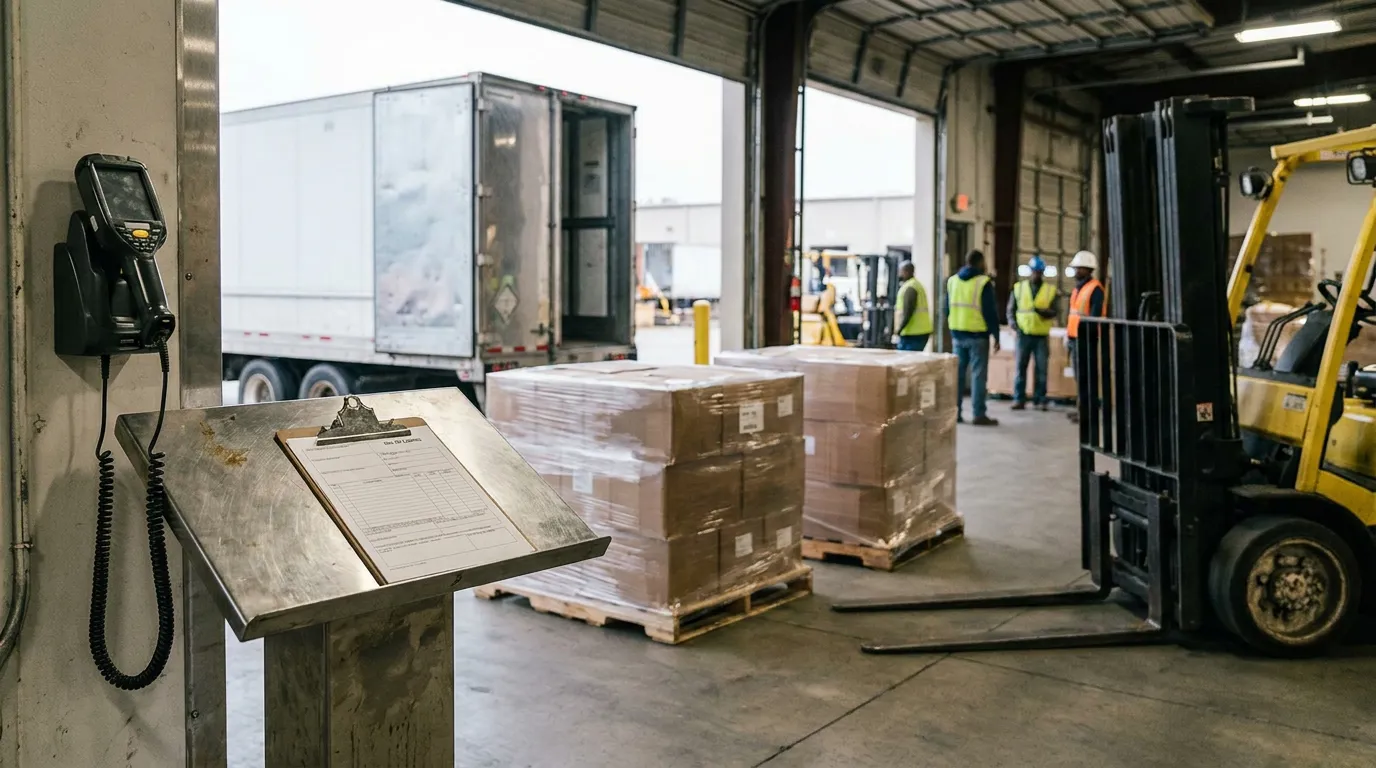
These commercial provisions govern rights between commercial parties rather than injury claims, but they may shape the factual record. When a cargo shift, overweight axle, or improperly described hazardous load contributes to a crash, documents generated when the broker arranged the shipment may show who described the freight, who directed loading, and who accepted the risk. A Memphis truck crash attorney will typically request these records early, before they’re routinely purged.
Insurance Layers in a Memphis Truck Wreck
Tennessee law shapes how liability coverage responds after a crash. Tenn. Code Ann. § 55-12-122(a) requires a motor vehicle liability policy to insure the named insured and any other permitted user against damages imposed by law, subject to policy terms and exclusions. Subsection (e)(1) provides that the insurer’s liability becomes absolute once covered injury or damage occurs, and cannot be cancelled by any agreement made after the occurrence.
Brokers usually sit outside that policy. Their exposure, if any, typically runs through contingent liability or errors and omissions coverage, which behaves differently from a trucking policy and often contains significant exclusions. Sorting out which policies apply, and in what order, is one of the more technical parts of a freight broker lawsuit.
How Fault Gets Divided Among Multiple Defendants
Adding a broker to a case may change the apportionment picture. Tennessee follows modified comparative fault: a plaintiff who is 50 percent or more at fault generally recovers nothing, and fault among defendants is usually allocated severally rather than jointly. Our discussion of broker verdicts and several liability explores how apportionment statutes can affect recovery when a broker is one of multiple defendants. Results remain highly fact-dependent.
The One-Year Deadline That Controls Almost Every Case
Tennessee gives injury victims a short window to file. Under Tenn. Code Ann. § 28-3-104(a)(1), actions for personal injury must generally be commenced within one year after the cause of action accrued. That deadline generally applies to claims against brokers for negligent carrier selection just as it applies to claims against the driver and motor carrier.
Limited exceptions exist, and courts often construe them narrowly. Discovery-rule accrual, tolling for minors or incompetent persons, and the extension to two years under Tenn. Code Ann. § 28-3-104(a)(2) when related criminal charges are brought can affect the deadline in specific situations, but none should be assumed to apply. Separate administrative processes, such as federal safety complaints, are not civil lawsuits and do not extend the filing deadline. Waiting to investigate can be risky, since broker cases may require time to identify the right corporate defendants before the clock runs out.
💡 Pro Tip: Electronic logging device data, dashcam footage, and carrier vetting records can be overwritten within weeks or months. Getting counsel involved quickly is often the difference between a provable broker claim and a theory without evidence.
Frequently Asked Questions
1. Can a freight broker be sued directly after a Memphis truck crash?
In some cases, yes, provided the facts support a theory such as negligent selection of the motor carrier or exercise of control over the shipment. Whether a claim survives depends on the evidence, contracts, and preemption arguments defendants may raise. Following the U.S. Supreme Court’s decision in Montgomery v. Caribe Transport II, LLC (May 14, 2026), negligent-hiring claims against freight brokers are preserved from federal preemption by the safety exception and may proceed under state law nationwide.
2. Does the $75,000 broker bond pay my injury claim?
Generally, no. That financial security is primarily designed to protect shippers and carriers when a broker fails to pay for transportation services, not to compensate injured motorists.
3. How do I know whether the company was a broker or a carrier?
Federal registration records identify which operating authority a company holds, and a company may hold more than one. Load confirmations, rate agreements, and bills of lading may reveal which role the company actually played on the specific shipment.
4. What evidence matters most in broker negligence claims?
Pre-load carrier safety data, the broker-carrier contract, load communications, and the broker’s internal vetting policies tend to carry significant weight. Much of this is often in the defendant’s possession and may need to be requested through formal discovery.
5. How long do I have to bring an 18-wheeler accident claim in Memphis?
Tennessee generally allows one year from the date of the crash under Tenn. Code Ann. § 28-3-104(a)(1). A limited set of exceptions, such as the two-year period that can apply when related criminal charges are brought, may alter that deadline, so prompt action and individualized review are important.
Putting the Pieces Together After a Serious Truck Collision
Freight broker liability claims sit at the intersection of federal transportation regulation and Tennessee negligence law. The broker’s role may be limited or substantial, and the difference usually emerges only after careful review of operating authority, carrier safety records, load documents, and insurance layers. Because Tennessee’s one-year deadline moves quickly and key electronic evidence may disappear sooner, injured people and grieving families may benefit from moving early rather than waiting to see how insurance adjusters respond.
For truck accident legal help in Memphis, the team at Mama Justice Law Firm is prepared to investigate every layer of the contracting chain. Call (833) 626-2587 or request your free consultation to get started.
Disclaimer: This content is for informational purposes only and is not legal advice. Every case is unique, and results may vary. Consult an attorney about your specific circumstances.