
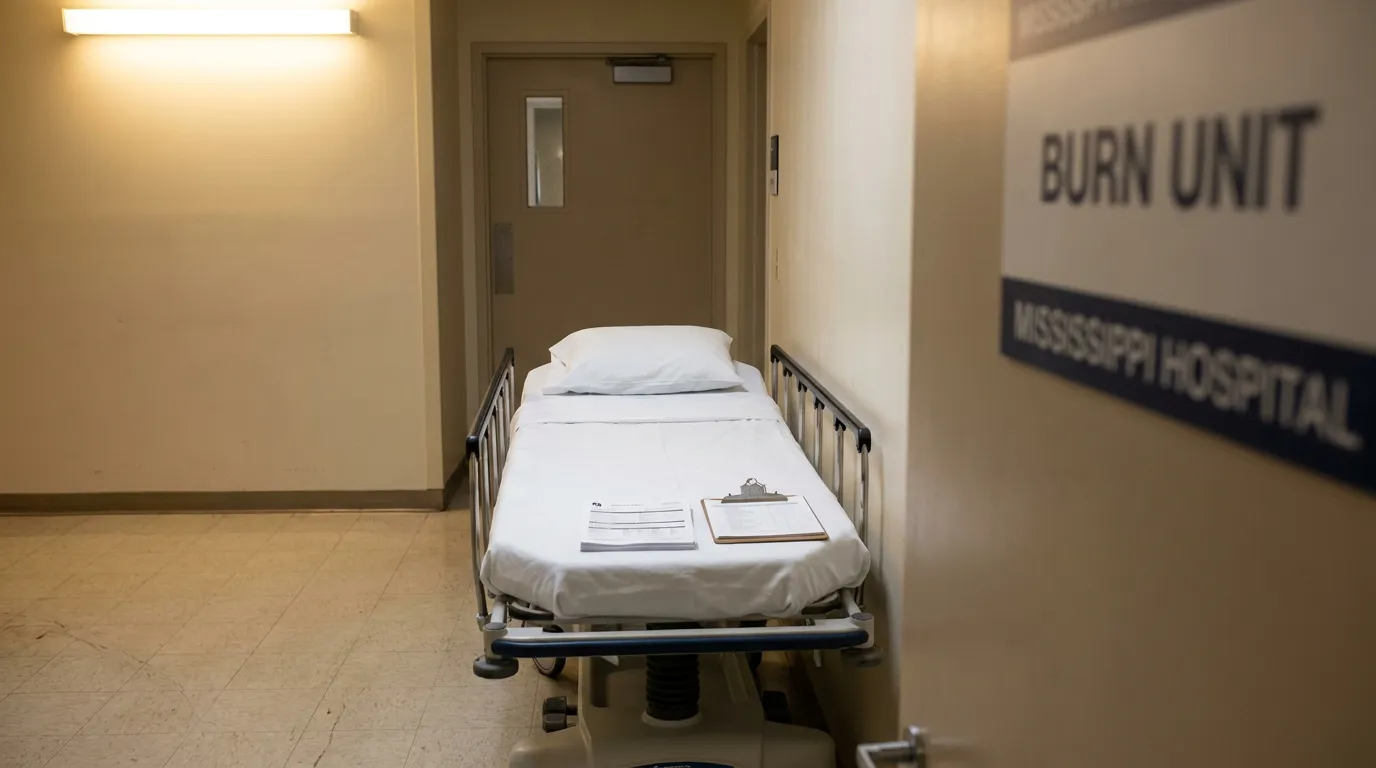
Understanding Burn Care Liens on Your Injury Settlement in Tupelo
Key Takeaways: Mississippi’s hospital lien statute, Miss. Code Ann. § 85-7-301, allows only "qualifying hospitals" (hospitals designated as burn centers by the State Department of Health) and "qualifying practices" providing "traumatic burn care" to claim a lien for reasonable charges on uncompensated care. The lien attaches to causes of action against third parties responsible for the injury, subordinate to attorney’s liens, not to personal assets. Providers must give 15 days’ advance written notice and file a verified statement with the chancery clerk in both the provider’s county and the patient’s county, within 75 days of discharge for hospitals or 90 days from first treatment for practices. Statutory protections include a 50% cap on lien payments under § 85-7-307, invalidation for defective or untimely compliance under § 85-7-303(2), and exemption for pre-admission settlements under § 85-7-311. Common disputes involve charges already paid by insurers, reasonableness of amounts, and coordination with health plans and government programs. Tupelo burn victims should request itemized bills, check Lee County chancery clerk records, and avoid signing releases before confirming how each lien will be handled.
If a Tupelo burn victim receives treatment at a burn center and bills go unpaid, Mississippi law may allow certain providers to place a lien on the patient’s injury claim rather than on the patient personally. Under Miss. Code Ann. § 85-7-301(2), a qualifying hospital or practice furnishing traumatic burn care "shall have a lien for the reasonable charges" for uncompensated care, attaching only to causes of action against third parties responsible for the injury, subordinate to any attorney’s lien. Your house, paycheck, and bank account are generally outside this lien’s reach, a distinction that matters enormously when recovering from catastrophic burns and worrying about settlement proceeds.
Mama Justice Law Firm helps burn victims and their families across North Mississippi understand and challenge improper liens. Call (833) 626-2587 or contact us now to talk through your situation with the team at Mama Justice Law Firm.

What the Mississippi Hospital Lien Statute 85-7-301 Actually Covers
This statute is far narrower than most people assume. It is not a general hospital lien law applying to every emergency room visit in Lee County. The provisions in Section 85-7-301 of the Mississippi Code sit within Title 85 (Debtor-Creditor Relationship), Chapter 7 (Liens), Article 19, titled "Qualifying Providers of Burn Care Lien for Causes of Action," spanning §§ 85-7-301 through 85-7-317.
Three defined terms control whether a lien is possible. Under § 85-7-301(1), a "qualifying hospital" means a hospital designated as a burn center by the State Department of Health, and a "qualifying practice" means a physician practice providing care to a patient admitted to such a hospital. The lien reaches only "uncompensated" traumatic burn care, portions not otherwise paid. If your health insurer, auto medical payments coverage, or another payer covered a portion, that portion generally should not appear in the lien amount.
Timing also limits the lien’s reach. Under Miss. Code Ann. § 85-7-311, any settlement or release executed before the injured party enters the qualifying hospital is generally not subject to §§ 85-7-301 through 85-7-315. The lien attaches to claims connected with the burn-care admission, not matters already resolved.
How a Provider Perfects a Traumatic Burn Care Lien
Perfection is a multi-step process with specific requirements. Miss. Code Ann. § 85-7-303 governs the filing of the verified statement, required contents, and notice. Under § 85-7-303(1)(a), written notice must be provided "not less than fifteen (15) days before the date of filing the statement" to the patient, legal representative, and known liable parties and insurers, sent by first-class and certified mail or statutory overnight delivery, return receipt requested.
Deadlines That Differ by Provider Type
Filing windows vary by provider type. Section 85-7-303(1)(b)(i)-(ii) sets separate deadlines:
| Provider Type | Filing Deadline |
|---|---|
| Qualifying hospital | Within 75 days after the patient’s discharge |
| Qualifying practice | Within 90 days after the person first sought treatment for the injury |
Where and What Must Be Filed
The verified statement goes to the chancery clerk in two counties. Under § 85-7-303(1)(b), it must be filed in the county where the provider is located and where the patient resides. The statement must list the patient’s name and address, provider’s name and operator, admission and discharge or treatment dates, amount claimed, and certification that it reflects uncompensated traumatic burn care.
The Clerk’s Role and How to Check the Record
Chancery clerks maintain a searchable trail. Under the chancery clerk recording requirements in Miss. Code Ann. § 85-7-305, the clerk endorses the filing date and hour and maintains an indexed lien book listing the hospital or practice, patient, and amount claimed. Tupelo residents can review Lee County chancery clerk records to determine whether a burn-care lien was filed.
💡 Pro Tip: Ask for a copy of the endorsed, file-stamped verified statement early. The date and hour of filing may be crucial in evaluating whether a lien was perfected on time.
Protections Built Into Mississippi Injury Lien Law
The Legislature wrote several safeguards into the statute that often change the math on a burn victim’s net recovery:
- A 50% cap. Under Miss. Code Ann. § 85-7-307, "In no case shall the payment towards the liens exceed fifty percent (50%) of the claimant’s balance." The section allows a court to determine pro rata compensation when the claimant’s balance is insufficient to cover medical liens.
- No lien on personal assets. Section 85-7-301(2) provides that the lien is not against the injured person, legal representative, or their other property or assets, and is not evidence of debt failure; § 85-7-303(1)(a) requires notices to state this.
- Release and notification rules. Under § 85-7-307(1), a release of the cause of action is generally not valid against the § 85-7-301 lien unless the lienholder is notified of results or executes a release; providers receiving payment must release the claimant from further liability for those charges.
- Defective compliance can void the lien. Section 85-7-303(2) provides that failure to timely comply with notice and filing rules may invalidate the lien, except against a liable party receiving actual notice before release or settlement.
The flip side deserves attention. A lien perfected under § 85-7-303 before a release may be effective, and § 85-7-307(2) allows a settling party obtaining the statutory affidavit to avoid being bound in certain circumstances. Families should not assume silence equals safety.
Common Challenges Tupelo Burn Victims Run Into
Most lien disputes turn on documentation. Often the claimed amount includes charges an insurer already paid or adjusted, conflicting with the "uncompensated" limitation. Reviewing itemized billing against explanation-of-benefits statements may reveal discrepancies that providers might correct once challenged.
Reasonableness of charges is another frequent flashpoint. The lien reaches "reasonable charges," and billed amounts are not automatically reasonable. Whether a figure survives scrutiny is fact-dependent.
Coordination problems multiply with several payers. Health plans, workers’ compensation carriers, and government programs may each assert reimbursement rights alongside a burn-care lien. Families sorting through overlapping claims often benefit from reading about who pays medical bills after a crash before negotiating.
💡 Pro Tip: Do not sign a release without confirming, in writing, how each asserted lien will be handled at closing. A release signed without lienholder notification may create avoidable complications.
Practical Steps After a Catastrophic Burn Injury
Early organization protects leverage later. Request a full itemized bill from the burn center, keep every certified mail notice, and note the discharge date since filing deadlines generally run from it for qualifying hospitals. Preserve evidence about how the burn occurred, since third-party liability often gives the claim value.
Legal representation changes how these issues get resolved. A Tupelo catastrophic injury lawyer can review the lien for statutory compliance, evaluate whether charges may be reasonable, and negotiate within the statutory framework. Mama Justice Law Firm is backed by 75+ years of combined legal experience and has helped 3,500+ families secure their legacy, with over $2 billion in assets protected for clients and their families.
Burn cases sit at the severe end of the injury spectrum. Long-term care needs, reconstructive surgeries, and lost earning capacity may all belong in the damages analysis. Our team handles these matters through our Tupelo catastrophic injury lawyer practice.
Frequently Asked Questions
1. Can a burn center take my house under this lien?
Generally no. Under § 85-7-301(2), the lien generally attaches only to causes of action against third parties and is not a lien against the patient’s other property or assets; § 85-7-303(1)(a) requires notices to state this.
2. What happens if the hospital misses the filing deadline?
Section 85-7-303(2) provides that failure to timely comply with notice and filing requirements may invalidate the lien, subject to an exception for liable parties receiving actual notice before release or settlement.
3. Is there a limit on how much a lien can take from my settlement?
Generally yes. Miss. Code Ann. § 85-7-307 provides that payment toward liens shall not exceed fifty percent of the claimant’s balance, preserving a portion for the injured person.
4. Does the mississippi hospital lien statute 85-7-301 apply to all hospital bills?
No. The statute is limited to qualifying hospitals and practices providing traumatic burn care, and only to uncompensated amounts. Other medical bills are governed by different rules.
5. How do I find out whether a lien was filed?
The verified statement is generally filed with the chancery clerk and indexed in the patient’s name under § 85-7-305, so a records search in the relevant county is the starting point.
Protecting Your Recovery After a Burn Injury
Mississippi’s burn-care lien scheme is narrow, technical, and full of conditions providers must satisfy before a lien has force. The statute limits liens to uncompensated traumatic burn care from qualifying providers, requires 15 days’ advance notice and timely chancery clerk filings, caps payment at half the claimant’s balance, and exempts pre-admission settlements. Each provision may materially affect what a Tupelo burn victim keeps, but outcomes depend on particular facts and documentation.
If a burn center lien claim has appeared in your case, do not negotiate it alone. Reach Mama Justice Law Firm at (833) 626-2587 or schedule a free consultation to have your lien reviewed.
Disclaimer: This content is for informational purposes only and is not legal advice. Every case is unique, and results may vary. Consult an attorney about your specific circumstances.