
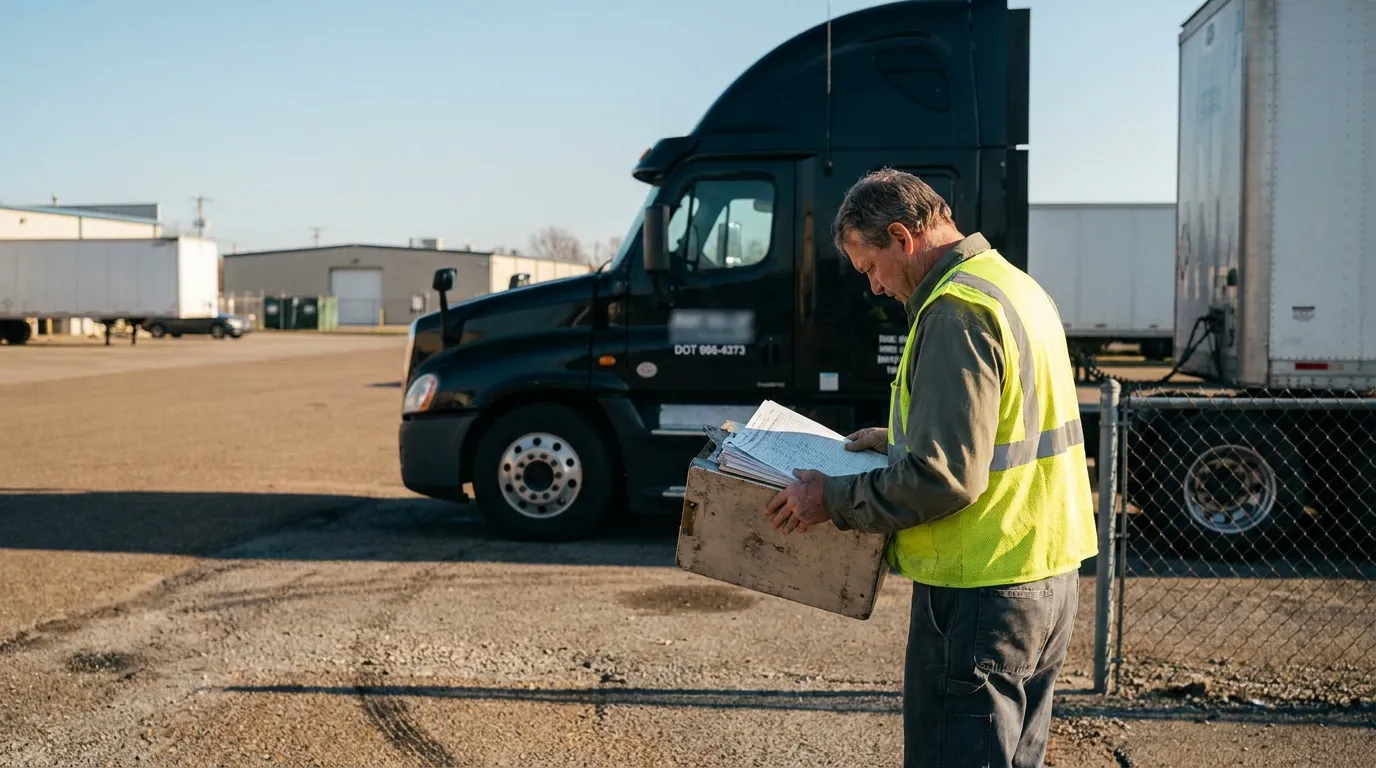
Understanding Why Truck Maintenance Files Become Critical Evidence
Key Takeaways: After a Memphis 18-wheeler crash, multiple parties examine maintenance records, including plaintiff attorneys and investigators, the motor carrier and insurer, government safety auditors, and accident reconstruction professionals. Federal regulations under 49 CFR 396 require carriers to systematically inspect, repair, and maintain vehicles with dated records, including annual inspection reports retained for 14 months. These files establish duty, breach, and causation in negligence claims. Tennessee’s modified comparative fault reduces recovery by the victim’s percentage of blame and bars recovery if the victim is 50% or more at fault, making proof of carrier negligence critical. Since carriers control this perishable evidence with limited retention periods, acting quickly with a legal hold letter is essential.
After a serious 18-wheeler collision, maintenance records are among the first documents investigators and attorneys request. These files can reveal whether mechanical defects, skipped inspections, or ignored repairs contributed to the crash. In Memphis, reviewers typically include your attorney and investigators, the trucking company and insurer, government safety officials, and accident reconstruction professionals.
No single person reviews these records. Instead, multiple parties examine them, each with different goals. For injured victims, the most important reviewer is a legal team fighting to prove negligence and preserve every page before it disappears.
If you or a loved one were hurt in a semi-truck crash, the team at Mama Justice Law Firm is ready to help. Call us at (833) 626-2587 or reach out through our confidential case review form to discuss how maintenance records may support your claim.
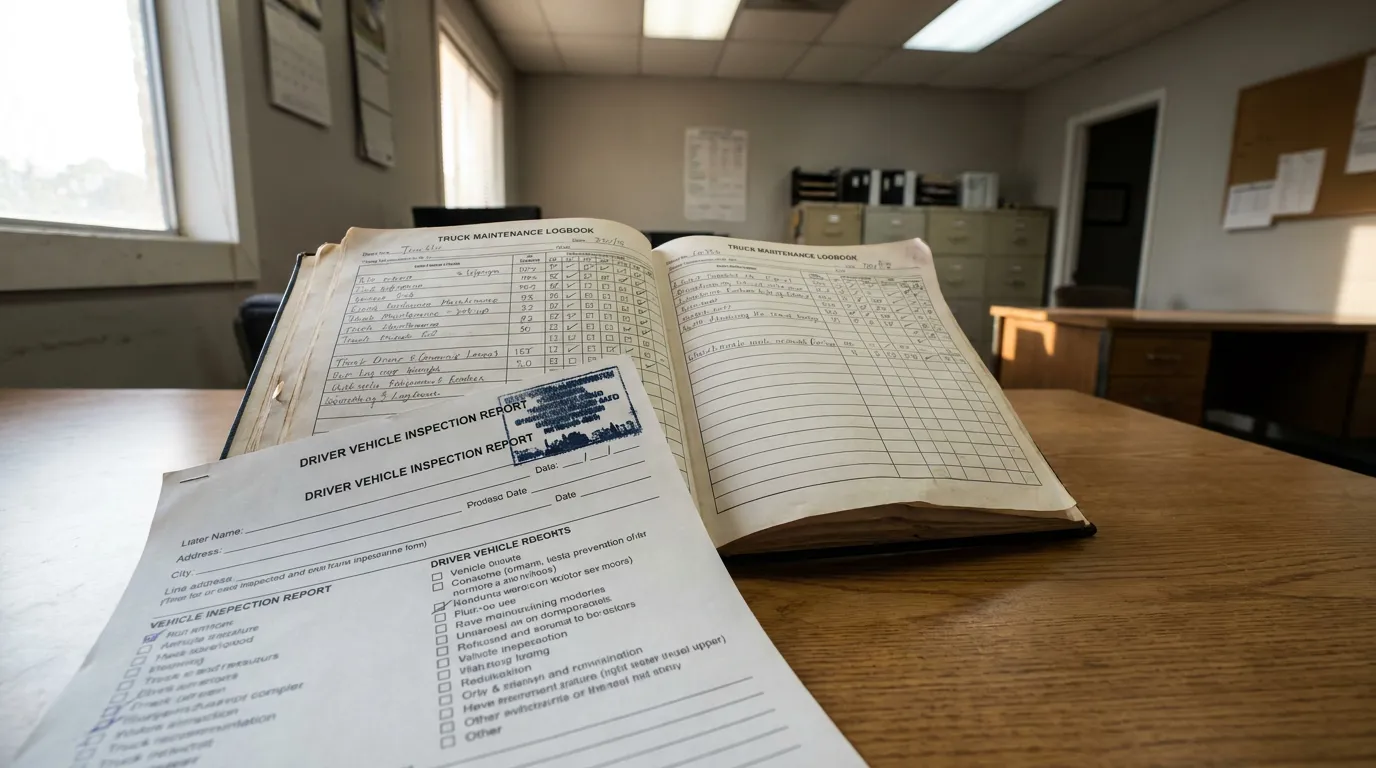
Who Actually Examines the Records After a Crash
Multiple parties review truck maintenance documentation after a serious wreck, and their interests rarely align. The reviewers generally include:
- Plaintiff attorneys and their investigators, who obtain files to identify breaches of federal safety duties.
- The motor carrier and its insurer, who review records to evaluate exposure and shape defenses.
- Government safety auditors, who examine compliance with federal inspection and recordkeeping rules.
- Accident reconstruction professionals, who correlate maintenance history with physical evidence.
FMCSA provides standardized documents these reviewers commonly request. A Vehicle Inspection, Repair, and Maintenance Record and a Driver’s Vehicle Inspection Report (DVIR) are specific forms that plaintiff attorneys, investigators, and safety auditors seek after Memphis truck crashes. When these forms are missing, incomplete, or contradicted by other evidence, that gap itself becomes powerful proof.
💡 Pro Tip: Request a legal hold letter be sent to the trucking company as early as possible. Maintenance files, driver logs, and electronic data can be altered or destroyed on routine retention cycles if no one demands preservation.
The Role of Your Legal Team
Your attorney gathers and interprets these records before they vanish. Building a truck-crash case requires early investigation, and Tennessee’s filing deadlines make prompt involvement important. Retaining counsel early helps prevent the statute of limitations from running and allows proper investigation through research and document collection.
Because trucking companies control this evidence, victims often struggle obtaining it alone. Many work with a Memphis truck accident lawyer who knows which federal forms exist and how to demand them formally.
What Federal Law Requires Trucking Companies to Keep
Federal regulations create the legal duty that generates maintenance records reviewed after crashes. Under 49 CFR 396, each motor carrier must systematically inspect, repair, and maintain all commercial vehicles under its control. This federal standard applies to carriers operating through Memphis, measuring local wrecks against a nationwide baseline.
Under 49 CFR § 396.3(b), carriers must keep dated records showing the nature and due date of inspection and maintenance operations. These details help reviewers determine whether mechanical problems played a role in the collision. You can review the federal framework in the FMCSA’s guidance on inspection and maintenance duties.
Retention periods determine whether recent records can still be obtained. For vehicles controlled for 30 consecutive days or more, carriers must maintain vehicle identification records. The original or copy of the annual periodic inspection report must be retained for 14 months from the report date. This window allows post-crash reviewers to verify whether a truck passed its required annual inspection, provided the request is made before records are lawfully purged.
Components That Get Scrutinized
When reviewers suspect mechanical failure, they focus on safety-critical parts. Under 49 CFR 396.3(a)(1), parts and accessories must be in safe and proper operating condition at all times. Reviewers commonly examine frame and frame assemblies, suspension systems, axles and attaching parts, wheels and rims, and steering systems for signs of neglect or failure.
Time-based inspection intervals can expose lapses. When a required inspection interval is missed, that omission may support an argument that the carrier breached its duty.
💡 Pro Tip: Ask whether the truck was leased or owned. Recordkeeping obligations can shift among the carrier, the equipment provider, and maintenance contractors, and identifying the right custodian is often the key to locating missing files.
How an 18 Wheeler Accident Attorney Memphis Relies on These Files
Truck maintenance files become evidence when tied to negligence claim elements. In a Tennessee 18-wheeler crash, a plaintiff must generally prove duty, breach, causation, and damages. Maintenance records help establish these elements by showing whether the carrier met or ignored federal obligations.
These records can implicate multiple parties. The regulations obligate every employee directly involved with vehicle inspection and upkeep to comply with 49 CFR 396, meaning files may point to mechanics, fleet managers, and the carrier itself.
The civil burden of proof makes documentary evidence especially valuable. Unlike criminal cases requiring proof beyond a reasonable doubt, Tennessee civil courts generally require that it be more likely than not that the tort occurred. That preponderance standard means well-documented maintenance neglect can meaningfully tip the scales.
Preserving this evidence is a race against time. Learning how to stop companies from destroying key evidence can help victims understand why speed matters after a Shelby County truck accident.
How Tennessee Fault Rules Shape the Value of the Evidence
Tennessee’s modified comparative fault system directly affects how much maintenance evidence is worth to your claim. This system reduces recoverable damages in proportion to the plaintiff’s fault share and bars recovery entirely if the plaintiff is 50% or more at fault.
Fault allocation is percentage-based, so demonstrating carrier negligence, such as poor maintenance, can increase the defendant’s share and preserve more of the injured party’s recovery while keeping the victim’s assigned percentage below the bar that would defeat the claim. You can read a general explanation of comparative negligence principles to understand how apportionment works.
| Reviewer | Primary Goal |
|---|---|
| Plaintiff attorney | Prove breach of duty and causation |
| Motor carrier / insurer | Assess exposure and possible defenses |
| Safety auditor | Confirm regulatory compliance |
| Reconstruction professional | Link maintenance history to physical evidence |
💡 Pro Tip: Keep your own timeline of the crash, your injuries, and every expense. Detailed personal documentation strengthens the damages element that maintenance records alone cannot prove.
Frequently Asked Questions
-
Who owns truck maintenance records after a crash?
The motor carrier generally controls and maintains these files under federal law. Because the company holds the evidence, injured victims often need a formal legal demand to obtain complete and unaltered copies.
-
How long must a trucking company keep inspection reports?
Annual periodic inspection reports must generally be retained for 14 months from the report date. This retention period means recent inspection documentation can often be recovered if you act promptly.
-
Can poor maintenance make the trucking company liable?
Poor maintenance may support a negligence claim. If records show the carrier breached its duty under 49 CFR 396 and that failure caused the crash, the evidence can help establish commercial truck liability in Memphis.
-
Does Tennessee’s comparative fault rule affect my recovery?
Yes, Tennessee applies modified comparative fault, which reduces recovery by your assigned percentage of blame and bars recovery entirely if you are 50% or more at fault. Strong maintenance evidence may shift more fault to the carrier and preserve more of your recovery.
-
How soon should I contact a lawyer?
In many cases, sooner is better because evidence is perishable and deadlines apply. Tennessee’s civil statute of limitations is strict, so prompt action helps protect both your evidence and your filing rights.
Protecting Your Rights After a Memphis Semi-Truck Crash
Truck maintenance records are reviewed by many parties, but only your legal team reviews them with your recovery as the priority. These files sit at the intersection of federal safety law, Tennessee negligence doctrine, and comparative fault, and they can make the difference between a disputed claim and a well-supported one. Because evidence is controlled by the carrier and subject to retention limits, timing and preservation are often decisive.
If you were injured in a semi-truck crash Memphis Tennessee families trust the team at Mama Justice Law Firm to pursue accountability. Call (833) 626-2587 today or send us your details through our secure contact page to learn how we can help preserve and use the evidence in your case.