

The Clock That Starts Ticking the Moment a Semi Hits Your Car
Key Takeaways: Federal rule 49 CFR § 382.303 requires motor carriers to test truck drivers for alcohol after qualifying crashes within two hours, or document why testing wasn’t completed within eight hours. That window is critical because alcohol metabolizes quickly, and missed tests force plaintiffs to rebuild impairment cases from witnesses, video, and driver conduct. Tennessee’s 0.04% commercial BAC limit creates enforcement teeth. Under McIntyre v. Balentine, alcohol evidence is admissible in civil cases, and Tennessee’s comparative fault rule means even small percentage differences can determine recovery. Carriers may face liability for testing failures, making fast evidence preservation essential.
When a commercial truck crashes in Memphis, one of the most powerful pieces of evidence can disappear within hours. Federal rules give carriers a narrow testing window, and alcohol leaves the bloodstream steadily. That’s why 49 cfr 382.303 post-accident testing sits at the center of many impaired-driving truck claims.
If you or someone you love was hurt by an 18-wheeler, the team at Mama Justice Law Firm can begin preserving time-sensitive proof immediately. Call (833) 626-2587 or contact us now to discuss what happened.
What the FMCSA Window Actually Requires After a Crash
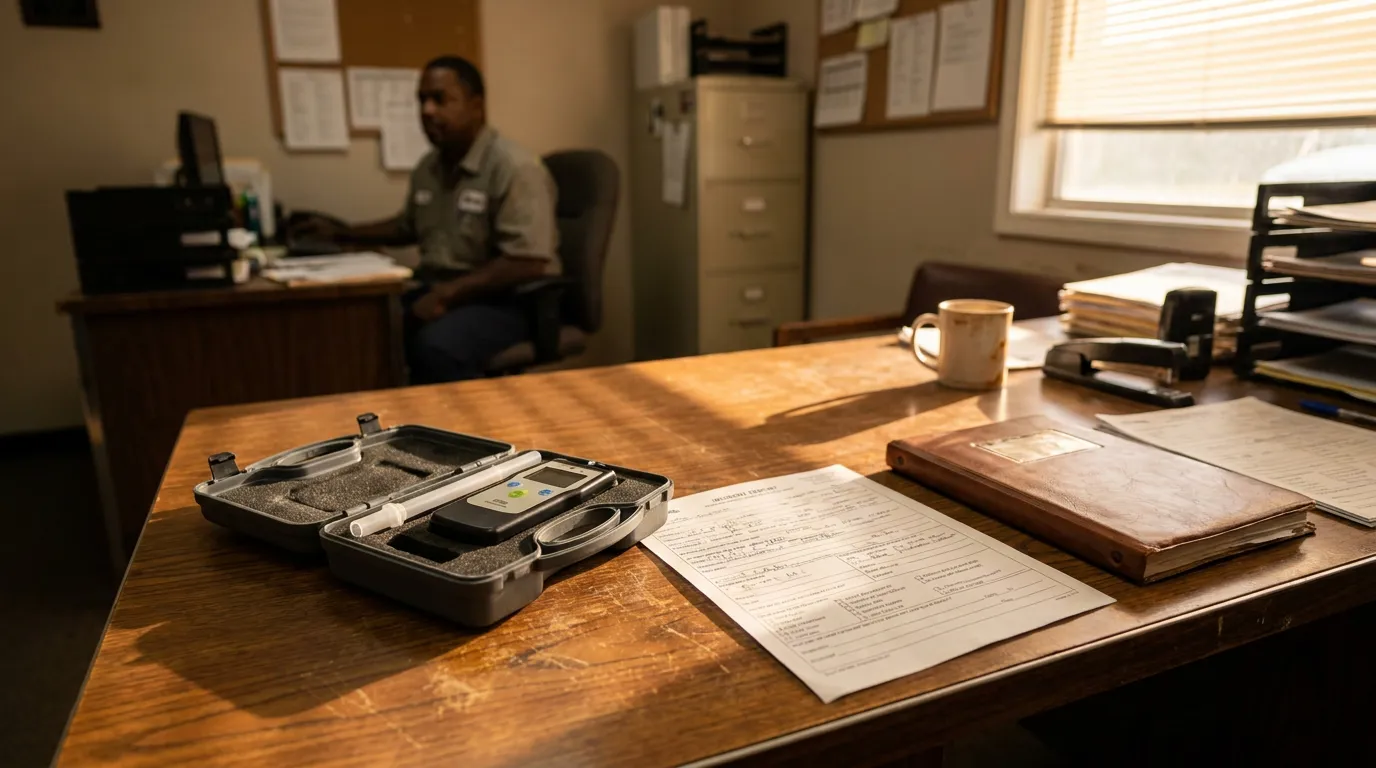
Federal regulations direct motor carriers to test drivers for alcohol after qualifying crashes promptly. Under 49 CFR § 382.303, alcohol testing should occur within two hours; if not, the carrier must document the delay. If no test occurs within eight hours, the carrier must stop attempting and document why. That eight-hour limit reflects how quickly blood alcohol concentration falls as the body metabolizes alcohol.
The practical consequence is harsh. Once the DOT alcohol test deadline passes, the number generally cannot be recreated reliably. Later estimates depend on expert extrapolation the defense will contest. Injured people must reconstruct impairment through circumstantial proof: witness statements, dash video, receipts, and driver conduct at the scene.
When Testing Is Triggered
Not every fender-bender triggers testing. Generally, testing is required after crashes involving a fatality, and after crashes where the driver receives a moving violation citation and either someone suffers an injury requiring immediate medical treatment away from the scene or a vehicle needs towing due to disabling damage. A driver who leaves the scene may be treated as having refused. Whether a particular Memphis truck accident triggers testing is fact-dependent and often contested in litigation.
Why Carriers Sometimes Miss the Window
Carriers occasionally claim confusion, distance to collection sites, or law enforcement delays. The regulations recognize that medical treatment or police custody can lawfully delay testing. In other cases, a documented failure to test or thin explanations may support arguments about trucking company negligence, though regulatory violations alone don’t establish liability without proof of causation.
Tennessee’s Stricter Commercial Driver Alcohol Rules
Tennessee holds commercial drivers to a lower threshold than ordinary motorists. Under Tenn. Code Ann. § 55-50-405(a)(1)(A), operating a commercial vehicle under the influence, or with a BAC of 0.04% or greater, carries a one-year disqualification. That’s half the 0.08% limit for non-commercial driving.
Penalties escalate steeply. Section 55-50-405(a)(2) provides three-year disqualification for violations while transporting placarded hazardous materials, and § 55-50-405(a)(3) provides lifetime disqualification, or not less than ten years, for a second violation. Tennessee expressly ties itself to the federal scheme: § 55-50-405(f) makes commercial operation subject to 49 CFR Parts 383 and 384. You can review the full text of these commercial driver alcohol rules to confirm current versions.
| Threshold or Deadline | Standard |
|---|---|
| BAC limit, commercial driver | 0.04% (Tenn. Code Ann. § 55-50-405(a)(1)(A)) |
| Alcohol test, preferred timing | Within 2 hours of the crash |
| Alcohol test, outer limit | 8 hours (49 CFR § 382.303) |
| Fatal-crash alcohol service report | Within 48 hours (Tenn. Code Ann. § 55-10-120) |
| Clearinghouse CDL downgrade | Within 60 days (Tenn. Code Ann. § 55-50-417) |
How 49 CFR 382.303 Post-Accident Testing Shapes Fault in Tennessee
Tennessee courts treat alcohol evidence as relevant to civil fault, not just criminal charges. In McIntyre v. Balentine, 833 S.W.2d 52 (Tenn. 1992), the Tennessee Supreme Court addressed a tractor-trailer collision where both drivers had been drinking. The court concluded that statutory presumptions of intoxication could apply in civil cases, creating rebuttable presumptions the defense may attempt to overcome. Intoxication alone doesn’t establish negligence or causation; plaintiffs must connect impairment to how the crash occurred.
McIntyre also gave Tennessee its modified comparative fault system. The court replaced contributory negligence with comparative fault, allowing recovery only if the plaintiff’s fault is less than the defendant’s, with damages reduced proportionally. Under this modified comparative fault rule, commonly described as the 49% bar, a few percentage points can decide whether families recover anything.
Both Sides Get Scrutinized
The McIntyre collision occurred when a Peterbilt struck a pickup; evidence showed the pickup driver’s blood alcohol at.17 percent, while testimony suggested the truck driver was speeding. Alcohol evidence can cut both directions, and outcomes depend heavily on specific facts developed in discovery.
The Carrier, Not Just the Driver, May Be Accountable
Motor carriers frequently appear as defendants alongside drivers. In McIntyre, the trucking company was a party as lessee of the tractor, illustrating how leasing arrangements may expose carriers. Identifying every potentially responsible entity, including carriers, brokers, or cargo loaders, is often important to pursuing full recovery.
Testing failures may support independent claims against companies. Tennessee’s CDL definitions at Tenn. Code Ann. § 55-50-102 classify traffic violations arising from crashes causing death, injury, or property damage as "serious traffic violations," feeding into disqualification analysis. A carrier that ignored that record or skipped required screening may face exposure beyond vicarious liability. Understanding what makes a crash DOT-recordable often clarifies which federal obligations were triggered.
💡 Pro Tip: Ask early whether the carrier completed a post-accident test, and if not, request the written documentation explaining why. That document, or its absence, can matter as much as the test result itself.
Licensing Consequences That Create a Paper Trail
Tennessee now folds the federal drug and alcohol clearinghouse into its CDL process. Under Tenn. Code Ann. § 55-50-417, beginning November 1, 2024, the department must check clearinghouse records before issuing, renewing, transferring, or upgrading a CDL, and must downgrade licenses within sixty days when the clearinghouse reports prohibition from operating a commercial vehicle. Failed or refused tests may leave administrative footprints, though clearinghouse records are subject to federal confidentiality rules and typically require formal discovery.
These administrative actions are separate from civil lawsuits. License downgrades don’t decide damage claims, and drivers who avoid disqualification aren’t automatically free of civil liability. Still, generated records may corroborate what happened after the crash.
Criminal exposure runs on a separate track. Tenn. Code Ann. § 55-50-405(a)(6)(A) directs that violators be punished under §§ 55-10-402 and 55-10-403. Evidence gathered promptly may support criminal, administrative, and civil theories simultaneously, though criminal acquittals don’t bar civil claims.
Preserving Evidence Before It Disappears
The hours and days after a crash often decide what proof will exist later. Tennessee’s testing provisions, including Tenn. Code Ann. § 55-10-406, govern breath and blood tests. Law enforcement tests are separate from carrier DOT tests unless federal requirements are met. Tenn. Code Ann. § 55-10-120 requires agencies to maintain disclosure policies and, in fatal crashes with probable cause of impairment, requires officers to investigate whether drivers were served alcohol at licensed establishments and notify the alcoholic beverage commission within forty-eight hours.
Practical steps that often make a difference include:
- Sending a spoliation letter demanding preservation of ELD data, driver logs, dispatch records, and any test results or non-test documentation
- Requesting the carrier’s drug and alcohol testing policy and training records
- Securing dash camera, truck stop, and nearby business video before routine overwrite
- Identifying witnesses who observed the driver’s behavior, speech, or odor at the scene
- Obtaining the crash report and any officer notes regarding suspected impairment
Tennessee doesn’t recognize an independent tort for destroyed evidence; instead, courts have discretion to impose sanctions or permit negative inferences, and timely preservation letters strengthen those requests.
Time limits apply to the claim itself. Tennessee generally imposes a one-year deadline for personal injury actions under Tenn. Code Ann. § 28-3-104, though the statute extends to two years when criminal charges arise from the same conduct, and limited exceptions exist. Claims involving governmental entities may involve shorter deadlines. If you need guidance from a 49 cfr 382.303 post-accident testing lawyer, acting quickly may protect both evidence and deadlines.
💡 Pro Tip: Keep your own timeline. Note the time of impact, when police arrived, and when the truck driver left the scene. Those details can help establish whether the FMCSA window was honored.
Frequently Asked Questions
1. What happens if the trucking company never tested the driver?
The carrier must document why testing didn’t occur within the required period. That documentation, or failure to produce it, may support arguments about post-accident alcohol testing failures and supervisory negligence, though weight depends on whether the crash triggered the requirement.
2. Can I still prove impairment without a test result?
Often, yes. Circumstantial evidence such as witness observations, video, purchase records, erratic driving, and post-crash conduct may support impairment theories, subject to admissibility rulings.
3. Does the 0.04% limit apply to every truck driver?
The 0.04% threshold applies to operation of commercial motor vehicles as statutorily defined. Drivers outside that definition remain subject to the 0.08% standard.
4. Will my own drinking bar my recovery?
Under Tennessee’s modified comparative fault rule from McIntyre v. Balentine, plaintiffs may recover only if their fault is less than the defendant’s, with damages reduced proportionally. Impaired plaintiffs may still recover if drinking didn’t substantially cause the crash.
5. How soon should I contact a Tennessee truck crash lawyer?
As soon as practical. Electronic data, video, and testing documentation can be lost or overwritten quickly, and preservation demands are most effective when sent early.
Why Timing Decides So Many Memphis Truck Cases
The eight-hour alcohol test window is short by design, because alcohol doesn’t wait for investigators. Tennessee’s 0.04% commercial standard, comparative fault framework, and clearinghouse rules all depend on evidence that must be captured quickly or not at all. For injured Memphis families, understanding that timeline can be a first step toward holding both driver and carrier accountable.
Mama Justice Law Firm has protected over $2 billion in assets for clients and their families, and our team is ready to move fast on your behalf. Reach Mama Justice by calling (833) 626-2587, or schedule your free consultation today.
Disclaimer: This content is for informational purposes only and is not legal advice. Every case is unique, and results may vary. Consult an attorney about your specific circumstances.