
When a Mechanic’s Work Puts an 18-Wheeler on the Road
Key Takeaways: Yes, a brake mechanic or repair shop can be held liable for an 18-wheeler accident in Tennessee if careless brake repair, adjustment, or inspection helped cause the crash. Federal rules under 49 C.F.R. Part 396 and Tennessee brake standards under Tenn. Code Ann. §§ 55-9-204 and 55-9-205 may serve as benchmarks for judging a mechanic’s work. Repair orders, inspection reports, driver complaints, and physical brake evidence often show whether truck repair negligence played a role, so preserve this evidence early. Under Tennessee’s modified comparative fault rule, fault can be divided among the mechanic, the trucking company, and the driver. An injured person can generally recover only if their own fault is less than 50 percent. Most personal injury claims must be filed within one year, with limited exceptions, so acting quickly can help protect your right to seek compensation.
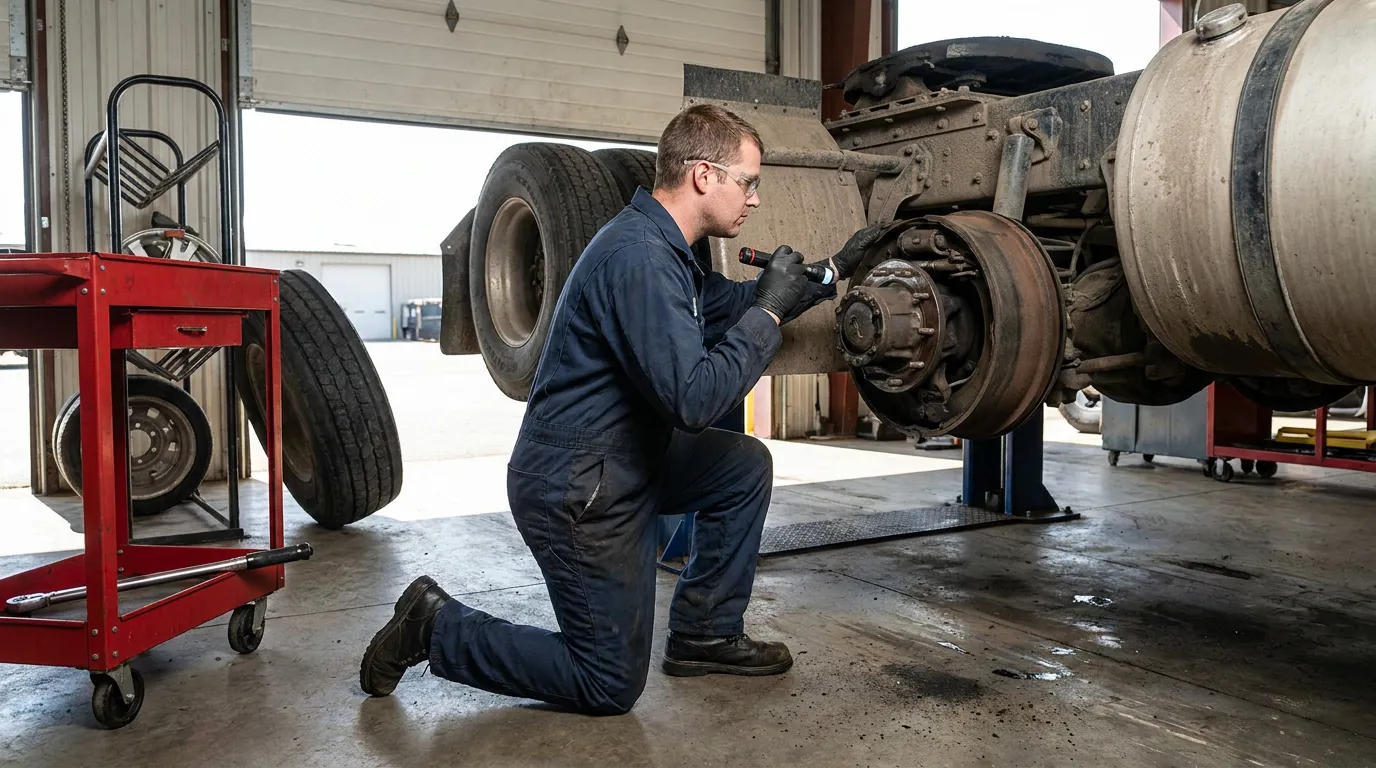
Yes. In some cases, a brake mechanic or repair shop can be held liable for an 18-wheeler accident in Tennessee. If a mechanic adjusted, repaired, or inspected a truck’s brakes carelessly and that work helped cause a crash, the mechanic may share legal responsibility with the driver and the trucking company. Maintenance records, inspection reports, and repair invoices often show whether someone cut corners.
If you or a loved one was hurt in a Memphis crash involving a big rig, the team at Mama Justice Law Firm can review your options. Call (833) 626-2587 or contact us now to start a free case review.
The Legal Duty Brake Mechanics Owe Everyone on the Road
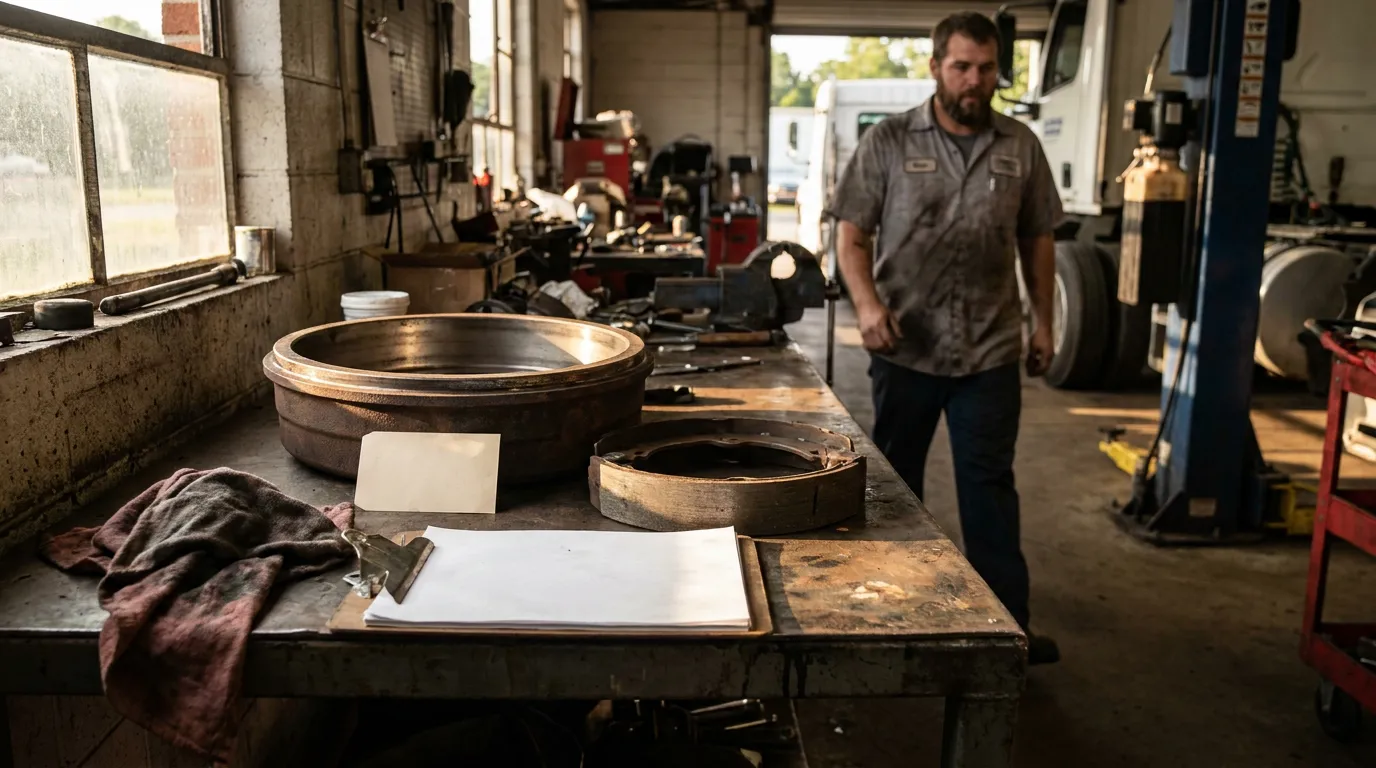
Mechanics who work on commercial trucks generally owe a duty of reasonable care to people who could foreseeably be hurt by their work. A loaded tractor-trailer can weigh up to 80,000 pounds, so a careless brake repair could hurt other drivers, passengers, and pedestrians. Tennessee negligence law asks whether the mechanic acted as a reasonably careful repair professional would have, and whether the mechanic’s breach actually and proximately caused the crash.
Federal rules help define reasonable care. Under 49 C.F.R. § 396.3(a), every motor carrier must systematically inspect, repair, and maintain all motor vehicles under its control, or have others do that work. When a carrier hires an outside shop, the carrier keeps its federal maintenance duty. You can review the full federal truck maintenance rules in Part 396 of the Federal Motor Carrier Safety Regulations.
Annual Inspections and Qualified Inspectors
Federal law also requires yearly inspections and brake work by qualified people. Under 49 C.F.R. § 396.17, commercial vehicles must be inspected at least once a year, including brake systems. Under § 396.19, inspectors must meet qualification standards. Under § 396.25, people who inspect, maintain, or adjust brakes must be qualified brake inspectors. If a mechanic signed off on an inspection without meeting those standards, or passed brakes that clearly failed, that could be strong evidence of truck repair negligence.
Operating Unsafe Vehicles
The rules ban putting a dangerous truck on the road. Under 49 C.F.R. § 396.7(a), a motor vehicle shall not be operated in a condition likely to cause an accident or breakdown. This rule mainly governs carriers and drivers, but a mechanic who clears a faulty brake system for service may help create that banned condition. Depending on the facts, breaking a safety rule may support a negligence per se argument, which generally requires showing the rule was meant to protect people like the injured person, was meant to prevent the type of harm suffered, and that the violation caused the injury.
What Tennessee Law Requires From Truck Brakes
Tennessee sets its own brake equipment and performance standards. These state laws give injured people clear benchmarks to measure a mechanic’s work against. When a repair leaves a truck below these standards, it may strengthen a brake failure claim.
Equipment Standards Under Tenn. Code Ann. § 55-9-204
Every motor vehicle on a Tennessee highway must have brakes that can control, stop, and hold it. Under Tenn. Code Ann. § 55-9-204(a), vehicles also need two separate ways to apply the brakes, and each must work on at least two wheels. A repair that weakens this backup could support a negligence claim against the shop.
The trailer half of an 18-wheeler has its own requirements. Under Tenn. Code Ann. § 55-9-204(c)(1), trailers and semitrailers with a gross weight of 3,000 pounds or more need adequate brakes the driver can apply from the cab, which must also engage on their own if the trailer breaks away. Federal rules under 49 C.F.R. § 393.42 generally require steering-axle brakes on commercial trucks built after July 25, 1980.
Performance and Adjustment Under Tenn. Code Ann. § 55-9-205
Tennessee law sets minimum stopping performance for brakes. Under Tenn. Code Ann. § 55-9-205(a), service brakes must be able to stop a vehicle or combination of vehicles going 20 mph within 30 feet on dry, level pavement free of loose material. Under § 55-9-205(d), this standard applies whether the vehicle is empty or loaded to its maximum legal capacity.
All brakes must be kept in good working order and adjusted evenly. Tenn. Code Ann. § 55-9-205(e) requires brakes to work as equally as practical on both sides of the vehicle. Poor brake adjustment is a common basis for a truck brake failure case. Violations of §§ 55-9-204 and 55-9-205 are Class C misdemeanors, which shows Tennessee treats faulty brakes as a public safety issue.
| Tennessee Requirement | Statute | Why It Matters in a Claim |
|---|---|---|
| Two separate braking means | Tenn. Code Ann. § 55-9-204(a) | Repairs cannot remove backup braking |
| Breakaway trailer brakes | Tenn. Code Ann. § 55-9-204(c)(1) | Applies to semitrailers 3,000+ lbs. |
| 30-foot stop from 20 mph | Tenn. Code Ann. § 55-9-205(a), (d) | Applies loaded or empty |
| Even brake adjustment | Tenn. Code Ann. § 55-9-205(e) | Common mechanic error |
Proving Brake Mechanic Liability After a Truck Brake Failure
Proving brake mechanic liability usually depends on documents and physical evidence. Under 49 C.F.R. § 396.3(b) and (c), motor carriers must keep inspection, repair, and maintenance records for each vehicle, for one year where the vehicle is housed or maintained and for six months after it leaves the carrier’s control. The records can show who worked on the brakes, what they did, and when. Knowing who reviews truck maintenance records after a crash can help families see how this evidence gets developed.
Investigators in a brake failure case often look for several types of proof. Common evidence includes:
- Repair orders, invoices, and parts receipts from the brake shop
- Annual inspection reports and inspector qualification records
- Driver vehicle inspection reports noting brake complaints
- Post-crash inspection findings and photos of brake parts
- Electronic control module data showing speed and braking before impact
Evidence can disappear quickly if no one acts. Trucks get repaired, parts get thrown away, and carriers may keep records only for limited periods. An early preservation letter puts the carrier and repair shop on notice to keep relevant evidence.
💡 Pro Tip: Ask that no one repair or replace the truck’s brake parts until an independent inspection takes place.
How Tennessee Divides Fault Among Multiple Parties
Tennessee uses modified comparative fault to divide responsibility. The jury assigns a percentage of fault to each party, and damages are adjusted to match. In an 18-wheeler accident case, a jury might split fault among a careless mechanic, the trucking company that ignored maintenance warnings, and a driver who missed signs of brake trouble. Tennessee has largely abolished joint and several liability, so each defendant generally pays only its own share.
Your own share of fault can affect your recovery. An injured person generally may recover damages only if their fault is less than 50 percent, and any award is reduced by their percentage of fault. Naming every responsible party matters because the jury can assign fault to someone who is not part of the case. Under Tenn. Code Ann. § 20-1-119, if a defendant blames a nonparty, the injured person may have a limited 90-day window to add that party.
Deadlines That Can End a Claim Before It Starts
Tennessee gives injured people a short window to file. Under Tenn. Code Ann. § 28-3-104(a)(1), most personal injury lawsuits must be filed within one year of the injury. You can read the Tennessee one-year filing deadline statute for its exact wording. Limited exceptions exist, such as a two-year period when the at-fault driver faces criminal charges for the conduct, and tolling rules for minors.
Claims against a repair shop may raise more timing questions. Negligence claims against a mechanic generally follow the same one-year deadline. Claims involving defective brake parts may also fall under Tennessee’s products liability statutes, including a statute of repose under Tenn. Code Ann. § 29-28-103.
Frequently Asked Questions
1. Can I sue both the trucking company and the brake mechanic?
Generally, yes. Tennessee law allows claims against more than one party, and fault may be divided among them under comparative fault rules.
2. What if the trucking company did the brake work itself?
The carrier may still be responsible, because 49 C.F.R. § 396.3(a) places maintenance duties on motor carriers. The law also generally treats in-house mechanics’ negligence within the scope of their job as the company’s.
3. Does a failed brake inspection after the crash prove negligence?
Not on its own. It can be important evidence, but it must be tied to what the mechanic did or failed to do and to the cause of the crash.
4. How long do I have to file a brake failure claim in Tennessee?
Most personal injury claims must be filed within one year under Tenn. Code Ann. § 28-3-104(a)(1), with limited exceptions.
5. What if I was partly at fault for the accident?
You may still recover if your fault is less than 50 percent, though your damages would be reduced by your share of fault.
Holding Every Responsible Party Accountable
A brake mechanic can share liability when careless repairs help cause a Tennessee truck crash. Federal rules under 49 C.F.R. Part 396 and state standards under Tenn. Code Ann. §§ 55-9-204 and 55-9-205 help set benchmarks for brake safety. Because Tennessee’s one-year deadline is short and fault rules can reduce recovery, early investigation matters. Mama Justice Law Firm has helped injured clients pursue compensation, including a recent $112,500 personal injury settlement in Mississippi, though every case is different and past results do not guarantee future outcomes.
If a truck brake failure changed your life, talking with a truck brake failure lawyer can help you understand who may be responsible. Reach out to Mama Justice Law Firm today at (833) 626-2587 or schedule your free consultation to discuss your case.
Disclaimer: This content is for informational purposes only and is not legal advice. Every case is unique, and results may vary. Consult an attorney about your specific circumstances.