

Reflective Tape Rules Every Decatur Truck Crash Victim Should Understand
Key Takeaways: Under 49 CFR 393.11, reflective tape on the sides and lower rear of a trailer generally has to sit as close as practicable to 15 to 60 inches above the road, and white strips have to go as close as practicable to the top rear corners. The rule generally covers trailers at least 80 inches wide with a GVWR of 10,001 pounds or more. Alabama generally follows these federal rules, so trucks passing through Decatur must meet the same standards. Missing, faded, or misplaced tape can be key evidence after a nighttime or underride crash, but a violation does not automatically prove fault. Under Alabama’s strict contributory negligence rule, being even slightly at fault may bar you from recovering anything. Many claims also have a two-year filing deadline, so act early and save evidence.
Under federal law, reflective tape on the side of a trailer generally has to sit between 15 and 60 inches above the road, or as close to that range as practicable. This rule comes from 49 CFR 393.11, the federal conspicuity rule. It also generally requires white strips near the top rear corners of the trailer. If you were hurt in a nighttime crash with a semi-trailer near Decatur, these rules may matter. Tape that was missing, faded, dirty, or misplaced could help explain why a driver never saw the trailer in time. Whether a violation helps your claim depends on the facts, the evidence, and how Alabama law applies.
If you or a loved one were hurt in a crash with a poorly marked trailer, you do not have to figure this out alone. The team at Mama Justice Law Firm can review how your crash happened and what evidence may still exist. Call (833) 626-2587 or contact us now to talk about your options.
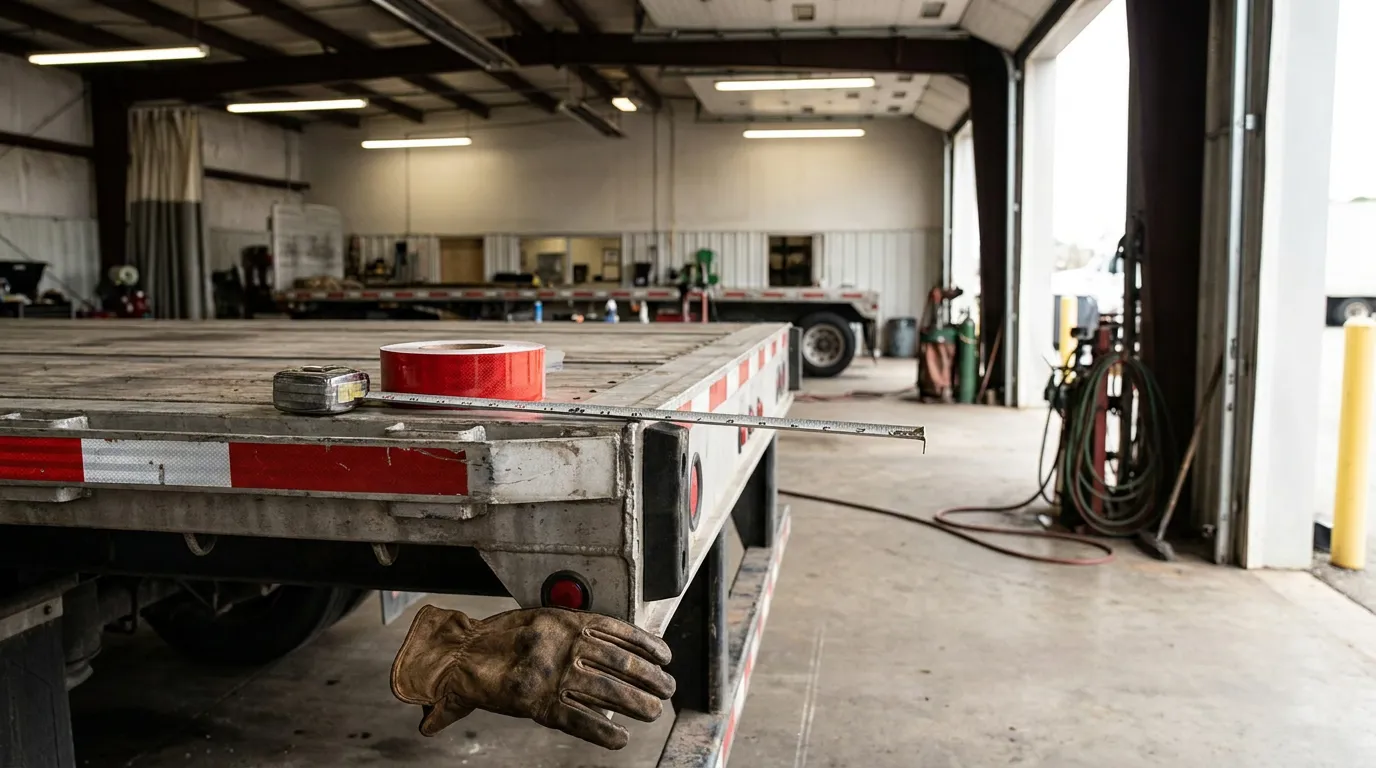
What the DOT Reflective Tape Requirements for Trucks Say
The DOT reflective tape requirements for trucks come mainly from 49 CFR 393.11, which the Federal Motor Carrier Safety Administration (FMCSA) enforces. That rule draws on Federal Motor Vehicle Safety Standard (FMVSS) No. 108, which the National Highway Traffic Safety Administration (NHTSA) applies to manufacturers. It generally covers trailers 80 inches or wider with a gross vehicle weight rating of 10,001 pounds or more. These trailers generally must have reflective sheeting or reflectors showing other drivers the trailer’s length and width. The rule generally excludes pole trailers and trailers built only as temporary living quarters.
The 15-to-60-Inch Reflective Tape Height Rule
The core height rule puts side and lower rear markings as close as practicable to a band between 15 and 60 inches above the road. That range roughly matches where car headlights shine at night. FMCSA’s conspicuity placement guidance explains where reflective sheeting goes on trailers. The words "as close as practicable" matter. Some designs, such as certain tankers or flatbeds, may not allow perfect placement, and courts may ask whether a carrier did what it reasonably could.
Pattern, Color, and Coverage
Trailer reflective sheeting generally has to follow a set pattern of alternating red and white segments along the sides and lower rear. The upper rear corners usually need pairs of white strips outlining the trailer’s top edges. Here is a simple overview:
| Location | Typical Requirement | Color |
|---|---|---|
| Sides | Strip covering at least half the trailer length, about 15, 60 inches high | Alternating red and white |
| Lower rear | Horizontal strip across full width, about 15, 60 inches high | Alternating red and white |
| Upper rear corners | Two pairs of strips, as close as practicable to the top | White |
| Rear impact guard | Strip across the horizontal bar | Alternating red and white |
This table is a summary and does not cover every detail or exception in the rule. Trailers built before December 1, 1993, generally had to be retrofitted by June 1, 2001, and some older or special equipment may face different standards. Reflective sheeting also generally must carry the DOT-C2, DOT-C3, or DOT-C4 marking. A lawyer can compare the trailer in your crash against the exact version of the rule that applied.
How Alabama Handles Trailer Conspicuity Standards
Alabama generally follows federal equipment standards for commercial trucks rather than creating its own height rule for reflective tape. The Alabama Administrative Code, Chapter 770-X-10, sets out state motor carrier safety rules. Provisions such as Ala. Admin. Code r. 770-X-10-.17 typically adopt the Federal Motor Carrier Safety Regulations, including 49 CFR Part 393. As a result, interstate trucks on I-65, U.S. 31, or Alabama 20 through Decatur generally must meet the same standards as trucks anywhere else. Whether the rules cover a carrier operating only within Alabama can depend on the vehicle and how far the state’s adoption reaches.
Alabama’s vehicle code also addresses lighting and warning devices, though not through § 32-5-243, which specifically governs flashing lights and warning signage for vehicles actively engaged in United States mail delivery service. The sections that actually address general vehicle lighting and reflector or warning-device requirements relevant to trucks and trailers are found elsewhere in the same division, including Ala. Code §§ 32-5-240, 32-5-241, 32-5-242, 32-5-245, and 32-5-246, none of which set a specific tape height requirement, which instead comes from the federal rule at 49 CFR 393.11.
Why Semi-Truck Visibility Rules Exist
Semi-truck visibility rules exist because drivers often cannot see a dark trailer at night until it is too late to stop. A trailer crossing a rural road or parked on a dim shoulder can be very hard to see. NHTSA research found that reflective markings cut side and rear crashes into trailers in the dark, helping support today’s rules.
The Nighttime Underride Risk
The most serious danger from poor visibility is an underride crash, where a car slides under the trailer. In these crashes, the trailer bed may strike the windshield and the people inside, and airbags and crumple zones may not work as designed. You can learn more about the nighttime underride risk in our related article.
💡 Pro Tip: Reflective tape fades, peels, and gets dirty. Photos taken at the scene, especially at night with a flash, may show the tape’s condition better than photos taken days later after the trailer is cleaned or repaired.
Turning a Marking Violation Into Truck Accident Evidence
A missing or misplaced reflective strip can be key truck accident evidence, but a violation does not automatically prove fault. In Alabama, breaking a safety rule may support a negligence claim if the rule was meant to protect people like you from the kind of harm that happened. You would still generally need to show the violation caused the crash and your injuries. Helpful evidence may include:
- Scene photos and video showing the trailer’s markings, lights, and position
- Dashcam footage from your vehicle, the truck, or nearby drivers
- Trailer inspection and maintenance records
- Roadside inspection reports and out-of-service violations
- Police crash reports and witness statements
- Electronic logging device (ELD) data and driver logs
Carriers may repair, repaint, or sell trailers after a crash, so this evidence can disappear fast. An early preservation letter tells the trucking company to keep the trailer and related records, and a court may punish a company that destroys evidence after notice. A crash reconstruction can also test how visible the trailer would have been from the driver’s seat.
Finding Who May Be Responsible
More than one party may share the blame when poor markings play a part in a crash. The truck driver generally must inspect the vehicle before each trip, and the motor carrier generally must maintain its equipment. A trailer owner, leasing company, repair shop, or manufacturer may also have played a role.
Challenges in an Alabama Truck Crash Case
Alabama law creates some hurdles that injured people should understand early. Alabama follows contributory negligence, a strict rule that may bar recovery if you are found even slightly at fault. There are narrow exceptions, such as the last clear chance doctrine and claims based on wanton (reckless) conduct. Trucking insurers often argue that the other driver was speeding or distracted, which makes visibility evidence even more important.
Deadlines also matter. Under Ala. Code § 6-2-38(l), many personal injury claims in Alabama must be filed within two years. Wrongful death claims under Ala. Code § 6-5-410 generally must be filed within two years of the death. Exceptions are generally read narrowly, and claims against government bodies may require notice within a shorter time. If you live in Tennessee but crashed in Alabama, or the other way around, which state’s law applies can affect your deadline. Tennessee generally allows one year for personal injury claims, so get advice quickly.
💡 Pro Tip: If you can safely do so, write down the trailer number, the company name on the door, and the USDOT number. These details can help identify the carrier and pull its federal safety record.
Frequently Asked Questions
1. How high must reflective tape be on a semi-trailer?
Side and lower rear tape generally must be as close as practicable to between 15 and 60 inches above the road under 49 CFR 393.11. Upper rear white markings generally go as close to the top of the trailer as practicable.
2. Does Alabama have its own reflective tape height law?
Alabama generally relies on the federal standards rather than a separate state height rule. State motor carrier rules in Ala. Admin. Code Chapter 770-X-10 typically adopt the federal rules.
3. Can missing reflective tape prove the trucking company was at fault?
A marking violation may support a negligence claim, but it does not guarantee a finding of fault. You generally need to show the violation caused or contributed to the crash. Alabama’s contributory negligence rule may also affect the outcome.
4. Which trailers need reflective tape?
The rule generally applies to trailers at least 80 inches wide with a GVWR of 10,001 pounds or more. Most semi-trailers on Alabama highways likely fall into this group. Pole trailers, temporary living quarters trailers, and some older trailers may face different standards.
5. How long do I have to file a claim after a truck crash in Alabama?
Many Alabama personal injury and wrongful death claims have a two-year deadline under Ala. Code §§ 6-2-38(l) and 6-5-410. Exceptions are limited, and claims against government bodies may have shorter notice deadlines. Talking with a lawyer early can help protect your rights.
Protecting Your Rights After a Poorly Marked Trailer Crash
Reflective tape keeps trailers visible, and when carriers ignore the DOT reflective tape requirements for trucks, people can be badly hurt or killed. Evidence of a violation can disappear fast, and Alabama’s strict fault rules and two-year deadlines make early action important. A truck accident evidence lawyer can help you learn whether a marking failure played a role in your crash.
If a dark or poorly marked trailer caused your crash, reach out today to learn your options. Mama Justice Law Firm is ready to listen and look into the facts of your crash. Call (833) 626-2587 or schedule your free consultation to get started.
Disclaimer: This content is for informational purposes only and is not legal advice. Every case is unique, and results may vary. Consult an attorney about your specific situation.