
How Crash Science Helps Decatur Families Prove What Really Happened
Key Takeaways: An accident reconstruction expert in a Decatur fatal crash case uses physics, engineering analysis, and physical evidence to help determine speed, right-of-way, braking, and the forces that may have caused fatal injuries. The work typically includes scene measurements, vehicle crush profiles, event data recorder downloads, video review, occupant kinematics, and roadway design factors. These findings may matter because Alabama’s wrongful death statute, Ala. Code § 6-5-410, has generally been interpreted to allow only punitive damages measured by the defendant’s culpability rather than the family’s losses, which can make proof of the degree of wrongdoing central. Generally, only the estate’s personal representative may file an action under § 6-5-410, the general punitive damages caps in Title 6, Chapter 11 are generally treated as inapplicable to wrongful death claims, and the two-year deadline is typically strictly enforced. A police report alone rarely settles causation, so early preservation of vehicles, video, and commercial trucking records can be critical. At deposition and trial, reconstruction testimony must generally satisfy Alabama’s reliability standard for expert opinion and often counters defense-retained analysts arguing contributory negligence.
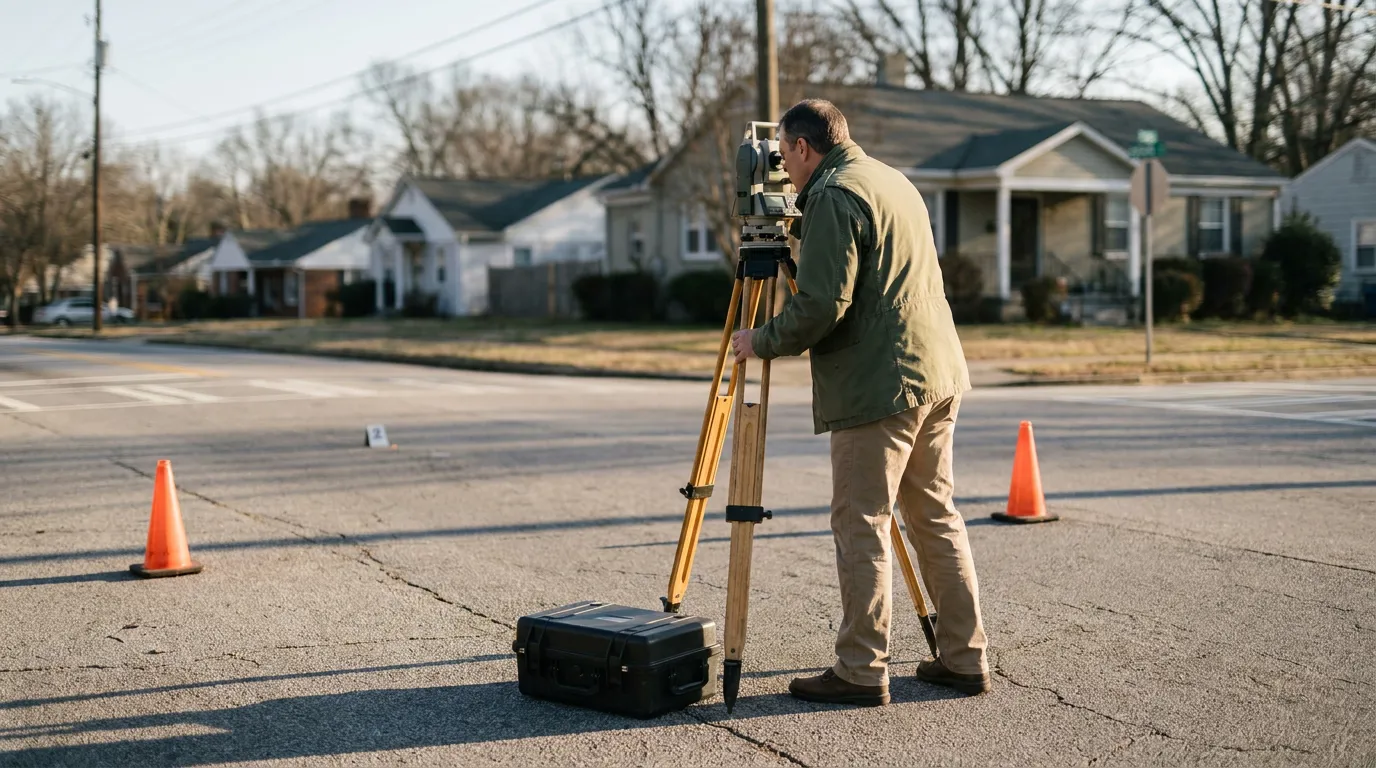
An accident reconstruction professional in a Decatur fatal crash case applies physics, engineering principles, and physical evidence to address what a police report often leaves open: how fast each vehicle was traveling, who entered the intersection first, whether braking occurred, and what forces may have caused the fatal injuries. This analysis can become the backbone of proving negligence and causation. Because Alabama wrongful death law generally requires proof both of underlying fault and of conduct a jury finds worthy of punishment, that analysis may shape whether a claim resolves fairly or falls apart.
If your family is facing a fatal accident investigation in Morgan County, Mama Justice Law Firm is available to listen and explain your options. Call (833) 626-2587 or reach out to our team now to discuss what evidence may still be preserved.

What an Accident Reconstruction Expert Fatal Crash Analysis Actually Involves
A reconstruction professional generally begins where law enforcement stops. Officers typically document a scene to determine whether a traffic law was violated, while a retained analyst works toward civil liability, decided under a preponderance-of-the-evidence standard rather than a criminal one. A citation, or its absence, does not necessarily control a civil wrongful death claim’s outcome.
Most reconstruction professionals gather and evaluate:
- Scene measurements, skid marks, gouge marks, and roadway geometry
- Vehicle crush profiles and points of impact
- Event data recorder ("black box") downloads showing speed, braking, and throttle
- Photographs, surveillance video, and dashcam footage
- Occupant kinematics and injury correlation
- Roadway design, sight lines, signal timing, and lighting conditions
These methods are not improvised. Federal crash researchers rely on substantially similar techniques. The National Highway Traffic Safety Administration’s crash investigation sampling program uses trained investigators who conduct on-scene investigations and compile data on vehicle damage, crash dynamics, and occupant injuries, generally pursuing the same objective as a reconstruction professional in an individual Decatur fatal crash file, though federal data is collected for statistical rather than case-specific purposes.
Why Alabama’s Wrongful Death Statute Raises the Stakes
Alabama treats wrongful death differently from most other states. Under Ala. Code § 6-5-410(a), a personal representative may commence an action and recover such damages as the jury may assess for the wrongful act, omission, or negligence causing the decedent’s death. Alabama courts have long interpreted the wrongful death statute as authorizing only punitive damages rather than compensatory damages, distinguishing Alabama from states using a survival or compensatory model. Any recovery generally passes to the decedent’s heirs under the statute of distribution rather than to the estate for debts.
That punitive framework can change what the evidence must show. Liability still requires proof of an underlying wrongful act, omission, or negligence, but because the jury assesses the quality of the defendant’s conduct rather than calculating economic loss, testimony on the degree of wrongfulness may carry significant weight. Reconstruction findings on speed, impairment indicators, inattention, or failure to brake may supply that factual foundation.
Generally, only the personal representative may bring the claim. A surviving spouse or parent generally cannot file individually without being appointed to represent the estate. Families frequently learn this months into the process, which is one reason early legal guidance matters. When the decedent was a minor, Ala. Code § 6-5-391 governs wrongful death of a minor, damages under that section have generally been treated as punitive, and it sets out its own sequence of who may sue, beginning with a parent before the personal representative.
Punitive Damages Caps and the Wrongful Death Exception
Alabama’s general punitive damages caps generally do not apply here. Ala. Code § 6-11-29, within Title 6, Chapter 11’s punitive damages scheme, provides that the article does not alter Alabama’s wrongful death statutes, and courts have accordingly treated the statutory caps as inapplicable to wrongful death actions. Practically, a Morgan County jury’s assessment may not be constrained by the same statutory ceiling, though due process review, remittitur, and post-trial motions may still reduce a verdict.
The Two-Year Filing Deadline
Timing is generally unforgiving. Section 6-5-410(d) requires the action be commenced within two years from the death. Alabama courts have generally treated this period as a condition of the right itself rather than an ordinary statute of limitations, meaning tolling arguments are typically interpreted narrowly. Limited exceptions exist in narrow circumstances, so the deadline should be confirmed with counsel.
Administrative timelines are generally separate. Requesting a crash report, cooperating with a law enforcement investigation, or pursuing an insurance claim generally does not extend the civil filing period absent a specific legal exception. Claims against governmental entities may carry additional notice requirements running on shorter schedules.
| Issue | Governing Section | Practical Effect |
|---|---|---|
| Who may file | § 6-5-410(a) | Personal representative of the estate |
| Death of a minor | § 6-5-391 | Separate statutory basis; punitive damages; parent may sue first |
| Filing deadline | § 6-5-410(d) | Two years from date of death |
| Damages caps | § 6-11-29 | Caps generally inapplicable to wrongful death |
Where the Evidence Comes From in a Morgan County Crash
The official crash report is usually the starting point. The Alabama Law Enforcement Agency maintains official crash documentation statewide, and its Alabama crash report request process governs how reports covering Decatur and Morgan County incidents are obtained. That report typically supplies scene diagrams, party identification, and preliminary officer findings.
A report alone rarely resolves causation. Officers work under time pressure and cannot always download vehicle data or preserve a scene indefinitely. Roadways are cleared, vehicles are repaired or salvaged, and surveillance video is often overwritten within days or weeks. Crash reports themselves are also frequently limited or inadmissible as substantive evidence at trial.
💡 Pro Tip: If a commercial vehicle was involved, written preservation demands for electronic logging data, telematics, maintenance records, and driver qualification files should go out early, since routine retention schedules may allow lawful destruction of those records.
Comparing the Crash to Broader Data
Reconstruction professionals often benchmark a crash against national datasets. The Fatality Analysis Reporting System, a nationwide census of fatal motor vehicle crashes, allows comparison of crash characteristics, roadway conditions, and contributing factors against established patterns using standardized fields covering vehicle type, speed, road conditions, and driver behavior.
Context does not replace case-specific proof. National data may help explain why a roadway configuration or vehicle behavior produced a fatal result, but Alabama juries generally decide cases on the facts before them, and statistical comparisons alone are rarely admissible to prove fault. Reading the firm’s wrongful death legal insights can help families understand how these pieces typically fit together.
The Crash Expert Role at Deposition and Trial
Admissibility generally comes before persuasion. Alabama has adopted a Daubert-style reliability standard for expert scientific testimony under Ala. Code § 12-21-160, so an expert witness crash opinion must rest on reliable principles and methods applied to sufficient facts, and opposing counsel routinely challenges qualifications, assumptions, and calculations. Courts may exclude testimony resting on speculation rather than measurable physical evidence.
Demonstrative exhibits often carry the message. Scaled diagrams, time-distance analyses, and animations can translate technical findings into something a jury may understand quickly, provided they are properly authenticated and admitted. The clarity of that presentation can influence settlement posture well before trial.
Defense-retained analysts often reach different conclusions. Insurers commonly hire their own professionals to argue reduced speed estimates, alternative impact angles, or contributory negligence, which has generally operated as a complete bar to recovery in Alabama under longstanding common law, subject to exceptions such as wanton conduct or subsequent negligence. That defense makes precise reconstruction analysis especially important in Alabama cases.
Practical Steps Families Can Take Early
Preservation often beats reconstruction after the fact. Photographs of the vehicles before repair, witness names, and the location of nearby cameras may matter enormously later. Families should not feel obligated to give recorded statements to an opposing insurer before understanding their rights, although their own policies may impose cooperation duties.
💡 Pro Tip: Keep the damaged vehicle in storage rather than authorizing salvage, and notify your attorney immediately if a tow yard sends a disposal notice.
Legal representation can coordinate the technical work. An experienced accident reconstruction expert fatal crash lawyer may retain qualified professionals, seek estate appointment, and manage preservation obligations while the family focuses on grieving. Outcomes always depend on the specific facts, applicable law, and evidence available in each case.
Frequently Asked Questions
1. Who can hire an accident reconstruction professional in a fatal crash case?
Generally, the personal representative of the estate, through counsel, retains the professional. Because § 6-5-410 generally limits standing to the personal representative, the retention and resulting report are typically handled as part of the estate’s claim. Family members may participate by providing information, photographs, and witness contacts, and counsel may begin investigating before an appointment is finalized.
2. How soon should reconstruction work begin after a Decatur fatal crash?
As early as practicable. Physical evidence may degrade within days, vehicles may be released for salvage, and video is frequently overwritten. Waiting until near the two-year deadline under § 6-5-410(d) may permanently limit what any analyst can determine.
3. Does the police report determine who was at fault?
Generally, it does not control the civil outcome. An officer’s conclusions and any citations may be useful investigative material, but they are often inadmissible at trial, and liability in a wrongful death action is generally decided by the finder of fact based on the full evidentiary record. Reconstruction findings sometimes contradict initial police conclusions.
4. Are punitive damages in Alabama wrongful death cases subject to a cap?
Alabama’s statutory punitive damages caps generally do not apply. Section 6-11-29 preserves Alabama’s wrongful death statutes from limits found elsewhere in Chapter 11. Any award may still be subject to post-trial review, remittitur, and constitutional due process scrutiny.
5. What if the deceased was a minor child?
Ala. Code § 6-5-391 provides a separate statutory basis. That section addresses wrongful death of a minor, damages under it have generally been treated as punitive rather than compensatory, and it allows a parent to sue within a defined period before the personal representative may do so. The applicable filing deadline and standing rules should be reviewed with an Alabama wrongful death attorney promptly.
Moving Forward With Clear Answers
An accident reconstruction expert fatal crash analysis can transform scattered physical evidence into a coherent account of how a collision occurred and why it proved fatal. In Alabama, where wrongful death damages are generally punitive and the two-year deadline under § 6-5-410(d) is typically strictly applied, that technical work may support the legal proof a family must develop. Every case turns on its own facts, and no reconstruction, however thorough, guarantees a particular result.
If you lost a loved one in a Decatur collision, Mama Justice Law Firm is ready to review the circumstances with you. Call (833) 626-2587 or schedule your free consultation today to learn what steps may still protect your family’s claim.
Disclaimer: This content is for informational purposes only and is not legal advice. Every case is unique, and results may vary. Consult an attorney about your specific circumstances.